Budget Silence on 24-Hour Economy Raises Business Concerns Over Ghana’s Industrialisation Drive
Liwalmor M-Moadan
Journalist
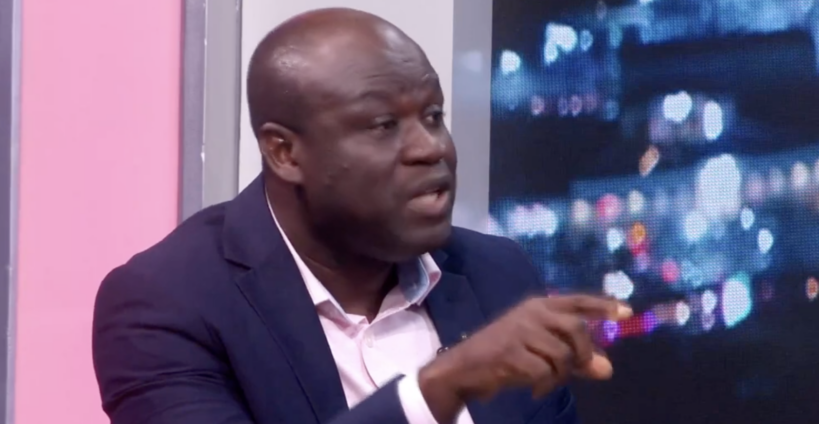
Ghana’s ambition to build a round-the-clock economy could struggle to attract meaningful private-sector investment unless policymakers address the country’s high cost of doing business, according to the Ghana Chamber of Commerce and Industry (GCCI), which says the 2026 Mid-Year Budget Review missed an opportunity to lay out a practical implementation roadmap.
The Chamber’s Chief Executive Officer, Mark Badu-Aboagye, argued that while the government’s 24-Hour Economy policy has generated considerable optimism, investors remain more concerned about financing costs, energy prices and policy certainty than the concept itself.
Speaking on JoyNews’ PM Express Business Edition, Badu-Aboagye said the budget should have translated the government’s flagship economic programme into concrete fiscal measures capable of encouraging manufacturers and exporters to expand production.
“The policy itself is well designed,” he said, “but implementation is what will determine whether it delivers the promised transformation.”
His remarks shift attention from the policy’s vision to the investment environment needed to make it commercially viable. Although the Bank of Ghana has begun easing monetary policy, he argued that lending conditions remain too restrictive for businesses planning long-term industrial investments.
With the policy rate still at 14% and commercial lending rates remaining significantly higher, manufacturers continue to face financing costs that erode profitability and discourage new factory investments.
According to the Chamber, industrialisation cannot be driven solely by private capital if businesses are expected to borrow at commercial rates while also absorbing high electricity tariffs, production costs and other operational expenses.
The business community believes these structural constraints undermine the government’s objective of encouraging companies to operate continuously under the proposed 24-hour production model.
Badu-Aboagye also questioned whether sufficient progress had been made beyond the administrative phase of the initiative.
While government has allocated GH¢101 million to establish and operate the 24-Hour Economy Secretariat, he argued that businesses are looking for evidence of tangible interventions, including targeted financing, tax incentives, infrastructure improvements and lower production costs.
For investors, the absence of detailed policy measures in the Mid-Year Budget creates uncertainty over how the programme will be implemented and financed.
Economists generally agree that expanding production beyond traditional working hours has the potential to increase industrial output, improve export competitiveness and generate employment. However, they caution that these gains depend on complementary reforms, including affordable credit, reliable electricity, efficient transport systems, labour market flexibility and predictable economic policies.
The Chamber further warned that Ghana risks repeating the shortcomings of earlier industrial programmes if implementation is not supported by measurable policy actions. Previous initiatives, including One District, One Factory (1D1F), demonstrated that ambitious industrial strategies require sustained financial support and a business environment capable of attracting long-term private investment.
Badu-Aboagye maintained that industrialisation remains the foundation upon which the government’s broader economic objectives rest.
Without stronger manufacturing capacity, he argued, ambitions to increase exports, diversify the economy and create sustainable employment will remain difficult to achieve, regardless of the policy’s broader aspirations.
His intervention comes as businesses increasingly look beyond macroeconomic stabilisation toward reforms that improve productivity and competitiveness, signalling that the success of Ghana’s flagship 24-Hour Economy may ultimately depend less on political commitment than on the government’s ability to reduce the cost of investing and producing in the country.
Written by
Liwalmor M-Moadan
M-Moadan is dedicated journalist committed to delivering accurate, timely, and impactful news. Passionate about uncovering the facts, telling meaningful stories, and keeping the public informed with integrity and professionalism.
Related Stories

Ghana’s Gold Revolution: Can Refining Gold at Home Finally Keep More of the Country’s Wealth in Ghana?
For generations, Ghana has drawn enormous wealth from beneath its soil, yet much of the value created from that wealth has flowed beyond its borders. Now,...
GoldBod Targets $1.4bn as BoG Reduces September Dollar Sales
The Bank of Ghana (BoG) has sharply reduced the amount of foreign exchange it plans to supply to the market in September 2026. Market data indicate that the...
Four CIIG Awards Strengthen Enterprise Insurance’s Leadership Position
Enterprise Insurance emerged as the most successful company at the sixth Chartered Insurance Institute of Ghana (CIIG) Awards, securing four major honours at...
Comments (0)
No comments yet. Be the first to share your thoughts.