Mahama touts TOR turnaround as proof state assets can be revived without taxpayer bailouts
Liwalmor M-Moadan
Journalist
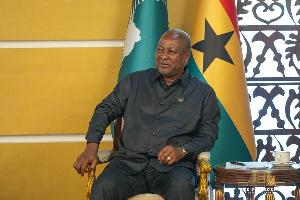
President John Dramani Mahama has presented the revival of the Tema Oil Refinery (TOR) as a case study in state enterprise reform, arguing that disciplined management, operational restructuring and commercial partnerships—not government bailouts—can restore strategic national assets while safeguarding Ghana’s fragile fiscal position.
Speaking at the commissioning of TOR’s refurbished Crude Distillation Unit (CDU), the President said the refinery’s return to operation was achieved without direct financial support from the state, underscoring what he described as a shift towards commercially driven recovery rather than reliance on public funds.
The restart of the CDU marks the refinery’s return to processing crude oil, including Ghana’s Jubilee blend, after years of operational setbacks that had left the country heavily dependent on imported refined petroleum products. The development is expected to strengthen domestic fuel production, reduce import dependence and improve energy security at a time when Ghana is seeking to rebuild industrial capacity and conserve foreign exchange.
For investors and policymakers, TOR’s revival represents more than the rehabilitation of a refinery. It signals a broader test of whether Ghana’s state-owned enterprises can become financially sustainable through improved governance, efficiency gains and private-sector collaboration instead of repeated fiscal intervention.
Mahama said the refinery’s recovery demonstrates that public enterprises need not become permanent liabilities on the national budget if they are managed with commercial discipline and clear accountability. The approach aligns with the government’s wider fiscal consolidation agenda, which aims to reduce pressure on public finances while restoring confidence in key state institutions.
The refinery’s renewed operations are also expected to generate economic spillovers across Ghana’s petroleum value chain, supporting local refining capacity, creating jobs and increasing demand for ancillary services. A stronger domestic refining sector could also help cushion the economy against external supply disruptions and volatile international fuel markets.
While TOR still faces the challenge of sustaining profitability in a competitive downstream market, its reopening marks one of the most significant milestones in Ghana’s efforts to revive strategic industrial assets. The refinery’s long-term success will ultimately depend on consistent crude supply, operational efficiency and prudent financial management—factors that will determine whether the turnaround evolves into a durable commercial recovery rather than a symbolic achievement.
Written by
Liwalmor M-Moadan
M-Moadan is dedicated journalist committed to delivering accurate, timely, and impactful news. Passionate about uncovering the facts, telling meaningful stories, and keeping the public informed with integrity and professionalism.
Related Stories

Ghana’s Gold Revolution: Can Refining Gold at Home Finally Keep More of the Country’s Wealth in Ghana?
For generations, Ghana has drawn enormous wealth from beneath its soil, yet much of the value created from that wealth has flowed beyond its borders. Now,...
GoldBod Targets $1.4bn as BoG Reduces September Dollar Sales
The Bank of Ghana (BoG) has sharply reduced the amount of foreign exchange it plans to supply to the market in September 2026. Market data indicate that the...
Four CIIG Awards Strengthen Enterprise Insurance’s Leadership Position
Enterprise Insurance emerged as the most successful company at the sixth Chartered Insurance Institute of Ghana (CIIG) Awards, securing four major honours at...
Comments (0)
No comments yet. Be the first to share your thoughts.