SIGA reports strong profit in state enterprises - bouncing back with recovery
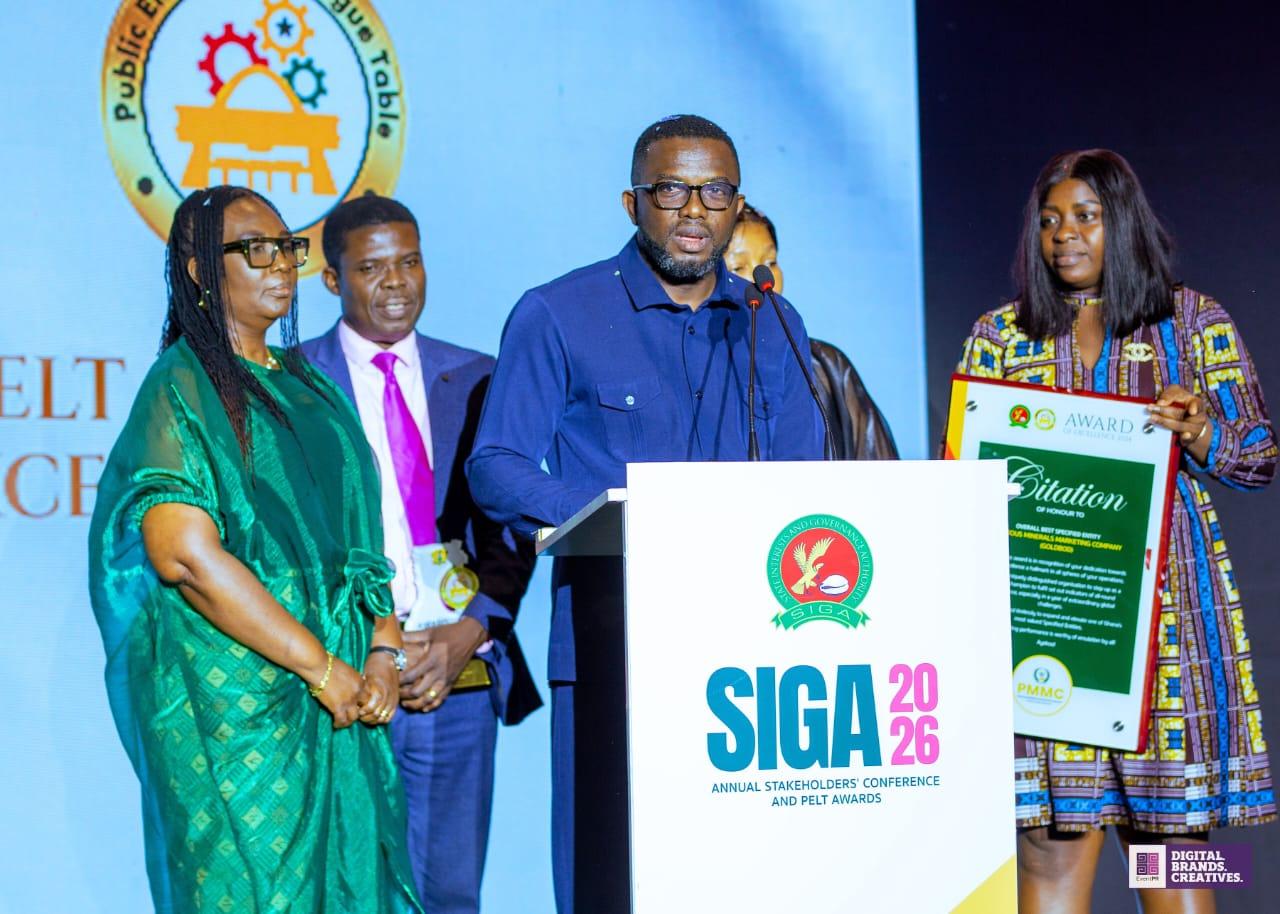
Ghana’s state-owned sector recorded a major improvement in financial performance in 2025, with State-Owned Enterprises (SOEs) moving from consolidated losses to significant profitability, according to the latest State Ownership Report (SOR) published by the State Interests and Governance Authority (SIGA).
The 2025 report represents the tenth edition of Ghana’s assessment of Specified Entities and the fifth report produced by SIGA since the Authority was established in 2019. It examined the performance of 162 out of the 175 approved Specified Entities, comprising 53 SOEs, 36 Joint Venture Companies (JVCs) and 73 Other State Entities (OSEs).
SIGA Director-General, Prof. Michael Kpessa-Whyte, described the report as particularly important because it reflects the performance of state entities during the first year of President John Mahama’s second administration. It also provides an assessment of how these institutions are supporting the government’s economic reset programme.
SOEs Record Major Financial Recovery
The biggest improvement was recorded among State-Owned Enterprises. Their combined revenue increased by 28.12 per cent, rising from GH¢137.64 billion in 2024 to GH¢176.43 billion in 2025.
The growth was driven largely by strong performances in sectors such as agriculture, manufacturing and infrastructure.
Profit before interest and tax climbed to GH¢25.49 billion, while the sector recorded a consolidated net profit after tax of GH¢19.80 billion. This represents a significant turnaround from the GH¢2.25 billion net loss recorded in 2024.
A stronger Ghanaian cedi also contributed to the improved results. SOEs recorded net foreign exchange earnings of GH¢11.72 billion in 2025, compared with a net foreign exchange loss of GH¢12.01 billion the previous year. Finance costs also declined substantially, falling by 42.49 per cent.
Despite the positive results, SIGA warned that several state enterprises continue to face serious financial difficulties. Five SOEs, including the Electricity Company of Ghana (ECG) and Ghana Digital Centre, reported losses in every year between 2021 and 2025. Six other entities also remained in negative equity throughout the five-year period.
Government Dividends Remain Low
Despite the overall improvement in SOE profitability, government dividend collections remained weak.
Only Ghana Reinsurance Company and TDC Company paid dividends to the government, with the two entities contributing a combined GH¢16 million.
The situation was different among Joint Venture Companies, which continued to perform strongly.
JVCs recorded a 36.55 per cent increase in net profit, reaching GH¢3.14 billion in 2025. Their combined assets also expanded by almost 26 per cent to GH¢96.69 billion.
Minority-interest JVCs were particularly important to government revenues. They generated GH¢61.32 billion in net profit and accounted for 97.12 per cent of all dividends received by government. Their contribution amounted to GH¢1.19 billion.
Other State Entities Face Growing Pressure
The financial performance of Other State Entities was considerably weaker.
Their combined net deficit increased from GH¢2.18 billion in 2024 to GH¢10.48 billion in 2025.
At the same time, their total assets expanded by 60.15 per cent to GH¢310.62 billion. However, liabilities grew by 41.83 per cent to GH¢323.17 billion, placing further pressure on the sector's financial position.
The Bank of Ghana's negative equity position of approximately GH¢93 billion was identified as one of the major contributors to the deterioration.
Better Economic Conditions Supported Performance
SIGA also linked the improved performance of some state entities to a more favourable macroeconomic environment in 2025.
Ghana's real GDP growth accelerated to 6 per cent, while the Monetary Policy Rate declined from 27 per cent to 18 per cent. By December, the average lending rate had also fallen to 20.4 per cent.
Public debt stood at GH¢640.99 billion. However, the debt-to-GDP ratio declined to 45.28 per cent.
SIGA nevertheless warned that fiscal risks remain, particularly those associated with government loan guarantees, on-lending arrangements and other contingent liabilities.
Reforms and Governance Improvements
The report highlighted several reforms introduced during the year to strengthen public financial management and improve the performance of state institutions.
Procurement-related infractions declined significantly, falling from GH¢18.4 billion to GH¢2.2 billion.
SIGA also assessed 70 entities under its governance and institutional performance framework and expanded the use of performance contracts as part of efforts to improve accountability and management effectiveness.
Other major government initiatives highlighted in the report included the implementation of aspects of the 24-hour economy programme, the GH¢62.86 billion Big Push infrastructure initiative, the recapitalisation of state-owned banks, the establishment of the Ghana Gold Board and reforms in the railway sector.
Employment, Climate and Gender Progress
Beyond financial performance, the report also highlighted progress in employment, climate action and gender representation across the state sector.
Employment increased by 5.45 per cent, reaching 98,724 workers. Women's representation also improved, rising to 30.02 per cent.
Climate-related initiatives were reported by 42 state entities, reflecting growing attention to environmental commitments within the public sector.
SIGA Calls for Sustained Reforms
Although SIGA considers 2025 a possible turning point for Ghana's state-owned sector, the Authority stressed that improved financial results must be converted into long-term efficiency and sustainable value creation.
SIGA called for stronger accountability, more effective allocation of capital and decisive measures to address entities that have consistently performed poorly.
The Authority's position is that state-owned institutions must move beyond simply surviving financially and instead become sustainable organisations capable of creating lasting economic value for the Ghanaian taxpayer and supporting Ghana's broader development objectives.
Related Stories

GoldBod Targets $1.4bn as BoG Reduces September Dollar Sales
The Bank of Ghana (BoG) has sharply reduced the amount of foreign exchange it plans to supply to the market in September 2026. Market data indicate that the...
Four CIIG Awards Strengthen Enterprise Insurance’s Leadership Position
Enterprise Insurance emerged as the most successful company at the sixth Chartered Insurance Institute of Ghana (CIIG) Awards, securing four major honours at...

Ghana’s Digital Finance Boom Faces Security Test as Fraud Threats Cross Banking and Telecom Networks
finance is creating a new challenge for the country’s financial architecture: how to preserve the efficiency and inclusion delivered by mobile money, fintech...
Comments (0)
No comments yet. Be the first to share your thoughts.