GCB Defies Falling Interest Rates with 46% Profit Surge as Fee Income Powers Growth
Liwalmor M-Moadan
Journalist
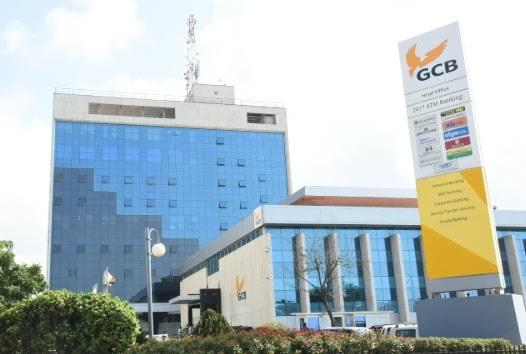
GCB Bank PLC has demonstrated that a changing interest-rate environment need not translate into weaker profitability, reporting a 46.4% increase in half-year net profit after successfully shifting its earnings mix beyond traditional lending income.
The bank posted profit after tax of GH¢1.23 billion for the six months ended June 2026, while profit before tax climbed 45.8% to GH¢1.91 billion, supported by robust growth in fee-based services, trading activities and disciplined cost management.
The performance comes at a time when Ghana’s banking sector is navigating one of its most challenging interest-rate cycles in recent years. Falling Treasury bill yields, lower lending rates and narrowing net interest margins have squeezed banks’ traditional revenue streams, forcing lenders to seek alternative sources of income.
Despite these pressures, GCB expanded operating income by 36.1% to GH¢3.73 billion, underscoring the resilience of its diversified business model.
Non-Interest Income Becomes the Growth Engine
The defining feature of GCB’s first-half performance was the rapid expansion of its non-funded income.
Net fee and commission income nearly doubled, rising 98% to GH¢658.7 million, while trading income jumped 76.8% to GH¢701.9 million. Combined with other operating income, non-funded revenue surged about 86% to GH¢1.39 billion, accounting for 37.3% of total operating income, up sharply from 27.2% a year earlier.
The results illustrate an institution increasingly generating earnings from customer transactions, digital banking services, commissions and financial market activities rather than relying predominantly on interest spreads.
Lower Funding Costs Cushion Margin Pressure
Although interest income grew only 4.1% to GH¢2.91 billion, reflecting the lower-rate environment, GCB significantly reduced its cost of funding.
Interest expense declined 28.9% to GH¢564.7 million, allowing net interest income to increase 17.3% to GH¢2.34 billion despite compressed market yields.
The ability to attract and retain deposits at lower funding costs enabled the bank to preserve profitability even as industry-wide net interest margins narrowed.
Efficiency Gains Strengthen Profitability
Revenue growth continued to outpace operating costs during the period.
Personnel, depreciation and other operating expenses rose 20.5%, substantially below the growth in operating income, leading to an improvement in the bank’s cost-to-income ratio to approximately 43.7% from 49.4% a year earlier.
The improved efficiency highlights stronger operating leverage as GCB scaled its business without a proportionate increase in expenses.
Balance Sheet Expands Across Key Segments
GCB continued to strengthen its balance sheet through robust deposit mobilisation and loan growth.
Customer deposits increased 24.5% to GH¢51.49 billion, while total assets expanded 28.7% to GH¢67.43 billion.
Net loans and advances climbed 35.4% to GH¢22.19 billion, alongside a 31.1% increase in investment securities to GH¢21.44 billion, reflecting the bank’s confidence in deploying liquidity into productive assets.
The expansion coincided with stronger liquidity conditions across Ghana’s financial system, allowing the bank to grow both lending and investments while maintaining comfortable liquidity buffers.
Asset Quality Shows Significant Improvement
Perhaps the strongest signal of balance-sheet resilience came from the bank’s credit quality.
GCB’s non-performing loan (NPL) ratio fell sharply to 4.7% from 13.8% a year earlier, placing it comfortably below the industry average of 16.1%.
The improvement suggests that loan growth has been accompanied by stronger credit risk management, improved recoveries and healthier portfolio performance.
Capital Remains Above Regulatory Threshold
The bank’s capital adequacy ratio moderated to 15.9%, down from 20.0% previously, largely reflecting rapid asset expansion and shareholder distributions.
However, the ratio remains comfortably above the Bank of Ghana’s 13% regulatory minimum, while shareholders’ equity increased 16.8% to GH¢7.02 billion.
Liquidity also remained exceptionally strong, with a 69.8% liquidity ratio, providing substantial capacity to support continued business growth.
Norvan Reports Analysis
GCB’s half-year results demonstrate how a well-diversified banking model can outperform during periods of falling interest rates. Rather than relying solely on lending margins, the bank successfully expanded fee income, trading revenue and transaction-based earnings to offset pressure on traditional interest income.
The sharp improvement in asset quality, stronger cost discipline and continued deposit growth further reinforce the sustainability of its earnings performance.
Looking ahead, maintaining this momentum will depend on the bank’s ability to sustain growth in non-interest income, preserve credit quality amid rapid loan expansion and protect capital as its balance sheet continues to grow.
For now, GCB has shown that Ghana’s evolving interest-rate cycle presents not only challenges but also opportunities for institutions capable of adapting their business model. Its first-half performance positions the bank as one of the strongest performers in the country’s banking sector in 2026.
Written by
Liwalmor M-Moadan
M-Moadan is dedicated journalist committed to delivering accurate, timely, and impactful news. Passionate about uncovering the facts, telling meaningful stories, and keeping the public informed with integrity and professionalism.
Related Stories
COCOBOD SECURES GH¢3.396BN IN LOCAL FUNDING DRIVE
Ghana's cocoa financing effort has brought in GH¢3.396 billion from local institutional investors, providing the Ghana Cocoa Board (COCOBOD) with fresh funds...


How to Save Money on a Low Income in Ghana
Saving money can feel almost impossible when your income is barely enough to cover your daily needs. For many people in Ghana, the problem is not that they do...

How to Create a Personal Budget That Actually Works
Creating a personal budget sounds simple: write down your income, list your expenses, and make sure you do not spend more than you earn. But in reality, many...
Comments (0)
No comments yet. Be the first to share your thoughts.