Ghana modernises investment regime with GIPA Act and AfCFTA-aligned reforms
Liwalmor M-Moadan
Journalist
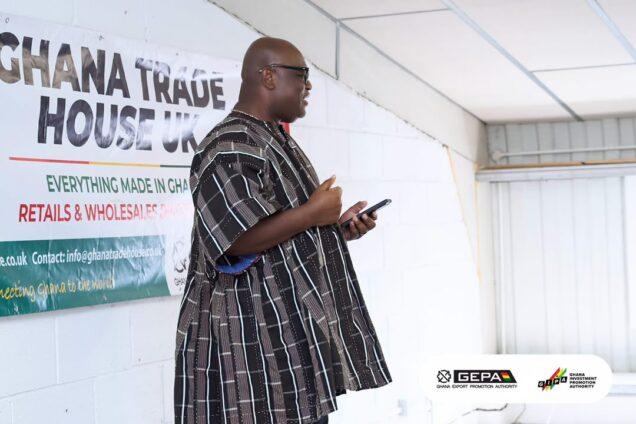
Ghana is seeking to reposition itself as one of West Africa’s most competitive investment destinations following the enactment of a sweeping legal reform that transforms the Ghana Investment Promotion Centre (GIPC) into the Ghana Investment Promotion Authority (GIPA), broadening its mandate and introducing a more investor-oriented regulatory framework.
Speaking at the official opening of the Ghana Trade House in London, Chief Executive Officer of GIPA, Simon Madjie, said the Authority’s new legal architecture would significantly improve the efficiency of investment facilitation by reducing administrative bottlenecks, accelerating business registration processes and delivering fully digitalised services to investors.
The reforms come as governments across Africa compete aggressively for foreign direct investment (FDI), with policymakers increasingly recognising that institutional efficiency, regulatory certainty and aftercare services have become just as important as tax incentives in attracting long-term capital.
President John Dramani Mahama signed the Ghana Investment Promotion Authority Act, 2026 (Act 1173) into law in July, formally replacing the Ghana Investment Promotion Centre with the Ghana Investment Promotion Authority. Beyond a change in name, the legislation substantially expands the institution’s responsibilities to attract, facilitate, promote and retain investments while supporting the international expansion of Ghanaian-owned enterprises.
According to Mr. Madjie, the legislation provides the Authority with stronger legal backing to deliver faster and more responsive services to both domestic and international investors.
“The new legislation has strengthened GIPA’s mandate, enabling it to better support both local and foreign investors through simplified registration processes, fully digitalised services and faster turnaround times.”
The emphasis on digitalisation reflects a broader global trend in investment promotion, where investors increasingly expect government agencies to offer end-to-end online services that minimise paperwork, shorten approval timelines and improve transparency.
For multinational corporations evaluating investment destinations, the speed and predictability of regulatory processes often influence location decisions alongside macroeconomic stability, market size and labour availability. By simplifying procedures, Ghana hopes to improve its standing in the regional competition for manufacturing, logistics, technology and export-oriented investments.
One of the most significant elements of the new legal framework is its alignment with the African Continental Free Trade Area (AfCFTA), whose secretariat is headquartered in Accra.
The legislation reportedly removes blanket minimum capital requirements for most enterprises, a move expected to lower barriers for investors and encourage greater participation by small and medium-sized businesses, startups and regional companies seeking to establish operations in Ghana.
The reforms also signal a shift in Ghana’s investment strategy—from merely attracting capital to building a comprehensive investment ecosystem that supports investors throughout the entire project lifecycle, including expansion and reinvestment.
Investment promotion agencies worldwide are increasingly judged not simply by the amount of FDI they attract but by their ability to retain investors, resolve operational challenges and encourage existing businesses to expand. Repeat investment from companies already operating in a country is often considered one of the strongest indicators of investor confidence.
The launch of the Ghana Trade House in London complements this strategy by providing a commercial platform to showcase Ghanaian products and deepen trade and investment links with the United Kingdom.
Beyond promoting exports, such trade houses can serve as investment gateways by connecting international businesses with opportunities in Ghana’s manufacturing, agribusiness, mining, technology and services sectors.
For Ghana, the UK remains an important source of investment and trade. Strengthening commercial engagement through dedicated trade promotion infrastructure could help diversify investment inflows while expanding market access for Ghanaian businesses seeking international growth.
The reforms also come at a time when Ghana is pursuing broader economic stabilisation measures under its IMF-supported programme, with policymakers seeking to restore macroeconomic confidence while stimulating private sector-led growth.
Improving the investment climate is expected to play a central role in that strategy. Stronger FDI inflows can provide capital for industrial development, create employment opportunities, introduce new technologies and generate export earnings without adding to the country’s public debt burden.
However, analysts note that legislative reforms alone may not be sufficient to transform Ghana’s investment landscape. Investors continue to monitor macroeconomic stability, exchange rate predictability, energy reliability, contract enforcement, land administration and the consistency of policy implementation.
The effectiveness of the new GIPA framework will therefore depend on how efficiently the Authority translates its expanded legal mandate into measurable improvements in investor experience.
If successfully implemented, the reforms could strengthen Ghana’s reputation as a regional investment hub and reinforce its ambition to become a preferred gateway for companies seeking access to the AfCFTA’s single African market.
As competition for international investment intensifies across emerging markets, Ghana’s latest institutional reforms suggest the country is placing greater emphasis on regulatory efficiency and investor service quality as critical drivers of long-term economic transformation.
Written by
Liwalmor M-Moadan
M-Moadan is dedicated journalist committed to delivering accurate, timely, and impactful news. Passionate about uncovering the facts, telling meaningful stories, and keeping the public informed with integrity and professionalism.
Related Stories

Executive Director of VAST Ghana secures his second term on Movendi international Board
Mr Labram Musah Massawudu, Executive Director of Vision for Accelerated Sustainable Development Ghana (VAST Ghana), has been re-elected to the International...
Executive Director of VAST Ghana secures his second term on Movendi International Board of
Mr.Labram Musah Massawudu, Executive Director of Vision for Accelerated Sustainable Development Ghana (VAST Ghana), has been re-elected to the International...

Global South Must turn independence into Economic strength - Prof. Opoku-Agyemang
Ghana’s Vice President, Professor Jane Naana Opoku-Agyemang, has urged developing countries to focus on building stronger economies and institutions to make...
Comments (0)
No comments yet. Be the first to share your thoughts.