Star Oil cuts petrol below GH¢15 as Ghana fuel retailers begin August price reset
Liwalmor M-Moadan
Journalist
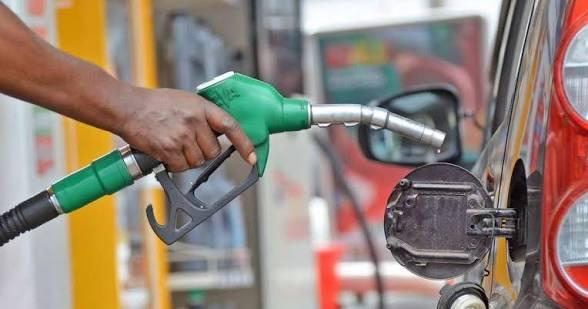
Some Oil Marketing Companies (OMCs) began reviewing petroleum product prices on Monday, August 17, with Star Oil emerging as one of the first large retailers to announce a reduction.
The company lowered petrol from GH¢15.49 to GH¢14.97 per litre, a reduction of GH¢0.52, or about 3.4 per cent. Diesel, however, remained unchanged at GH¢16.97 per litre.
The adjustment provides modest relief to motorists but also highlights the increasingly divergent forces shaping Ghana’s fuel market: international product prices, crude oil volatility, exchange-rate movements and competition among retailers.
The National Petroleum Authority (NPA) has set the minimum price floor for petrol at GH¢13.92 per litre for the second pricing window of August, down GH¢0.61, or 4.2 per cent, from GH¢14.53 in the preceding window.
Diesel has moved in the opposite direction. Its floor increased GH¢0.22 from GH¢14.97 to GH¢15.19 per litre, while the LPG floor declined marginally from GH¢11.06 to GH¢10.98 per kilogramme.
Star Oil’s GH¢14.97 petrol price therefore remains GH¢1.05 above the regulatory floor, illustrating an important feature of Ghana’s deregulated downstream market: a lower NPA floor does not automatically translate into an equivalent reduction at the pump.
The floor represents the minimum threshold rather than a mandated retail price. Final pump prices also incorporate premiums charged by international oil trading companies, operating margins of bulk importers and distributors, and margins retained by marketers and dealers.
That distinction will be central to how much of the latest reduction ultimately reaches households.
Joy Business checks on Monday morning indicated that market leader GOIL had yet to adjust its pump prices, while TotalEnergies had also maintained existing prices. Some OMCs indicated that decisions could still be taken later in the day.
The response of larger retailers will be closely watched because aggressive reductions by one operator can force competitors to sacrifice margins to protect market share, particularly among price-sensitive commercial drivers and high-volume consumers.
Petrol offers relief, diesel remains pressure point
The economics of the latest window are mixed.
The Chamber of Oil Marketing Companies (COMAC) had projected petrol prices could decline by as much as 2.90 per cent, while diesel could increase by about 1.39 per cent. LPG was projected to decline by roughly 0.93 per cent.
Those projections reflected divergent movements in international refined-product markets.
Average crude oil prices increased 2.02 per cent to about US$90.41 a barrel in mid-August, while international diesel prices rose 2.86 per cent. Petrol and LPG prices, by contrast, declined 5.46 per cent and 2.54 per cent respectively, according to COMAC.
The divergence matters for Ghana because diesel has a disproportionately large influence on the productive economy.
Commercial transport operators, haulage companies, manufacturers, construction firms, mining businesses and companies relying on generators are significant diesel consumers. Sustained diesel prices therefore feed more directly into freight and operating costs than changes in petrol alone.
That makes Star Oil’s decision to maintain diesel at GH¢16.97 significant even as petrol falls.
Government has already intervened in the diesel market by temporarily reducing the regulatory margin by GH¢2 per litre for one month, an attempt to cushion consumers from the impact of higher international prices.
The intervention had helped bring the diesel floor sharply below the level prevailing before the measure was introduced. Without that cushion, pressure on diesel consumers could have been considerably stronger.
Cedi becomes crucial variable
Foreign exchange will also determine whether motorists receive further relief.
Ghana imports a significant proportion of its refined petroleum requirements, meaning movements in the cedi directly affect the local currency cost of fuel purchases.
COMAC said the cedi had weakened to an average of about GH¢11.80 against the dollar between July 27 and August 11 before strengthening, with the Bank of Ghana rate reaching GH¢10.98 to the dollar on August 14. The industry body said sustained appreciation could provide additional relief in subsequent pricing windows.
The combination of a stronger currency and falling international petrol prices would normally create room for further reductions. But elevated crude prices and geopolitical risks remain capable of quickly reversing those gains.
Brent crude was trading around US$88.50 a barrel on August 14 after hovering close to US$90 in recent days, reflecting concerns about potential global supply disruptions.
For policymakers, the immediate benefit of cheaper petrol extends beyond household transport budgets.
Fuel is an important component of Ghana’s inflation transmission mechanism. Sustained reductions can moderate transport costs and inflation expectations, while prolonged increases — particularly in diesel — can spread through supply chains into food, manufactured goods and services.
The second August pricing window therefore presents a complicated picture: petrol consumers are beginning to see relief, but diesel-intensive businesses remain exposed to elevated energy costs.
Star Oil’s move has now shifted attention to the rest of the industry. If larger OMCs follow with substantial petrol reductions, competitive pressure could push average pump prices lower during the remainder of August.
But with retailers permitted to price above the NPA floor to reflect their cost structures and margins, the size of the benefit ultimately reaching consumers will depend not only on international markets and the cedi, but increasingly on how aggressively Ghana’s fuel retailers are prepared to compete.
Written by
Liwalmor M-Moadan
M-Moadan is dedicated journalist committed to delivering accurate, timely, and impactful news. Passionate about uncovering the facts, telling meaningful stories, and keeping the public informed with integrity and professionalism.
Related Stories

Executive Director of VAST Ghana secures his second term on Movendi International Board of
Mr.Labram Musah Massawudu, Executive Director of Vision for Accelerated Sustainable Development Ghana (VAST Ghana), has been re-elected to the International...

Global South Must turn independence into Economic strength - Prof. Opoku-Agyemang
Ghana’s Vice President, Professor Jane Naana Opoku-Agyemang, has urged developing countries to focus on building stronger economies and institutions to make...
Executive Director of VAST Ghana wins second term on Movendi International Board
Mr. Labram Musah Massawudu, Executive Director of Vision for Accelerated Sustainable Development Ghana (VAST Ghana), has been re-elected to the International...
Comments (0)
No comments yet. Be the first to share your thoughts.