South African Banks Brace for US-Iran War Fallout as Fitch Sees Strong Capital, Liquidity Buffers
Liwalmor M-Moadan
Journalist
South Africa’s largest banks appear well placed to withstand the economic fallout from the US-Iran conflict, with strong earnings, diversified franchises and sizeable capital and liquidity buffers providing protection against a combination of higher inflation, tighter monetary policy and potentially weaker borrower finances.
Fitch Ratings said Standard Bank, Absa and FirstRand — alongside the country’s other major banking groups and their holding companies — have sufficient financial resilience to navigate the deterioration in the operating environment triggered by geopolitical tensions.
The assessment comes as the conflict transmits fresh pressures into South Africa’s economy through higher energy prices, inflation and interest rates, creating a more difficult environment for consumers, businesses and lenders.
South Africa’s headline inflation accelerated to 5.0% in June 2026 from 3% in February, highlighting how quickly external geopolitical shocks can feed into domestic prices.
The South African Reserve Bank responded to the inflationary pressures by raising the repo rate by 25 basis points to 7% in May 2026.
Fitch forecasts a further 25 basis-point increase by the end of 2026 before an expected 50 basis-point reduction by the end of 2027.
The ratings agency expects this interest-rate trajectory, combined with a modest acceleration in economic activity, to keep banking-sector profitability broadly stable in the near term.
Real gross domestic product growth is forecast at 1.3% in 2026, compared with 1.1% in 2025.
For South Africa’s banks, however, the interest-rate environment presents a complicated trade-off.
Higher rates can initially support net interest income by widening the spread between what banks earn on loans and what they pay depositors. But prolonged monetary tightening can eventually become damaging as households struggle with mortgage, vehicle and unsecured debt repayments, while businesses face higher financing costs.
That makes asset quality one of the most important indicators to watch as the geopolitical shock works its way through the economy.
According to Fitch, impaired loan ratios remain elevated but are on a declining path and are adequately covered by specific loan-loss allowances, taking into account tangible collateral and prospects for recovering outstanding credit.
More importantly, pre-impairment operating profits provide a substantial buffer against loan impairment charges.
This is particularly significant during periods of economic uncertainty because profitability represents an important first line of defence against deteriorating credit conditions. Strong operating earnings allow banks to absorb additional provisions and credit losses before those pressures begin to materially erode regulatory capital.
South Africa’s major banks also enter the period with considerable capital headroom.
Common equity Tier 1 capital ratios stood between 12.0% and 13.1% at the end of 2025, excluding unappropriated profits, with end-first-quarter 2026 figures used for Investec Limited.
Those ratios remain comfortably above regulatory minimum requirements, providing banks with additional capacity to absorb unexpected losses if the economic fallout from the conflict becomes more severe.
Liquidity represents another important layer of protection.
At the end of May 2026, the banking sector’s net stable funding ratio stood at 117%, while its liquidity coverage ratio reached 161%.
The figures indicate that banks have significant buffers against both longer-term funding disruptions and short-term liquidity pressures — an increasingly important consideration during periods when geopolitical uncertainty can trigger abrupt changes in global capital flows and investor risk appetite.
The resilience is particularly important given the nature of the shock facing South Africa.
The US-Iran conflict is transmitting pressure into economies far removed from the battlefield through oil prices, inflation, financial markets, currencies and interest rates.
As a significant importer of petroleum products and an economy closely connected to international financial markets, South Africa remains exposed to both commodity-price and financial-market transmission channels.
Its major banks, however, benefit from diversified operations spanning retail banking, corporate and investment banking, insurance, wealth management and operations across several African markets.
Such diversification reduces dependence on a single business line or domestic market and can help offset weakness in one segment with stronger performance elsewhere.
Regulatory reforms are meanwhile adding another layer of financial protection.
The country’s five major banking groups have begun issuing a new debt class known as FLAC, designed to provide additional loss-absorbing capacity during the resolution of a troubled bank.
The instrument can absorb losses and potentially be converted into regulatory capital during a bank resolution, reducing the likelihood that taxpayers would ultimately be required to shoulder the financial burden of rescuing a systemically important institution.
Implementation is being phased in over six years. Banks are expected to meet 60% of their base FLAC requirement by the end of 2028 before achieving full compliance by the end of 2031.
The reforms strengthen a regulatory framework that is increasingly focused not only on preventing bank failures but also on ensuring that institutions can be resolved without destabilising the wider financial system.
Fitch’s confidence in the sector also follows an improvement in South Africa’s sovereign credit profile.
The ratings agency upgraded the banks’ and their bank holding companies’ Long-Term Issuer Default Ratings to ‘BB’/Stable from ‘BB-’/Stable in June 2026 following an upgrade of the sovereign rating.
According to Fitch, the move reflected an easing of the sovereign constraint on the banks’ standalone credit profiles.
The Stable Outlooks assigned to the banks’ Long-Term Issuer Default Ratings mirror that of South Africa’s sovereign rating, illustrating the close relationship between the strength of the banking system and the country’s broader fiscal and economic position.
Yet Fitch’s assessment should be interpreted as evidence of resilience rather than immunity from the geopolitical shock.
A prolonged conflict that keeps global energy prices elevated could maintain pressure on inflation, forcing monetary policy to remain restrictive for longer. That could weaken household disposable incomes, raise corporate financing costs and eventually translate into higher credit impairments.
A deterioration in global investor sentiment could also generate volatility in the rand and increase external financing pressures.
For now, however, South Africa’s largest lenders enter this period of geopolitical uncertainty with strong franchises, healthy profitability and sizeable capital and liquidity cushions.
The combination gives them significant capacity to absorb economic shocks without immediately threatening financial stability.
For investors and policymakers, the crucial variable will be the duration of the US-Iran conflict and whether its inflationary effects prove temporary or become embedded in the global economy.
For South Africa’s banks, Fitch’s assessment suggests that although the external environment has become markedly more challenging, their balance sheets provide considerable financial firepower to navigate the turbulence.
Written by
Liwalmor M-Moadan
M-Moadan is dedicated journalist committed to delivering accurate, timely, and impactful news. Passionate about uncovering the facts, telling meaningful stories, and keeping the public informed with integrity and professionalism.
Related Stories
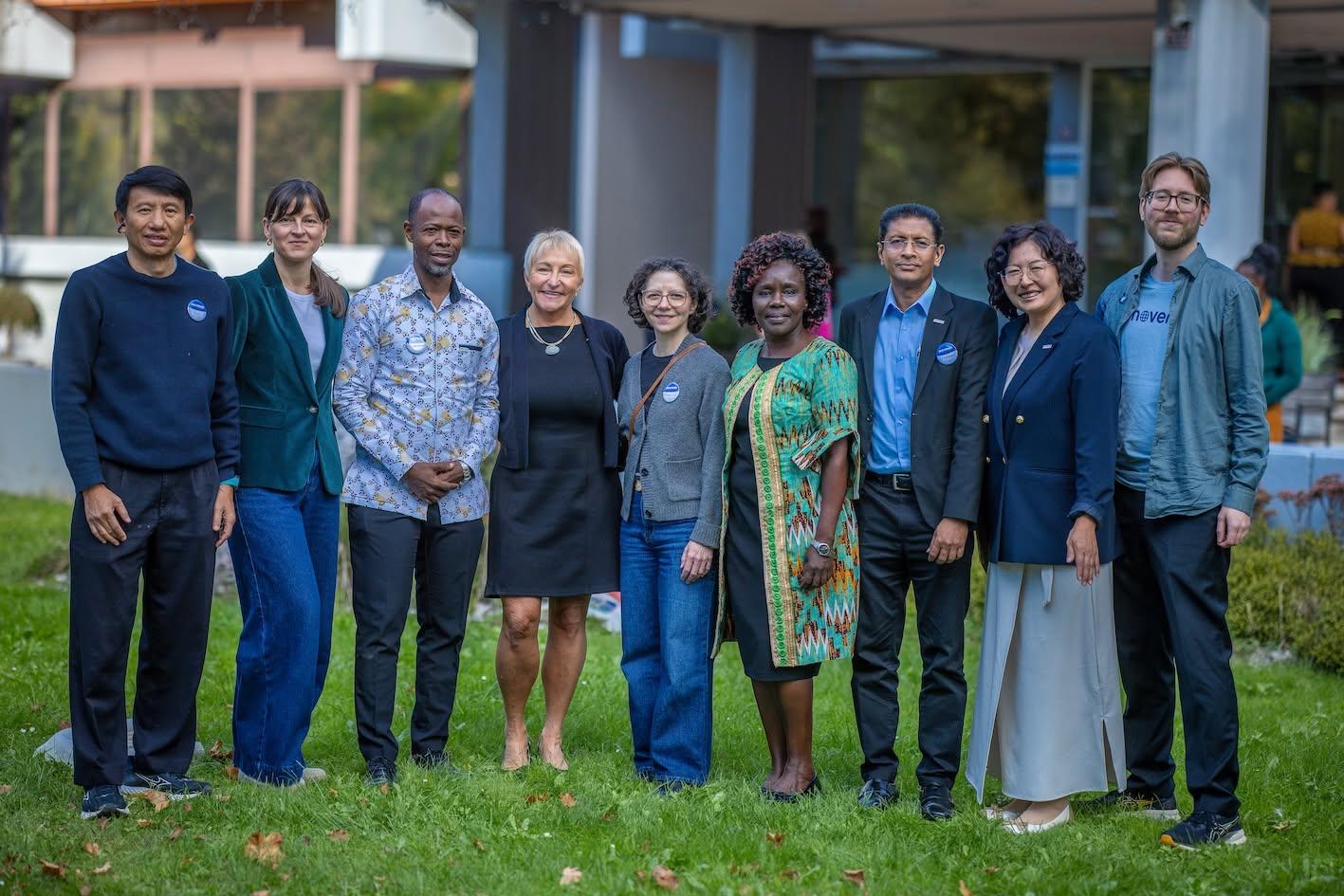
Executive Director of VAST Ghana secures his second term on Movendi international Board
Mr Labram Musah Massawudu, Executive Director of Vision for Accelerated Sustainable Development Ghana (VAST Ghana), has been re-elected to the International...
Executive Director of VAST Ghana secures his second term on Movendi International Board of
Mr.Labram Musah Massawudu, Executive Director of Vision for Accelerated Sustainable Development Ghana (VAST Ghana), has been re-elected to the International...
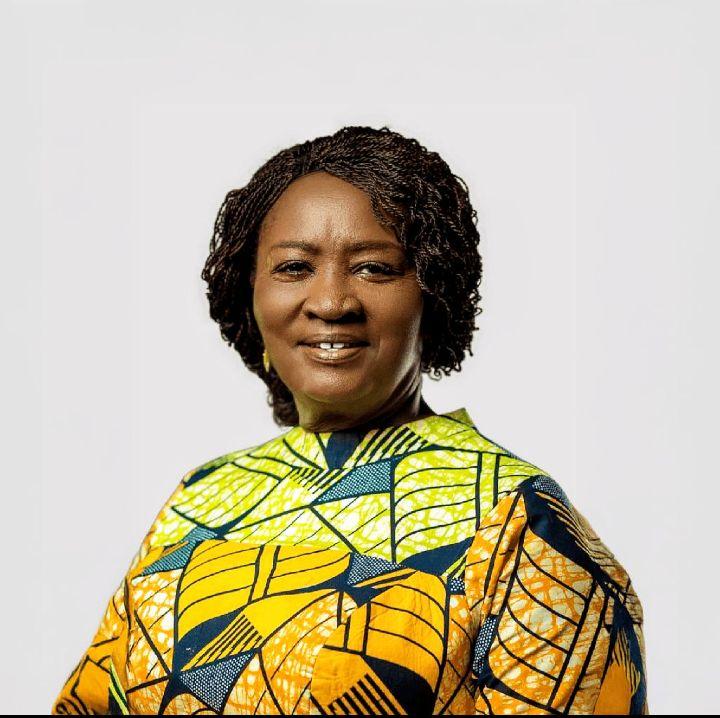
Global South Must turn independence into Economic strength - Prof. Opoku-Agyemang
Ghana’s Vice President, Professor Jane Naana Opoku-Agyemang, has urged developing countries to focus on building stronger economies and institutions to make...
Comments (0)
No comments yet. Be the first to share your thoughts.