Ronaldo Signals Final Season as 1,000-Goal Chase Frames Last Chapter of a Global Football Career
Liwalmor M-Moadan
Journalist
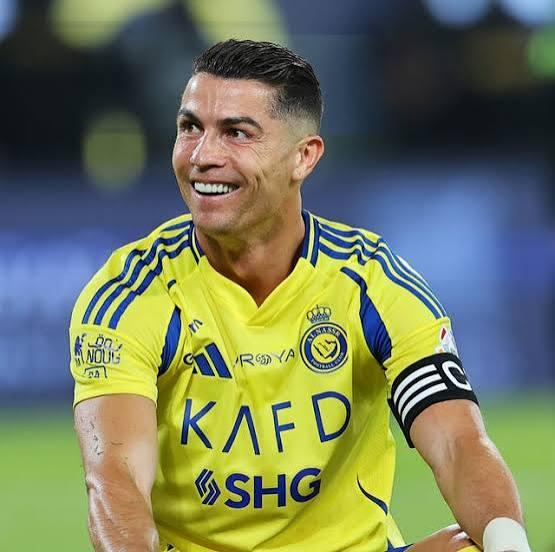
Cristiano Ronaldo has offered his clearest indication yet that the 2026/27 season could be his last in professional football, setting the stage for the closing chapter of a career that has transformed the economics, commercial reach and competitive standards of the global game.
The Portuguese forward, now 41, suggested that retirement is increasingly becoming a reality as he approaches the end of his contract with Saudi Pro League side Al-Nassr.
“This is probably my last year of football, and I want to leave a spectacular legacy,” Ronaldo said.
The statement is significant because Ronaldo has spent much of the latter stages of his career resisting attempts to place a timetable on his retirement. His latest comments suggest that the question is shifting from whether he can continue playing to how he wants one of football’s most celebrated careers to end.
Ronaldo’s immediate objective is likely to be dominated by one final landmark: the pursuit of 1,000 senior career goals.
Already the most prolific goalscorer in the history of men’s international football, the Portugal captain has continued adding to a scoring record built across more than two decades in Portugal, England, Spain, Italy and Saudi Arabia.
Reaching 1,000 goals would provide a symbolic conclusion to a career defined by an almost relentless accumulation of individual and team records.
But Ronaldo’s legacy extends considerably beyond statistics.
His career has coincided with football’s transformation into an increasingly global entertainment business, where the commercial value of individual players can rival that of the institutions they represent.
From Manchester United and Real Madrid to Juventus and eventually Al-Nassr, Ronaldo has repeatedly demonstrated the ability of a single footballer to influence television audiences, sponsorship interest, merchandise sales and the international profile of a league.
That influence became particularly visible following his move to Saudi Arabia.
Ronaldo’s arrival at Al-Nassr in late 2022 represented one of the most consequential transfers in the development of Saudi football. It preceded an unprecedented recruitment drive that brought several established European stars into the Saudi Pro League as the kingdom sought to build a more internationally competitive domestic football industry.
His presence therefore became part of something considerably larger than the sporting ambitions of one club.
Saudi Arabia has invested heavily in football as part of a broader strategy to diversify its economy and expand its influence in global sport. Ronaldo provided the emerging league with an instantly recognisable global figure capable of attracting audiences that previously had little engagement with Saudi domestic football.
That commercial dimension will form an important part of assessing his career.
Few footballers have developed a personal brand with comparable international reach. Ronaldo’s following across digital platforms has made him attractive not only to football clubs but also to multinational advertisers seeking access to a vast global audience.
Yet the foundation of that commercial power has always been sporting performance.
Ronaldo emerged at Sporting CP before joining Manchester United in 2003, where he developed from an exciting winger into one of football’s most decisive attacking players.
His move to Real Madrid in 2009 elevated that trajectory further.
In Spain, Ronaldo became the club’s record goalscorer and played a central role in an era of European dominance. His rivalry with Lionel Messi also became one of the defining sporting narratives of the 21st century, dividing supporters while simultaneously expanding global interest in Spanish football.
A subsequent move to Juventus demonstrated his continuing commercial and sporting appeal before he returned to Manchester United and later departed European football for Saudi Arabia.
Across that journey, Ronaldo accumulated five Ballon d’Or awards, Champions League titles and domestic championships in England, Spain and Italy.
His international career has been equally important to his legacy.
For Portugal, Ronaldo became the central figure of a generation that transformed the country from a respected European football nation into a consistent contender for major honours.
Portugal’s victory at Euro 2016 remains one of the defining achievements of his international career, while subsequent success in the UEFA Nations League further strengthened his standing.
The possibility of retirement after the 2026/27 season therefore carries significance well beyond Al-Nassr.
Football has already begun transitioning away from the generation dominated by Ronaldo and Messi, with younger stars increasingly becoming the commercial and sporting faces of the game.
Ronaldo’s eventual departure would accelerate that transition.
There is nevertheless considerable football still to be played before that moment arrives.
His ambition to finish with what he describes as a “spectacular legacy” suggests that the final season will not simply be ceremonial. Ronaldo has built much of his reputation around longevity, physical preparation and an unwillingness to accept declining expectations with age.
The pursuit of 1,000 goals gives that final phase a measurable target.
Whether he reaches it or not, Ronaldo’s place within football history is already secure.
The more consequential question is how the sport evaluates the scale of his influence after he leaves it.
His career has connected elite sporting performance with the emergence of the footballer as a global commercial institution. It has stretched across different leagues, different generations and a profound transformation in the economics of professional football.
Now, more than two decades after making his senior debut, Ronaldo appears finally prepared to contemplate the end.
And if the 2026/27 season does prove to be his last, football will not merely be witnessing the retirement of one of its greatest goalscorers.
It will be closing one of the most commercially powerful and culturally influential chapters in the modern history of the game.
Written by
Liwalmor M-Moadan
M-Moadan is dedicated journalist committed to delivering accurate, timely, and impactful news. Passionate about uncovering the facts, telling meaningful stories, and keeping the public informed with integrity and professionalism.
Related Stories
Ghana Premier League Champions Since 2000: A Look at the Clubs That Have Ruled Ghanaian Football
The Ghana Premier League has produced some of the most memorable champions in the history of Ghanaian football, with several clubs leaving their mark on the...
US$50,000 Black Queens Per Diem Row Exposes Fault Lines in Ghana’s Sports Financing System
Ghana’s Ministry of Sports and Recreation has pushed back against claims of unpaid allowances to the Black Queens, producing payment records that it says show...
Cameroon hands Ghana first WAFCON defeat, putting Black Queens under qualification pressure
Ghana’s Black Queens have suffered their first setback at the 2026 Women’s Africa Cup of Nations (WAFCON), losing 1-0 to Cameroon in a result that...
Comments (0)
No comments yet. Be the first to share your thoughts.