US$50,000 Black Queens Per Diem Row Exposes Fault Lines in Ghana’s Sports Financing System
Liwalmor M-Moadan
Journalist
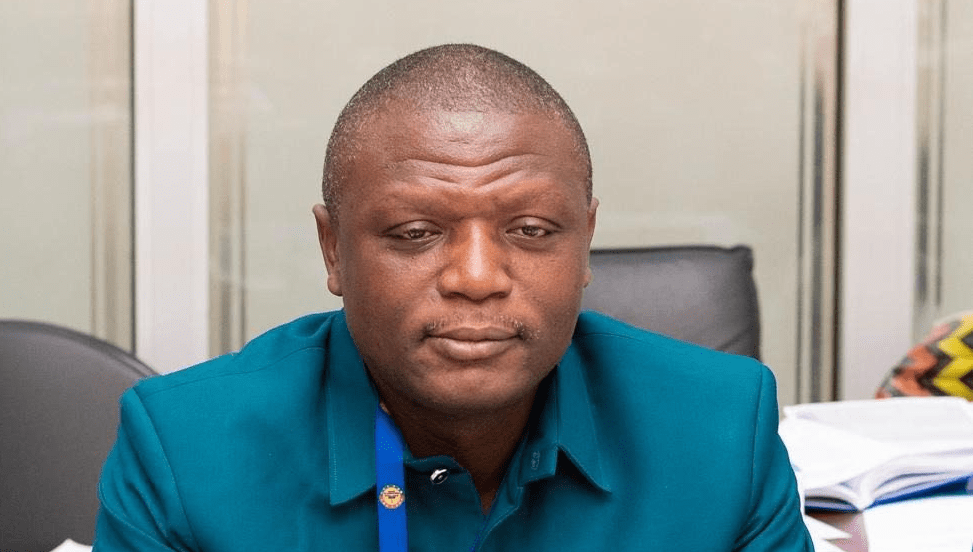
Ghana’s Ministry of Sports and Recreation has pushed back against claims of unpaid allowances to the Black Queens, producing payment records that it says show US$50,000 was disbursed to 25 players during their stay in Morocco — an intervention that has shifted the controversy from whether money was paid to the more complicated question of what the national team was actually promised.
The dispute comes at a sensitive moment for Ghana’s senior women’s national team, with players publicly raising concerns about outstanding per diems, bonuses and welfare support during their 2026 Women’s Africa Cup of Nations campaign.
The Ministry insists that all approved per diems have been settled, while acknowledging that a winning bonus earned against Cape Verde is still being processed. It has separately rejected the players’ expectation of qualification-related bonuses, saying those payments were never approved as government obligations.
“For the avoidance of doubt, Government does not owe the Black Queens any outstanding per diem,” the Ministry said.
Payment records accompanying the government’s response indicate that players received US$1,300 each for the period from July 26 to August 7.
For 25 players, that translates into US$32,500.
A second payment covering August 8 to August 14 amounted to US$700 per player, adding another US$17,500 and taking total per diem payments to US$50,000.
The structure implies a daily allowance of US$100 and cumulative payments of US$2,000 for each player across the 20-day period.
The Ministry said the first payment was made in advance on July 29, while the second was made on August 11 after Ghana’s quarter-final exit necessitated a longer stay in Morocco as the team entered the FIFA Women’s World Cup qualification play-in pathway.
“Accordingly, as of 12 August 2026, Government has no outstanding per diem obligation to the Black Queens,” the Ministry said.
The accounting is clearer than the dispute
On the narrow question of per diems, the government’s documentation strengthens its position. Signed allowance sheets can provide an auditable trail showing what was paid, to whom and for what period.
But the dispute illustrates an important distinction in public finance: proof that one category of expenditure has been settled does not necessarily resolve claims relating to another.
The Black Queens’ concerns extend beyond per diems to winning and qualification bonuses as well as welfare arrangements.
The Ministry itself acknowledges that the team earned a winning bonus after defeating Cape Verde during the group stage.
That money had not reached players at the time of the Ministry’s statement because, according to government, winning bonuses follow a different payment process from per diems.
“The winning bonus earned from the victory over Cape Verde is therefore being processed in accordance with the established procedure,” the Ministry said.
Winning bonuses are transferred directly into the accounts of eligible players and officials after documentation, statutory deductions and other public financial procedures are completed.
The distinction is bureaucratically important but potentially less convincing from the perspective of athletes.
For a player, an approved bonus that remains in the payment system is still money not yet received. For the government, however, an approved liability awaiting processing is fundamentally different from an unpaid per diem that should already have been disbursed.
That gap between administrative accounting and player expectations sits at the heart of the controversy.
Qualification bonuses expose bigger governance problem
The sharper disagreement concerns bonuses connected to WAFCON qualification and Ghana’s matches against Egypt.
The Ministry says the existing sports financing framework does not provide for a separate bonus simply for qualifying for WAFCON through the home-and-away qualification process.
“There was no Government approval for the payment of winning bonuses for the WAFCON qualifying matches against Egypt and this position was communicated to the Ghana Football Association,” it said.
“It is therefore inaccurate to characterise a payment which was neither approved nor established as an entitlement as an outstanding Government obligation.”
This is where the issue moves beyond an argument about arrears into the governance of national-team financing.
If government did not approve a payment, then from a strict public-finance perspective it is difficult to classify the amount as a state liability.
But that does not fully answer another important question: whether players were led to believe by officials, team management or football authorities that such bonuses would be paid.
If those expectations existed, the controversy points to a coordination problem between the Ministry, Ghana Football Association and national-team management.
Before players enter camp, there should ideally be a written compensation framework specifying daily allowances, winning bonuses, qualification bonuses, progression incentives and payment timelines.
Without such clarity, verbal expectations can evolve into financial disputes, while government officials are left defending expenditure rules after competitions have started.
Small expenditure, bigger institutional risk
The US$50,000 at the centre of the per diem argument is relatively small in the context of Ghana’s national budget. Its significance lies instead in what the episode says about financial governance in elite sport.
National-team expenditure ultimately involves public money. That means compensation must satisfy two competing requirements: athletes should be rewarded promptly and predictably, while government must maintain expenditure controls, documentation and accountability.
Failure on either side carries costs.
Delayed payments can damage morale and create distractions during competitions. Loosely defined promises, meanwhile, can create unbudgeted liabilities and expose government to expenditure pressures that were never formally authorised.
The solution is therefore not simply faster payment. It is better financial architecture.
Ghana could establish competition-specific compensation agreements before major tournaments, formally acknowledged by players, the GFA and the Ministry. Such agreements could identify approved entitlements and distinguish them from discretionary rewards.
That would make the eventual cost of tournament success more predictable for government while reducing uncertainty for players.
Welfare dispute remains
The disagreement also stretches into player welfare.
The Black Queens have raised concerns about management support, mental health and general well-being during their campaign.
The Ministry counters that the team has an extensive support structure involving a Team Manager, Team Administrator, two physiotherapists, a medical doctor, nurse, dietician, chef, two management team members and additional technical officials.
But the presence of personnel does not necessarily settle whether players consider the support adequate.
Modern elite sport increasingly treats psychological support, recovery, nutrition and player welfare as performance infrastructure rather than supplementary expenditure.
For Ghana, that matters because investment in women’s football should increasingly be judged not only by tournament allowances but by whether institutional systems allow players to perform under professional conditions.
Transparency is ultimately the stronger defence
The Ministry’s release of payment documentation is therefore important. It introduces verifiable records into what might otherwise become a contest of competing statements.
But signed payment sheets alone cannot resolve disagreement over what players believed they were entitled to receive.
That requires clarity over the approved compensation framework itself.
The Black Queens controversy should consequently become an opportunity for reform rather than another episodic argument over national-team bonuses.
“For the avoidance of doubt, Government does not owe the Black Queens any outstanding per diem,” the Ministry maintains.
Its records may substantiate that narrow claim.
The larger challenge is ensuring that, before Ghana’s national teams enter their next major competition, players, football administrators and government all have the same understanding of what success is worth and exactly when it will be paid.
Written by
Liwalmor M-Moadan
M-Moadan is dedicated journalist committed to delivering accurate, timely, and impactful news. Passionate about uncovering the facts, telling meaningful stories, and keeping the public informed with integrity and professionalism.
Related Stories
Ghana Premier League Champions Since 2000: A Look at the Clubs That Have Ruled Ghanaian Football
The Ghana Premier League has produced some of the most memorable champions in the history of Ghanaian football, with several clubs leaving their mark on the...

Ronaldo Signals Final Season as 1,000-Goal Chase Frames Last Chapter of a Global Football Career
Cristiano Ronaldo has offered his clearest indication yet that the 2026/27 season could be his last in professional football, setting the stage for the closing...
Cameroon hands Ghana first WAFCON defeat, putting Black Queens under qualification pressure
Ghana’s Black Queens have suffered their first setback at the 2026 Women’s Africa Cup of Nations (WAFCON), losing 1-0 to Cameroon in a result that...
Comments (0)
No comments yet. Be the first to share your thoughts.