Ghanaian tycoon Sam Jonah takes Nigeria to Paris arbitration over 501-hectare Abuja property dispute
Liwalmor M-Moadan
Journalist
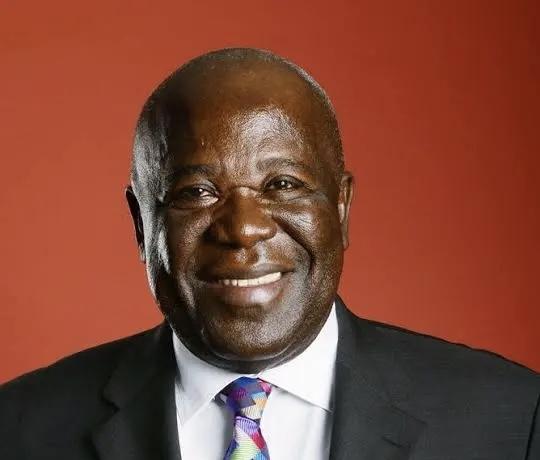
Ghanaian mining magnate Sir Sam Jonah’s investment company has escalated a long-running dispute over a 501-hectare property development in Nigeria’s capital to international arbitration in Paris, opening a potentially consequential test of contractual certainty and investor protection in Africa’s largest economy.
JonahCapital Nigeria Limited has initiated proceedings against Nigeria’s Federal Capital Development Authority (FCDA) before the International Chamber of Commerce (ICC), challenging the termination of its Development Lease Agreement covering River Park Estate in Lugbe, Abuja.
The dispute centres on competing interpretations of the duration and obligations of the development agreement governing a project conceived as one of Abuja’s largest privately developed residential communities.
River Park Estate is planned to accommodate more than 11,000 housing units and an estimated 42,000 residents across 501 hectares, alongside shopping centres, offices, healthcare facilities, places of worship and other supporting infrastructure.
The scale of the project means the dispute extends beyond a conventional property disagreement. Its resolution could have implications for housing investment, land administration and perceptions of regulatory and contractual risk in Nigeria, particularly among foreign and institutional investors considering long-term infrastructure and real estate commitments.
Nyesom Wike, Nigeria’s Minister of the Federal Capital Territory, has confirmed that arbitration proceedings have commenced.
“The other party has gone to arbitration, and we said okay, let them conclude the arbitration process,” Wike said.
At the heart of the case is disagreement over whether JonahCapital retains valid development rights over the property.
The FCDA maintains that the Development Lease Agreement signed with JonahCapital has expired, providing the legal basis for the authority to repossess the land. Wike has also argued that the FCDA has no contractual relationship with Paulo Homes Limited, which authorities say was subsequently introduced into the development.
JonahCapital contests that interpretation.
The company argues that its agreement remains valid until June 2030 and has asked the ICC tribunal to determine that the FCDA’s November 5, 2025 termination of the lease was unlawful.
The distinction is commercially significant. A finding in favour of JonahCapital could reinforce its contractual rights over a development with substantial underlying property value and potentially expose the Nigerian authorities to financial consequences depending on the remedies eventually sought and awarded.
A ruling favouring the FCDA, however, could fundamentally reshape ownership and development arrangements surrounding the estate.
Infrastructure obligations deepen dispute
JonahCapital’s case also raises a broader issue frequently confronting large African property developments: the division of infrastructure responsibilities between governments and private developers.
The company alleges that the FCDA failed to provide essential infrastructure, including roads, electricity and water, despite what JonahCapital says were obligations contained in the development agreement.
According to the developer, it was consequently forced to finance and construct some of the infrastructure itself.
For property developers, such expenditure can materially alter project economics. Large housing developments are typically structured around assumptions concerning land costs, infrastructure provision, financing expenses and the pace at which residential and commercial units can be sold.
When developers are required to absorb infrastructure costs initially expected to be borne by the state, capital requirements rise and expected returns can deteriorate substantially.
The disagreement therefore illustrates one of the central risks facing private capital involved in African urban development: projects frequently require long investment horizons while political leadership, regulatory interpretations and land administration policies can change considerably during their lifespan.
JonahCapital has further alleged that individuals and organisations that were not parties to the original development agreement subsequently asserted ownership claims over portions of River Park Estate, resulting in years of litigation and competing claims.
The developer says it resorted to international arbitration after attempts to settle the dispute through official channels and Nigeria’s domestic courts failed to produce a resolution.
It has also accused the FCDA of fencing portions of the disputed estate while arbitration proceedings were underway, an action it warned could further intensify the disagreement.
Investor confidence under scrutiny
The movement of the dispute to Paris gives the case significance beyond Nigeria’s property sector.
International arbitration clauses are commonly incorporated into major cross-border investment contracts precisely because investors seek an independent mechanism for resolving disputes involving governments and state institutions.
For Nigeria, which is seeking billions of dollars of foreign investment across energy, infrastructure, manufacturing and real estate, the handling of the River Park dispute could therefore be closely watched by international investors.
Capital-intensive projects depend heavily on predictability. Investors generally price not only conventional commercial risks but also the possibility of contract changes, regulatory intervention, land disputes and prolonged litigation.
Where those risks are perceived to be elevated, investors may demand higher returns, reduce exposure or direct capital towards jurisdictions regarded as offering stronger contractual protection.
The implications are particularly important for Nigeria’s housing sector. Rapid urbanisation and population growth have created enormous demand for housing in Abuja, Lagos and other major cities, while limited public financing means private developers are expected to supply much of the required investment.
A project capable of delivering more than 11,000 homes is therefore economically significant, particularly at a time when Nigeria faces a substantial housing deficit.
Dispute carries political history
The River Park controversy has also attracted intervention from some of Nigeria’s most prominent political figures.
Former Nigerian president Olusegun Obasanjo last year rejected claims attributed to Sir Sam Jonah that the 501 hectares had been allocated during his administration.
Obasanjo described the assertion as “absolutely untrue, fictitious, misleading and libellous,” adding another layer of controversy to the history surrounding the land.
The arbitration tribunal will ultimately have to look beyond the political exchanges and examine the contractual documentation, obligations of the parties, validity and duration of the Development Lease Agreement and circumstances surrounding its termination.
For JonahCapital, the proceedings represent an attempt to secure contractual rights it insists remain valid until 2030. For Nigerian authorities, the case concerns the government’s ability to enforce its interpretation of land and development agreements within the Federal Capital Territory.
But for investors, the stakes are wider.
The River Park case illustrates the difficult intersection between land rights, infrastructure provision, government authority and long-term private capital that continues to shape Africa’s urban development.
With billions of dollars required to close the continent’s housing and infrastructure gaps, governments increasingly depend on private and foreign capital. Yet attracting that investment requires more than offering land or development opportunities. It requires confidence that contracts will survive political transitions, disputes can be resolved predictably and investors will have credible avenues for enforcing their rights.
The ICC arbitration in Paris will not by itself settle those broader questions. But its eventual outcome could determine the fate of one of Abuja’s biggest private residential developments — and provide another closely watched measure of the contractual risks confronting investors deploying long-term capital in Nigeria.
Written by
Liwalmor M-Moadan
M-Moadan is dedicated journalist committed to delivering accurate, timely, and impactful news. Passionate about uncovering the facts, telling meaningful stories, and keeping the public informed with integrity and professionalism.
Related Stories
COCOBOD SECURES GH¢3.396BN IN LOCAL FUNDING DRIVE
Ghana's cocoa financing effort has brought in GH¢3.396 billion from local institutional investors, providing the Ghana Cocoa Board (COCOBOD) with fresh funds...


How to Save Money on a Low Income in Ghana
Saving money can feel almost impossible when your income is barely enough to cover your daily needs. For many people in Ghana, the problem is not that they do...

How to Create a Personal Budget That Actually Works
Creating a personal budget sounds simple: write down your income, list your expenses, and make sure you do not spend more than you earn. But in reality, many...
Comments (0)
No comments yet. Be the first to share your thoughts.