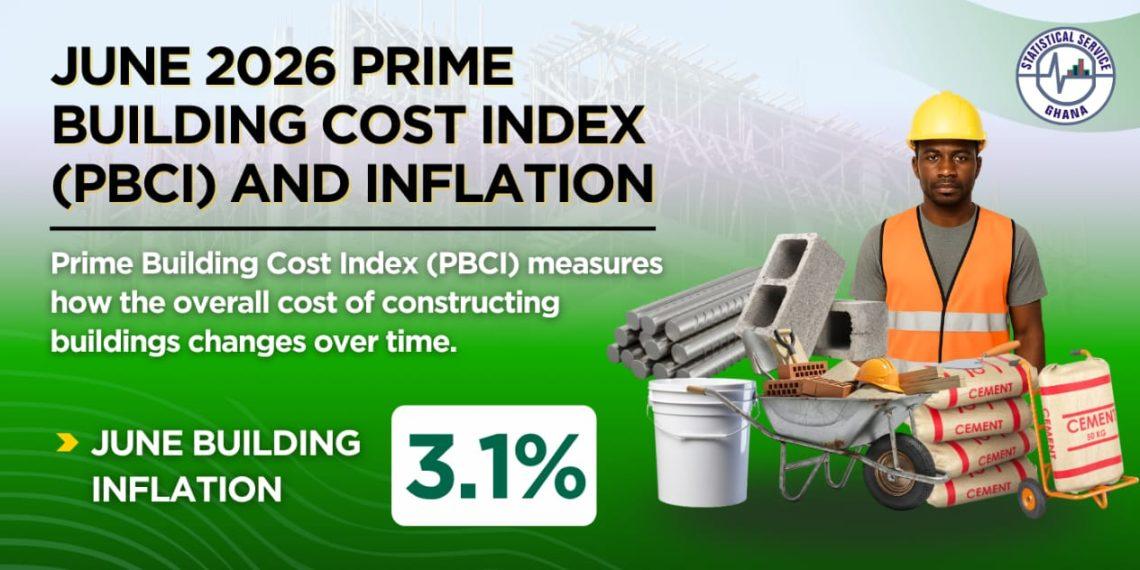
Ghana’s building-cost inflation edged higher for the second straight month in June as soaring machinery, equipment and installation-material costs outweighed declines in cement, steel and labour prices, highlighting new cost pressures for developers despite a broader easing in construction inflation.
The Prime Building Cost Index (PBCI) rose 3.10% year-on-year in June, up from 2.70% in May, according to the Ghana Statistical Service. While the increase marks a modest acceleration, it remains far below the 18.10% recorded a year earlier, signalling that inflationary pressures across the construction sector have eased significantly.
The main source of concern shifted away from traditional building materials toward machinery and specialised equipment. Plant and equipment costs surged 16.00% year-on-year, accelerating sharply from 9.80% in May, while prices climbed 5.10% during June alone. Despite representing only 4.00% of the index, the category accounted for more than a fifth of the increase in overall building inflation.
Materials, which carry the largest weighting in the index, also recorded higher inflation at 3.90%, driven by steep increases in plumbing materials, roofing sheets, electrical installations and glazing products.
However, the report also delivered positive news for builders at the structural phase of construction. Cement prices fell 13.00%, steel declined 8.60%, while aggregate and timber prices also eased, helping to moderate overall project costs.
Labour costs provided additional relief. Overall labour inflation remained negative at -2.60%, reflecting lower wages for both skilled and unskilled construction workers and offsetting part of the increase in machinery and material costs.
The contrasting trends suggest developers may benefit from lower costs during the early stages of construction but continue to face significant financial pressure as projects move into roofing, electrical, plumbing and finishing works, where imported equipment and specialised materials dominate expenditure.
For contractors, the data underscores the importance of reviewing procurement strategies and incorporating price-adjustment clauses into contracts as cost pressures become increasingly concentrated in specific input categories rather than across the entire construction sector.
The Ghana Statistical Service said the latest figures indicate that construction inflation has largely stabilised after a year of rapid disinflation, but warned that persistent increases in machinery and installation costs remain a key risk to project budgets and public infrastructure delivery.
Written by
Liwalmor M-Moadan
M-Moadan is dedicated journalist committed to delivering accurate, timely, and impactful news. Passionate about uncovering the facts, telling meaningful stories, and keeping the public informed with integrity and professionalism.
Related Stories
President Mahama Sets 2030 Deadline for Ghana’s Raw Mineral Exports
Ghana has set its sights on a major change in the way it earns from its mineral resources, with President John Dramani Mahama announcing a 2030 target to end...

Executive Director of VAST Ghana secures his second term on Movendi international Board
Mr Labram Musah Massawudu, Executive Director of Vision for Accelerated Sustainable Development Ghana (VAST Ghana), has been re-elected to the International...
Executive Director of VAST Ghana secures his second term on Movendi International Board of
Mr.Labram Musah Massawudu, Executive Director of Vision for Accelerated Sustainable Development Ghana (VAST Ghana), has been re-elected to the International...
Comments (0)
No comments yet. Be the first to share your thoughts.