Letshego’s Profit Surge Signals Strategic Shift Towards Full-Service Retail Banking
Liwalmor M-Moadan
Journalist
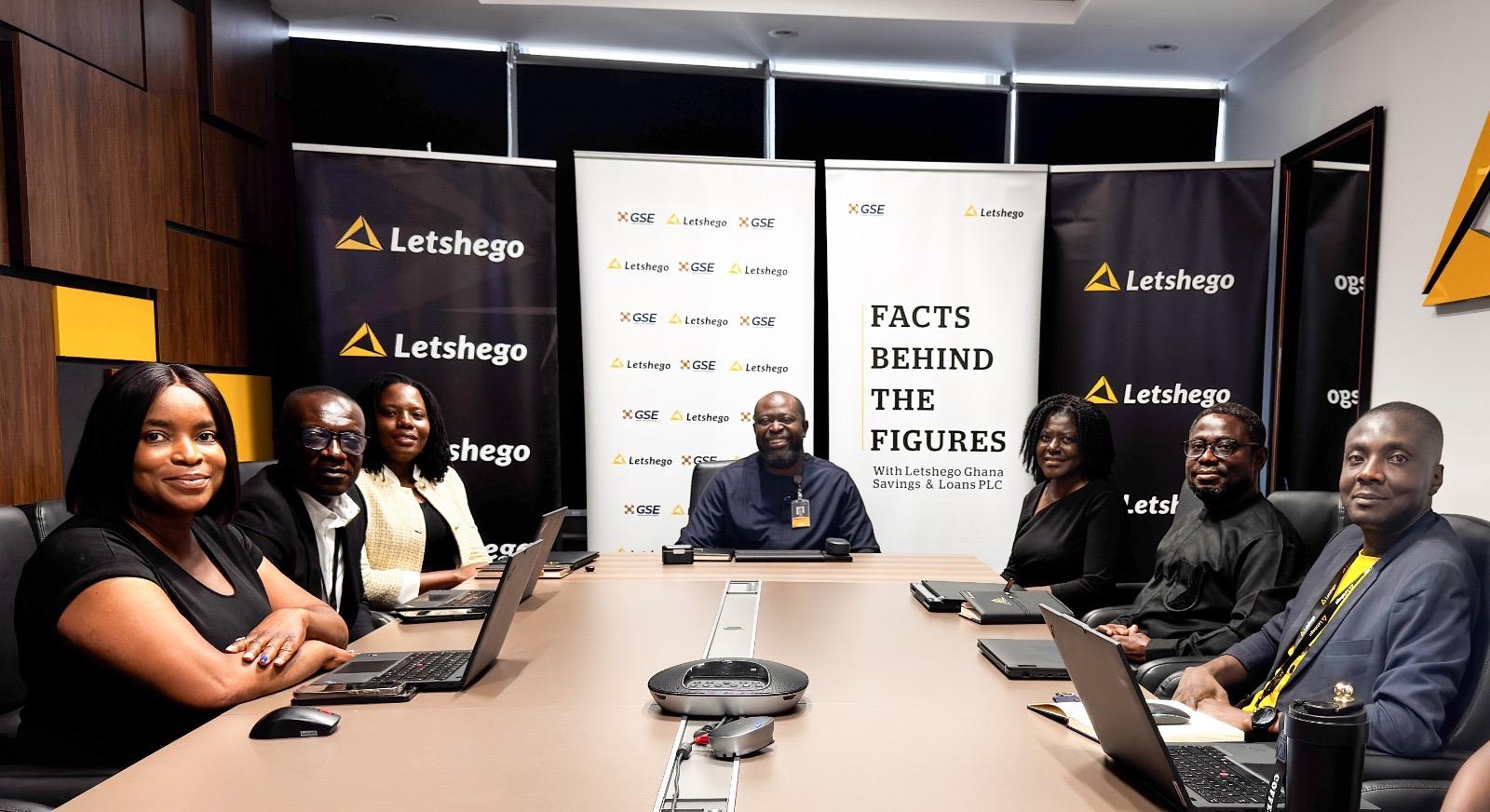
Letshego Ghana Savings and Loans PLC has delivered one of the strongest earnings performances in Ghana’s non-bank financial sector this year, using a surge in digital lending and stronger funding efficiency to almost triple first-half profit while positioning itself for a possible transition into a microfinance bank.
The lender reported profit before tax of GH¢67 million for the six months ended June 30, 2026, up from GH¢24 million in the corresponding period last year, as higher lending volumes, improved funding costs and disciplined expense management combined to lift profitability.
The results, presented during the Ghana Stock Exchange’s Facts Behind the Figures session on Wednesday, suggest Letshego is moving beyond rapid loan growth towards building a broader retail financial institution with stronger deposit mobilisation, digital savings products and diversified funding.
Return on equity climbed to 33%, compared with 23% a year earlier, reflecting more efficient use of shareholders’ capital, while lending income increased 35% to GH¢308 million, supported by rising loan disbursements across its customer base.
At the centre of that expansion remains digital finance.
Letshego disbursed approximately GH¢5 billion through its mobile lending platforms during the first half of the year, underlining how technology-driven credit continues to reshape Ghana’s consumer lending market. The company’s gross loan portfolio expanded to GH¢1.2 billion, reinforcing its position among the country’s leading digital-focused lenders.
Yet the story extends beyond lending growth.
The company has increasingly shifted its focus towards strengthening its funding structure. Customer deposits rose to GH¢834 million, while total assets reached GH¢1.9 billion, indicating growing customer confidence and reducing reliance on more expensive wholesale funding.
That strategy also strengthens resilience.
Letshego ended the period with a Capital Adequacy Ratio of 20.2%, comfortably above regulatory requirements, providing additional capacity to expand lending while absorbing potential credit risks in an evolving economic environment.
The institution’s longstanding participation in Ghana’s domestic bond market continues to provide another competitive advantage. Having maintained an active presence in the capital market for more than a decade, management says its well-managed debt maturity profile and remaining capacity under its bond programme leave the company well placed to finance future expansion without placing undue pressure on liquidity.
Beyond the financial metrics, Letshego is also attempting to reposition itself as an impact-focused lender.
During the period, the company expanded financing for women-owned businesses, piloted group-lending initiatives targeted at female entrepreneurs and increased support for clean energy and green mobility projects as part of its environmental, social and governance strategy.
Looking ahead, management intends to deepen its digital banking ecosystem by rolling out its QwikSave retail savings product, expanding impact-led lending, strengthening loan collections and enhancing portfolio quality.
The company is also preparing for a potential transition into a microfinance bank, subject to ongoing Bank of Ghana sector reforms and regulatory approval—a move that could significantly broaden its product offering and deepen its footprint within Ghana’s retail financial services industry.
“Our H1 2026 results reflect the strength of our strategy, the resilience of our business model and our commitment to sustainable growth,” Chief Finance Officer Daisy O. Adjei-Boadi said, adding that the company continues to strengthen its balance sheet while expanding financial inclusion across Ghana.
Chief Executive Officer Nii Amankra Tetteh said the institution remains focused on delivering profitable growth while creating long-term value for customers, shareholders and communities through greater access to inclusive financial services.
The performance underscores a broader trend emerging across Ghana’s financial sector: institutions that combine digital distribution, strong capital buffers and stable retail funding are increasingly outperforming peers as competition intensifies and regulators encourage more resilient, deposit-funded business models.
Written by
Liwalmor M-Moadan
M-Moadan is dedicated journalist committed to delivering accurate, timely, and impactful news. Passionate about uncovering the facts, telling meaningful stories, and keeping the public informed with integrity and professionalism.
Related Stories

Ghana’s Gold Revolution: Can Refining Gold at Home Finally Keep More of the Country’s Wealth in Ghana?
For generations, Ghana has drawn enormous wealth from beneath its soil, yet much of the value created from that wealth has flowed beyond its borders. Now,...
GoldBod Targets $1.4bn as BoG Reduces September Dollar Sales
The Bank of Ghana (BoG) has sharply reduced the amount of foreign exchange it plans to supply to the market in September 2026. Market data indicate that the...
Four CIIG Awards Strengthen Enterprise Insurance’s Leadership Position
Enterprise Insurance emerged as the most successful company at the sixth Chartered Insurance Institute of Ghana (CIIG) Awards, securing four major honours at...
Comments (0)
No comments yet. Be the first to share your thoughts.