Nigeria Targets Global Refining Leadership with 24 New Refineries by 2030
Liwalmor M-Moadan
Journalist
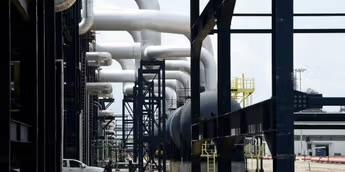
Nigeria is embarking on one of the world’s most ambitious refinery expansion programmes, aiming to raise its crude oil refining capacity to 2.64 million barrels per day (bpd) by 2030 through the construction of 24 new refineries, a strategy that could fundamentally reshape Africa’s largest oil producer and elevate it into a leading exporter of refined petroleum products.
According to Industrial Info Resources, Nigeria now has the world’s largest pipeline of grassroots refinery projects, surpassing the United States and Iran, which each have 11 planned refineries, while China and Iraq have five and eight projects respectively. The planned developments are expected to attract an estimated US$10.74 billion in investment between 2026 and 2030, with modular refineries accounting for the bulk of the new capacity.
The expansion marks a decisive shift for a country that has long exported crude oil while relying heavily on imported refined fuels to meet domestic demand. By processing more crude locally, Nigeria aims to strengthen energy security, reduce import dependence, capture greater value across the petroleum supply chain and position itself as a regional supplier of refined products.
The transformation has already begun with the Dangote Refinery, whose operations have altered Nigeria’s downstream oil landscape. The refinery, regarded as the world’s largest single-train facility, has increased processing levels beyond its original design capacity and helped Nigeria become a net exporter of petrol for the first time in decades. It has also emerged as Europe’s largest external supplier of jet fuel, underscoring the country’s growing influence in global fuel markets.
If completed on schedule, Nigeria’s refinery expansion would represent one of the most significant industrial investments in Africa’s energy sector, strengthening its position as a refining hub and reducing a long-standing structural weakness in its oil economy. The strategy also has broader implications for West Africa, where increased regional fuel supply could reshape petroleum trade flows and pricing across the continent.
Written by
Liwalmor M-Moadan
M-Moadan is dedicated journalist committed to delivering accurate, timely, and impactful news. Passionate about uncovering the facts, telling meaningful stories, and keeping the public informed with integrity and professionalism.
Related Stories

Hamdaway Explained How You Can Invest

Saving Is the Slowest Way to Go Broke
Everyone tells you to save. Nobody tells you what saving actually costs. Put $10,000 in a savings account earning 1% a year. In ten years, you'll have roughly...
PETROSOL Offer up TO 17% to raise money through Corporate Bonds
PETROSOL Raises GH¢100 Million in Maiden Corporate Bond as Investors Show Strong Confidence PETROSOL Platinum Energy PLC has made a major entry into Ghana’s...
Comments (0)
No comments yet. Be the first to share your thoughts.