PIAC Seeks Prosecutorial Powers to Tighten Oil Revenue Accountability Amid Production Decline
Liwalmor M-Moadan
Journalist
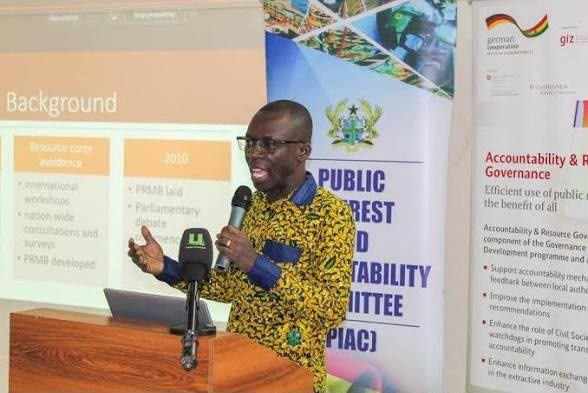
Ghana’s petroleum revenue watchdog is seeking prosecutorial powers to strengthen enforcement against the misuse of oil revenues, arguing that weak accountability mechanisms are undermining transparency at a time when crude production and government petroleum receipts are falling sharply.
The Public Interest and Accountability Committee (PIAC) wants Parliament to expand its legal mandate to enable it to surcharge public officials and pursue sanctions against those responsible for the misappropriation or misapplication of petroleum funds.
Speaking during the second cohort of the Africa Extractive Media Fellowship at the University of Ghana Business School, PIAC Executive Secretary Isaac Dwamena said the absence of effective enforcement has allowed financial irregularities in the petroleum sector to persist despite the safeguards contained in the Petroleum Revenue Management Act (PRMA).
Dwamena also criticised the continued capping and reallocation of petroleum funds, describing the practice as inconsistent with the legal framework governing Ghana’s oil revenues. He argued that repeated withdrawals from the Ghana Heritage Fund, originally established to preserve wealth for future generations, have significantly eroded long-term national savings.
According to PIAC, the Heritage Fund has reportedly declined from about US$2.8 billion to roughly US$100 million by June 2026 following successive drawdowns, including those made during the COVID-19 pandemic and subsequent government interventions.
The call for stronger enforcement comes against the backdrop of deteriorating performance in Ghana’s upstream petroleum industry. PIAC’s latest report shows total petroleum receipts fell by more than 43% to approximately US$770 million in 2025, down from about US$1.36 billion in 2024.
The first half of 2025 was particularly challenging, with petroleum revenues dropping by 56%, driven by lower crude oil production and weaker international oil prices. National crude output also contracted by nearly 26% over the same period, underscoring structural pressures facing the country’s mature oil fields.
PIAC warned that declining production, shrinking revenues and weak enforcement collectively threaten the sustainability of Ghana’s petroleum revenue management framework. It urged government to fully comply with existing petroleum laws, strengthen institutional accountability and provide oversight bodies with stronger legal powers to recover misused public funds and deter future financial misconduct.
Written by
Liwalmor M-Moadan
M-Moadan is dedicated journalist committed to delivering accurate, timely, and impactful news. Passionate about uncovering the facts, telling meaningful stories, and keeping the public informed with integrity and professionalism.
Related Stories
COCOBOD SECURES GH¢3.396BN IN LOCAL FUNDING DRIVE
Ghana's cocoa financing effort has brought in GH¢3.396 billion from local institutional investors, providing the Ghana Cocoa Board (COCOBOD) with fresh funds...


How to Save Money on a Low Income in Ghana
Saving money can feel almost impossible when your income is barely enough to cover your daily needs. For many people in Ghana, the problem is not that they do...

How to Create a Personal Budget That Actually Works
Creating a personal budget sounds simple: write down your income, list your expenses, and make sure you do not spend more than you earn. But in reality, many...
Comments (0)
No comments yet. Be the first to share your thoughts.