Senegal jails TikTok influencers as free-speech concerns raise questions over digital business climate
Liwalmor M-Moadan
Journalist
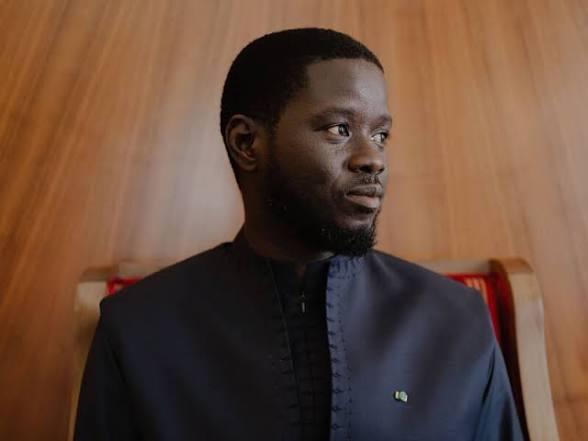
A Senegalese court has sentenced three TikTok influencers to prison terms and imposed financial penalties after finding them guilty of insulting President Bassirou Diomaye Faye, in a case that has intensified debate over freedom of expression and the operating environment for digital media businesses in one of West Africa’s important emerging economies.
The three men work for Feenal Digital, an online communications platform that produces political and public-interest content and has been perceived by some observers as sympathetic to former Prime Minister Ousmane Sonko and his PASTEF political movement.
Mandoumbe Diop, popularly known as Lamignou Darou, received a three-month prison sentence without suspension. Diop is the most prominent of the three personalities, commanding more than half a million followers on TikTok, where some of his videos attract tens of thousands of views.
Magueye Diaw, known online as Oustaz Thiep, and Moustapha Ndiaye, known as Ndiaye Touba, were each sentenced to two months in prison, according to Feenal Digital. Their lawyer, Abdy Nar Ndiaye, said the pair were additionally fined CFA500,000, equivalent to about $800.
Ndiaye challenged the severity of the prosecution, arguing that the TikTok posts were essentially comedic and should not have resulted in criminal proceedings.
The convictions go beyond a dispute over social-media commentary. They highlight the increasingly complicated relationship between governments, online creators and digital businesses across Africa, where social-media platforms have become important channels for political communication, advertising, entrepreneurship and public accountability.
For Senegal, the controversy arrives at a particularly sensitive political moment.
President Faye and Ousmane Sonko, once close political allies, have recently split, with Faye launching his own political party last month. That political realignment has heightened scrutiny of media organisations and digital platforms perceived to be aligned with competing political camps.
Feenal Digital describes itself as a platform established to promote the activities of government institutions and the private sector. The prosecution of individuals associated with the company therefore raises broader questions about the boundaries within which politically oriented digital businesses can operate.
Digital economy meets political risk
Senegal has spent years positioning itself as a growing technology and services hub in Francophone West Africa. Expanding internet penetration, mobile-money adoption and a young population have helped create opportunities for digital entrepreneurs, content creators, advertising businesses and online media companies.
But the economic potential of that ecosystem depends partly on predictable regulation.
For investors, the immediate financial value of the fines imposed on the influencers is relatively insignificant. The larger concern is whether criminal sanctions for online expression create uncertainty for businesses whose commercial models depend on producing and distributing information.
Digital-media businesses monetise attention. Their revenues can come from advertising, sponsorships, political communications, brand partnerships and audience subscriptions. When the boundaries of permissible speech become difficult to predict, companies may face higher legal and compliance costs while creators could resort to self-censorship.
That risk can eventually influence investment decisions.
International technology businesses assessing African markets increasingly examine not only internet penetration and consumer spending but also data regulation, cybersecurity laws, taxation, content restrictions and the broader political environment.
Senegal therefore faces the challenge of balancing legitimate concerns about misinformation, defamation and online abuse against the need to preserve an open digital environment capable of attracting investment and supporting innovation.
Governance credentials under scrutiny
The case could also have implications for Senegal’s wider governance reputation.
The country has historically been viewed as one of West Africa’s more politically stable democracies, an attribute that has supported its attractiveness to foreign investors compared with some neighbouring economies affected by military coups and prolonged political instability.
Political stability carries an economic premium.
Investors deploying capital into infrastructure, energy, telecommunications and financial services generally demand greater returns when political and institutional uncertainty increases. Conversely, strong institutions, predictable regulation and respect for legal rights can reduce perceived country risk and support longer-term investment.
Critics of the convictions have characterised the case as an attack on free expression. The government had not immediately responded to requests for comment reported in connection with the case.
Authorities will nevertheless face pressure to demonstrate that enforcement of laws governing online speech is consistent, transparent and compatible with Senegal’s broader democratic and economic ambitions.
A wider African debate
Senegal’s controversy reflects a broader challenge confronting African governments as political debate increasingly migrates from traditional newspapers, television and radio stations to TikTok, Facebook, X and other digital platforms.
The economics of political communication have consequently changed.
Individuals equipped with smartphones can now command audiences that rival traditional media organisations, dramatically reducing barriers to entry in the information industry. Governments consequently face information ecosystems that are faster, more decentralised and considerably harder to regulate.
For policymakers, the temptation to respond through tougher legislation and criminal sanctions carries its own economic risks.
Heavy restrictions could discourage entrepreneurship and weaken the development of domestic digital-media industries at precisely the moment African economies are seeking to create employment opportunities for their young populations.
Senegal’s handling of the Feenal Digital case will therefore be watched beyond the country’s political circles.
The central question for investors and digital entrepreneurs is not simply whether governments should regulate harmful online content. It is whether those rules are sufficiently clear, proportionate and predictable to allow businesses and creators to operate without excessive political or legal uncertainty.
As Senegal seeks investment to support its next phase of economic development, maintaining that balance could become increasingly important to both its democratic credentials and its ambition to build a competitive digital economy.
Written by
Liwalmor M-Moadan
M-Moadan is dedicated journalist committed to delivering accurate, timely, and impactful news. Passionate about uncovering the facts, telling meaningful stories, and keeping the public informed with integrity and professionalism.
Related Stories

FRANCE COUNTS THE COST OF NATIONWIDE PROTESTS AFTER HISTORIC TOWN HALL FIRE
PARIS, France — October 19, 2026 French authorities are assessing the damage caused by nationwide demonstrations that turned destructive on Saturday, October...
PUTIN MEETS TRUMP ENVOYS: IS UKRAINE FINALLY MOVING CLOSER TO PEACE
A new diplomatic effort to end the Russia-Ukraine war has placed peace negotiations back in the international spotlight after months of stalled progress. On...

Senegal’s $11 Billion Debt Crisis: The Financial Storm Shaking West Africa
Senegal is confronting one of the most severe sovereign debt crises in recent African history after audits revealed that its public debt was vastly...

Comments (0)
No comments yet. Be the first to share your thoughts.