VAST GHANA URGES REVIEW OF THE 20% FRUIT JUICE TAX EXEMPTION
Sarah
Senior Reporter
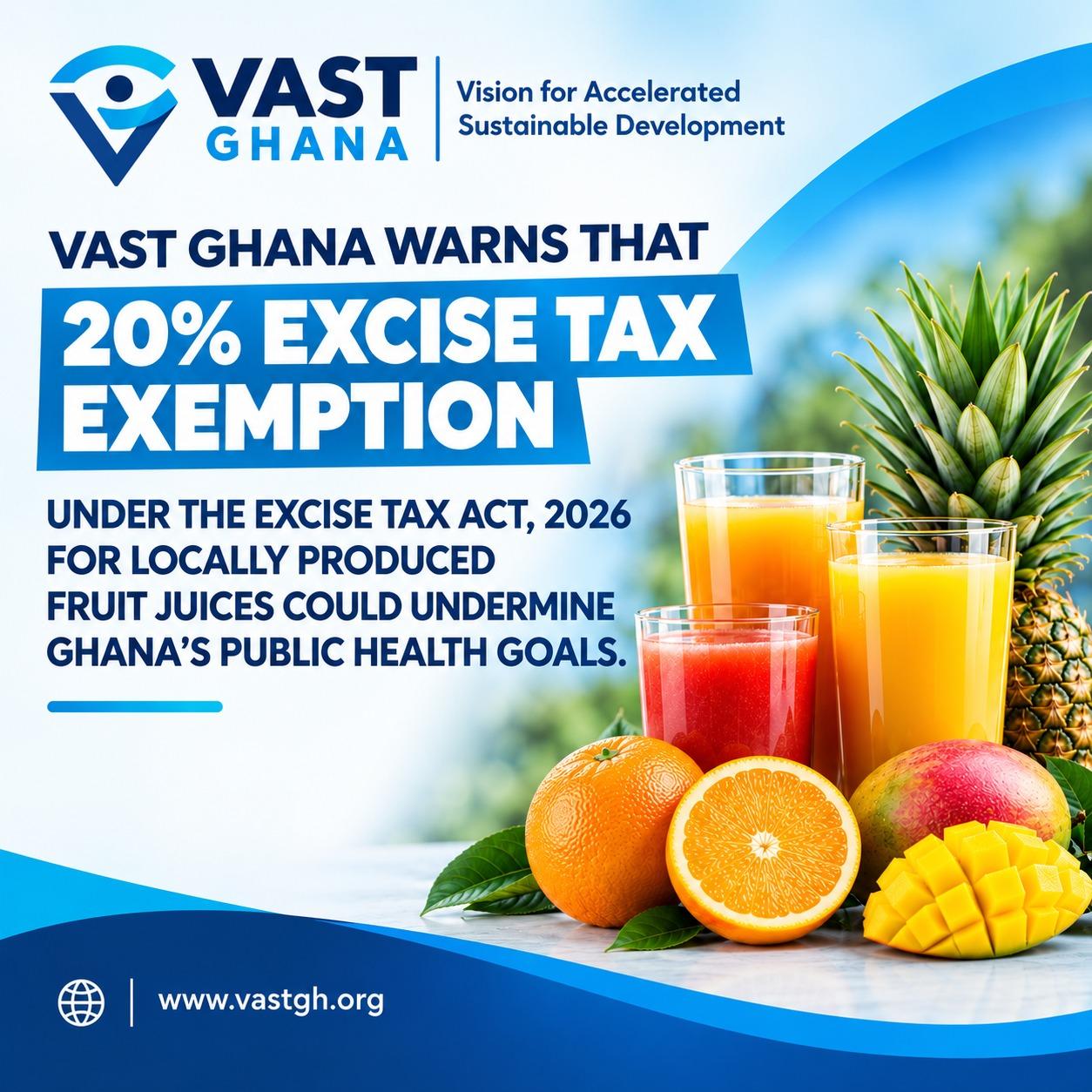
Vision for Accelerated Sustainable Development Ghana (VAST Ghana) has called on the Ministry of Finance to reconsider the removal of the 20 percent excise tax on locally produced fruit juices, warning that the policy could weaken efforts to reduce diet-related diseases.
In a press statement issued on October 26, 2026, the organisation said exempting locally manufactured fruit juices from the tax without considering their sugar content could undermine Ghana’s public health objectives and reduce the effectiveness of taxation as a tool for preventing non-communicable diseases (NCDs).
VAST Ghana acknowledged that the government’s decision was intended to strengthen domestic production and improve the competitiveness of local manufacturers. However, it argued that economic incentives should be designed in ways that also protect consumers from the health risks associated with excessive sugar consumption.
The organisation explained that some fruit juices contain significant amounts of free sugars, depending on their ingredients and processing methods. Regularly consuming beverages high in sugar can contribute to obesity, weight gain and type 2 diabetes.
VAST Ghana therefore cautioned against granting tax exemptions based solely on where beverages are produced, rather than their nutritional composition.
VAST Ghana also raised concerns about the criteria the Ministry of Finance would use to determine which products qualify as fruit juices under the exemption. It said clear definitions were necessary to prevent uncertainty in the industry and ensure that the policy did not create opportunities for tax avoidance.
The organisation has urged the Ministry of Health to express concern about the potential public health implications of the measure, particularly its relationship with government initiatives focused on healthcare access and disease prevention.
These include the Ghana Medical Trust Fund (GMTF) and the Free Primary Health Care (FPHC) Policy, which are intended to improve access to healthcare and strengthen preventive services.
According to VAST Ghana, excise taxation can serve two important purposes: discouraging the consumption of products associated with health risks and generating revenue to support national development.
It maintained that Ghana's approach to taxing beverages should reflect their potential health effects, regardless of whether they are manufactured locally or imported.
The organisation's position is consistent with the World Health Organization's recommendations on taxing sugar-sweetened beverages to reduce excessive sugar consumption and prevent non-communicable diseases.
VAST Ghana also referred to the WHO's 3 by 35 initiative, which encourages countries to increase the real prices of tobacco, alcohol and sugary drinks through taxation by 2035.
VAST Ghana warned that exempting locally produced beverages while taxing imported products with similar sugar levels could create an uneven competitive environment. The policy, it added, might also reduce manufacturers' motivation to develop products with lower sugar content.
As an alternative, VAST Ghana has proposed a taxation system that takes account of the amount of free sugar in beverages. It believes such an approach would better connect tax obligations to health risks while encouraging manufacturers to improve the nutritional quality of their products. The organisation has further called for stronger regulatory measures to guide the implementation of the exemption.
It wants clear product classification standards, accurate labelling of sugar content and fruit composition, and regular monitoring to ensure that manufacturers meet the requirements for tax relief.
VAST Ghana cautioned that without adequate safeguards, some manufacturers could market products as fruit juices despite their high sugar content or limited actual fruit composition, potentially allowing products to benefit from an exemption they might not otherwise qualify for.
The organisation said these measures would help protect consumers against misleading product claims and reduce opportunities for businesses to avoid applicable taxes. Looking ahead to the next national budget statement, VAST Ghana expressed hope that the government would reconsider the exemption as part of future tax reforms.
It called for the Ministry of Finance to work with the Ministry of Health, the Food and Drugs Authority and other relevant stakeholders to develop a beverage taxation framework that supports local industry without compromising public health.
VAST Ghana stressed that Ghana's economic development policies should complement efforts to improve nutrition and prevent disease, rather than create conditions that could weaken those objectives.
Written by
Sarah
Serah is a committed reporter who is keen on accurate delivering, timely, and impactful news. Passionate about uncovering the facts, telling meaningful stories, and keeping the public informed with integrity and professionalism.
Related Stories

President Mahama Sets 2030 Deadline for Ghana’s Raw Mineral Exports
Ghana has set its sights on a major change in the way it earns from its mineral resources, with President John Dramani Mahama announcing a 2030 target to end...

Executive Director of VAST Ghana secures his second term on Movendi international Board
Mr Labram Musah Massawudu, Executive Director of Vision for Accelerated Sustainable Development Ghana (VAST Ghana), has been re-elected to the International...
Executive Director of VAST Ghana secures his second term on Movendi International Board of
Mr.Labram Musah Massawudu, Executive Director of Vision for Accelerated Sustainable Development Ghana (VAST Ghana), has been re-elected to the International...
Comments (0)
No comments yet. Be the first to share your thoughts.