AfDB approves $18.8mn grant to lift Ghana’s rice output and curb import dependence
Liwalmor M-Moadan
Journalist
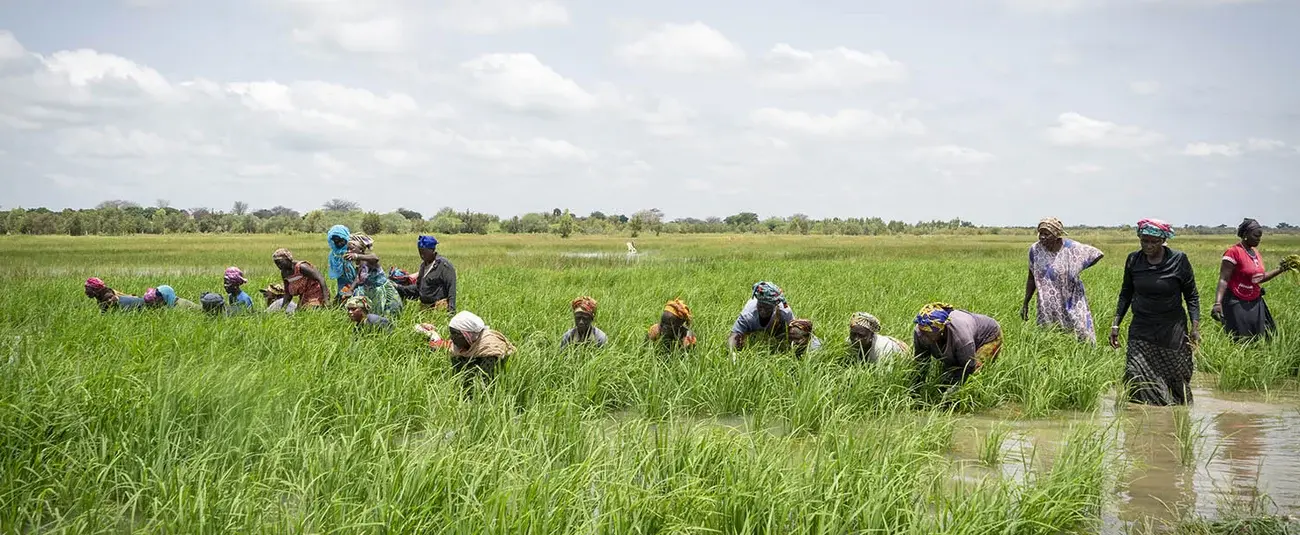
The African Development Bank Group has approved an $18.8mn grant to Ghana to expand domestic rice production, strengthen food security and create jobs, providing fresh financing for the government’s effort to reduce the country’s longstanding dependence on imported rice.
The grant, approved by the Bank’s Board of Directors, will finance Ghana’s participation in the Regional West Africa Resilient Rice Value Chains (REWARD) Project, an initiative designed to strengthen rice production and value chains across the region.
For Ghana, the intervention comes at a critical point in its agricultural transformation agenda. Rice has become an increasingly important component of household consumption, but growth in domestic production has struggled to keep pace with demand, leaving the country dependent on imports and vulnerable to swings in global food prices, exchange rates and international supply chains.
The REWARD project is intended to tackle some of the structural constraints behind that imbalance by directing investment beyond primary production into irrigation, mechanisation, processing and markets.
“This project will help strengthen Ghana’s rice value chain by increasing productivity, improving market access, and supporting agribusiness development,” said Halima Hashi, Country Manager for Ghana at the African Development Bank Group.
“By investing in climate-resilient agriculture, the initiative will contribute to food security, job creation, and more inclusive economic growth.”
From import substitution to value-chain development
The significance of the $18.8mn intervention extends beyond increasing the number of tonnes of rice harvested.
Ghana’s challenge has historically been one of developing an integrated domestic value chain capable of competing with imported rice on price, quality, consistency and availability.
Improving farm yields without simultaneously addressing storage, processing, packaging, transportation and market access risks creating additional production without a sufficiently efficient route to consumers.
The REWARD project therefore seeks to address several parts of the chain simultaneously.
Financing will support climate-resilient rice production systems, better access to quality agricultural inputs and mechanisation, as well as irrigation and land development in important production areas. Processing facilities are also expected to be modernised, while market linkages and private-sector participation will be strengthened.
That broader approach could prove important for the commercial viability of Ghana’s rice industry.
Domestic producers often face higher production and financing costs while processors must contend with inconsistent supplies of paddy rice and infrastructure constraints. Imported rice, meanwhile, benefits from mature international supply chains, established brands and relatively predictable quality.
Closing that competitiveness gap will require productivity gains to translate into lower unit costs and better-quality finished products.
Northern Savannah takes centre stage
Implementation will concentrate on selected districts within Ghana’s Northern Savannah Ecological Zone, placing one of the country’s most agriculturally promising regions at the centre of the programme.
The area possesses significant potential for expanded commercial agriculture but remains constrained by inadequate infrastructure, limited irrigation, weak market integration and exposure to increasingly unpredictable climatic conditions.
Investment in irrigation is particularly significant.
Ghanaian agriculture remains heavily exposed to rainfall patterns, making production vulnerable to droughts, floods and changes in planting seasons. Expanding climate-resilient irrigation systems could enable farmers to achieve more predictable production cycles and potentially increase cropping intensity.
Mechanisation and access to improved inputs could similarly lift yields, while better land development can expand the amount of acreage available for commercially viable production.
For northern Ghana, the project also carries an employment dimension. A stronger rice industry could create opportunities not only for farmers but for machinery operators, transporters, processors, aggregators, input suppliers and other agribusinesses.
This means the economic impact of the investment will depend partly on whether policymakers succeed in developing an ecosystem of businesses around rice production rather than treating agriculture primarily as a smallholder production programme.
Foreign exchange implications
Reducing rice imports also has implications for Ghana’s external accounts.
Food imports represent a recurring source of foreign exchange demand. Expanding the domestic supply of commodities that can be competitively produced locally could therefore help reduce some pressure on foreign currency over the longer term.
But import substitution will only deliver sustainable economic benefits if local production becomes genuinely competitive.
Restricting imports while domestic supply remains expensive or inadequate could raise consumer prices. The stronger policy route is to increase yields, improve processing efficiency and build reliable distribution systems so that locally produced rice can compete commercially with foreign alternatives.
The REWARD project’s emphasis on productivity and private-sector participation suggests an attempt to address that challenge from the supply side.
Feed Ghana gains another financing pillar
The programme also reinforces the government’s Feed Ghana Programme, which seeks to expand agricultural production, strengthen food security and reduce the country’s reliance on imported food.
The AfDB financing gives that ambition an additional external funding pillar at a time when fiscal constraints limit the government’s ability to finance large agricultural infrastructure programmes entirely from the domestic budget.
For development partners, food security has also assumed greater strategic importance following the disruption to global commodity markets in recent years and mounting climate pressures across Africa.
Building resilient domestic production capacity is increasingly viewed not merely as agricultural policy, but as part of broader economic and national resilience.
The AfDB said the project is consistent with its priorities around climate-resilient agriculture, private-sector development and inclusive economic growth, while supporting wider West African efforts to strengthen regional food systems.
For Ghana, however, the ultimate test will be implementation.
The $18.8mn grant can provide irrigation, machinery, improved inputs and processing capacity, but turning those investments into lasting reductions in rice imports will require reliable markets, effective project management and sustained private investment after donor financing ends.
If those elements come together, the REWARD project could help shift Ghana’s rice strategy from repeated campaigns for greater domestic consumption towards something more durable: a commercially competitive local rice industry capable of feeding a larger share of the country while generating jobs and conserving foreign exchange.
Written by
Liwalmor M-Moadan
M-Moadan is dedicated journalist committed to delivering accurate, timely, and impactful news. Passionate about uncovering the facts, telling meaningful stories, and keeping the public informed with integrity and professionalism.
Related Stories

Ghana’s Gold Revolution: Can Refining Gold at Home Finally Keep More of the Country’s Wealth in Ghana?
For generations, Ghana has drawn enormous wealth from beneath its soil, yet much of the value created from that wealth has flowed beyond its borders. Now,...
GoldBod Targets $1.4bn as BoG Reduces September Dollar Sales
The Bank of Ghana (BoG) has sharply reduced the amount of foreign exchange it plans to supply to the market in September 2026. Market data indicate that the...

Four CIIG Awards Strengthen Enterprise Insurance’s Leadership Position
Enterprise Insurance emerged as the most successful company at the sixth Chartered Insurance Institute of Ghana (CIIG) Awards, securing four major honours at...
Comments (0)
No comments yet. Be the first to share your thoughts.