Ghana accelerates green transition with 10% renewable energy target by 2030
Liwalmor M-Moadan
Journalist
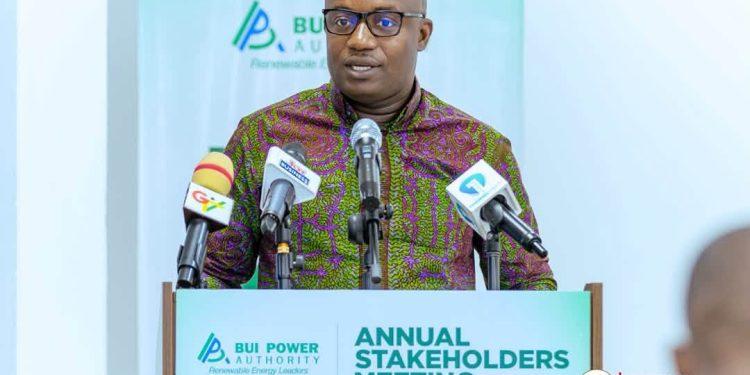
Ghana is targeting renewable energy penetration of at least 10 per cent by 2030 as the government seeks to accelerate the country’s transition towards cleaner power generation while confronting persistent financial weaknesses across the energy sector.
Minister for Energy and Green Transitions John Jinapor said achieving the target would require sustained policy and regulatory support, increased investment in renewable generation and improvements to the electricity grid.
But he warned that the expansion of clean-energy infrastructure could not be separated from the financial health of the wider power sector, where revenue collection, payment discipline and prudent financial management would be critical to sustaining future investment.
Speaking at the Annual Stakeholders Meeting of the Bui Power Authority (BPA), Jinapor said the government intended to create the conditions needed for renewable energy projects to expand while ensuring that institutions across the electricity value chain remained financially and operationally resilient.
“As Government works towards achieving at least 10% renewable energy penetration by 2030, we remain committed to providing the policy, regulatory and investment support needed to accelerate clean energy development, strengthen our electricity grid and ensure a financially sustainable energy sector,” he said.
The target places renewable energy development at the centre of Ghana’s efforts to diversify its electricity generation mix and reduce its exposure to the costs and supply risks associated with conventional thermal generation.
Ghana has traditionally relied on a combination of hydropower and thermal generation, with solar and other non-hydro renewable technologies accounting for a relatively modest share of the electricity system.
The push towards 10 per cent therefore implies a significant expansion of renewable capacity over the remainder of the decade, alongside investments in transmission infrastructure, storage and grid management technologies capable of accommodating more variable sources of electricity.
Bui emerges as clean-energy platform
Jinapor pointed to the performance of the Bui Power Authority as evidence of the role state-owned power producers could play in the transition.
He commended the Authority for what he described as an outstanding performance during 2025, highlighting its ability to exceed its clean-energy generation target while expanding solar capacity and commissioning battery energy storage facilities.
The Authority also recorded strong financial results and maintained what the minister described as an excellent safety record.
BPA, originally associated primarily with the Bui hydroelectric project, has increasingly expanded its operations into solar generation and energy storage, potentially positioning the institution as an important vehicle for Ghana’s renewable-energy ambitions.
Battery storage will become particularly important as renewable penetration increases. Unlike conventional power plants, electricity generation from solar varies according to weather conditions and time of day. Storage systems can absorb electricity when production is high and release it when demand rises or renewable generation falls.
That capability could help Ghana integrate larger quantities of solar power without compromising grid stability.
Financing becomes the critical constraint
Yet Jinapor’s remarks also underscored one of the biggest challenges facing Ghana’s energy transition: the financial condition of the electricity sector.
Large-scale renewable generation, transmission upgrades and storage facilities require substantial long-term capital. The ability to attract such investment depends partly on whether electricity-sector institutions can generate sufficient revenues and meet their financial obligations.
The minister therefore argued that investment must be accompanied by improvements in revenue mobilisation and financial management.
“This must be complemented by improved revenue collection, prudent financial management and stronger payment discipline across the energy value chain to safeguard the sector’s long-term sustainability and enable continued investment in critical infrastructure,” he said.
The warning highlights the relationship between Ghana’s renewable-energy ambitions and longstanding structural challenges in the power sector.
Weak revenue collection, commercial and technical losses and payment difficulties across the electricity value chain can ultimately limit the resources available for investment, even where generation capacity is expanding.
For the government, the challenge is therefore broader than simply commissioning additional solar installations.
Achieving the 2030 target will require renewable projects to be connected to a grid capable of managing them, while utilities and other sector institutions must remain sufficiently financially viable to purchase power, maintain infrastructure and finance further expansion.
Investment opportunity
The renewable target could nevertheless create significant opportunities for private capital.
Solar generation, battery storage, distributed energy systems and associated transmission infrastructure are likely to attract increasing investor interest as Ghana attempts to expand electricity supply while reducing the carbon intensity of incremental generation.
The country’s energy transition could also support industrial investment if additional renewable capacity translates into more reliable electricity and competitive long-term power costs.
For developers, however, the attractiveness of the market will depend on regulatory certainty, tariff structures, payment security and the financial strength of electricity-sector counterparties.
That makes the financial reforms highlighted by Jinapor as important to investors as the headline renewable-energy target itself.
Transition requires a stronger grid
Increasing renewable penetration also creates technical demands.
Greater solar generation requires stronger transmission and distribution networks, improved system planning and technologies capable of balancing electricity supply and demand as generation fluctuates.
BPA’s investment in battery energy storage offers one potential response.
If deployed at sufficient scale and combined with grid modernisation, storage could allow Ghana to accommodate significantly more renewable generation while reducing some of the operational challenges associated with intermittent electricity sources.
The government’s 2030 objective therefore represents more than a generation target. It will test whether Ghana can simultaneously mobilise investment, modernise its electricity infrastructure and address the financial weaknesses that have constrained the sector.
Jinapor said the government would continue working with industry stakeholders to establish the policy and investment environment necessary to expand renewable energy while tackling those constraints.
The central message is that Ghana’s energy transition will ultimately depend on two reforms moving together: more clean electricity entering the system and stronger financial discipline ensuring that the system can pay for it.
Without the latter, the capital required for the former could become increasingly difficult to mobilise.
Written by
Liwalmor M-Moadan
M-Moadan is dedicated journalist committed to delivering accurate, timely, and impactful news. Passionate about uncovering the facts, telling meaningful stories, and keeping the public informed with integrity and professionalism.
Related Stories
COCOBOD SECURES GH¢3.396BN IN LOCAL FUNDING DRIVE
Ghana's cocoa financing effort has brought in GH¢3.396 billion from local institutional investors, providing the Ghana Cocoa Board (COCOBOD) with fresh funds...


How to Save Money on a Low Income in Ghana
Saving money can feel almost impossible when your income is barely enough to cover your daily needs. For many people in Ghana, the problem is not that they do...

How to Create a Personal Budget That Actually Works
Creating a personal budget sounds simple: write down your income, list your expenses, and make sure you do not spend more than you earn. But in reality, many...
Comments (0)
No comments yet. Be the first to share your thoughts.