Afenyo-Markin’s attacks are driven by ‘bitterness’; I’ll face Parliament — GoldBod CEO
Liwalmor M-Moadan
Journalist
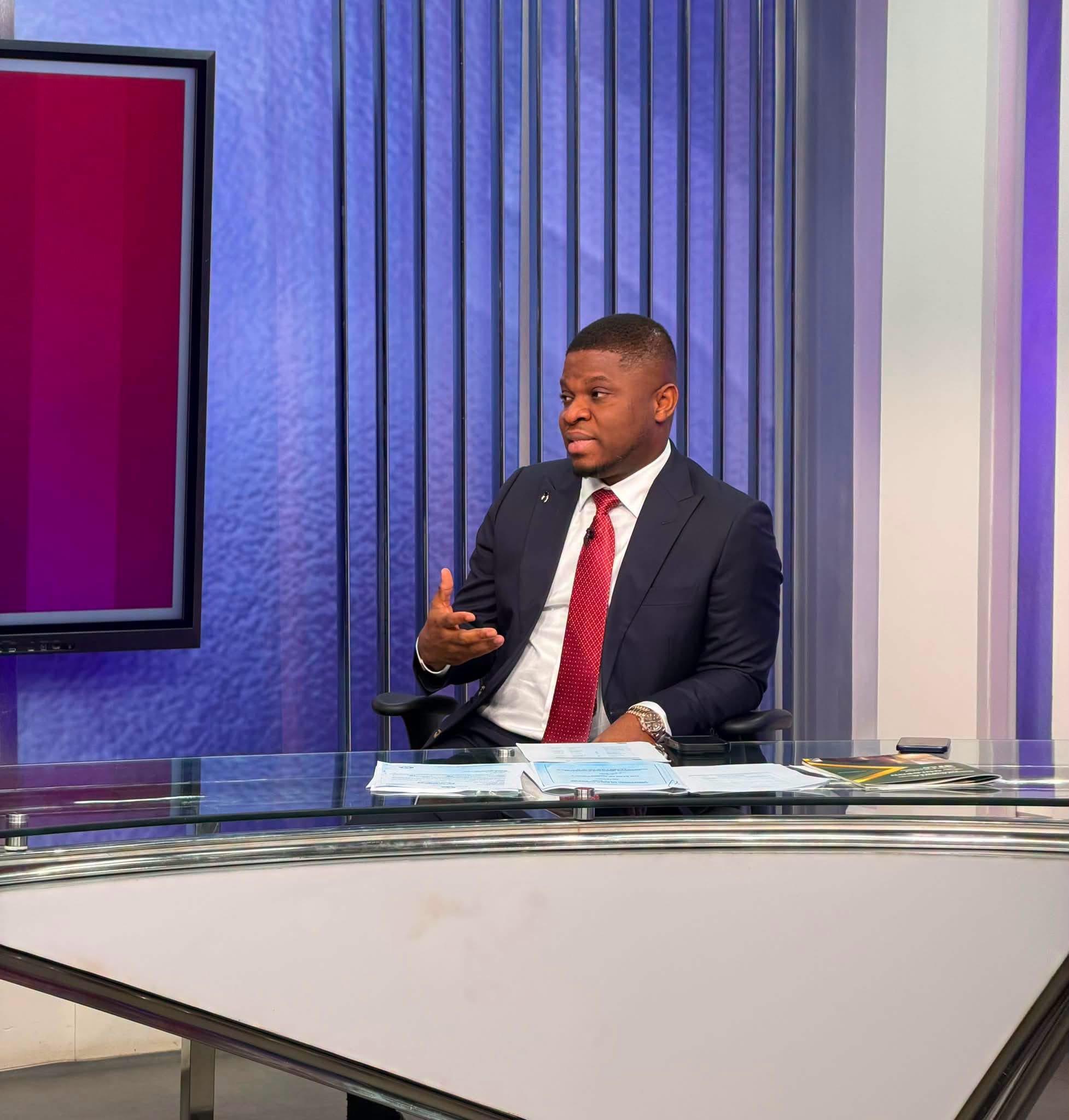
The Chief Executive of the Ghana Gold Board (GoldBod), Sammy Gyamfi, has challenged Parliament to subject the institution to full scrutiny, escalating a political dispute over the governance of Ghana’s increasingly important state-backed gold trading architecture.
Mr Gyamfi said he was prepared to appear before any relevant parliamentary committee to account for GoldBod’s activities, while dismissing criticism from Minority Leader Alexander Afenyo-Markin as motivated by personal “bitterness” rather than substantive concerns about the institution.
The exchange comes at an important point for Ghana’s gold sector. Gold has become increasingly central to the country’s foreign-exchange strategy, reserve accumulation and efforts to formalise the small-scale mining and trading industry. That makes the governance of GoldBod not merely a political issue, but an increasingly important question for fiscal management, monetary stability and investor confidence.
Speaking during a Space conversation on X on Sunday, August 9, Mr Gyamfi drew a distinction between criticism from Mr Afenyo-Markin and questions raised by Kojo Oppong Nkrumah, the Ranking Member on Parliament’s Economy Committee.
“As for Kojo Oppong Nkrumah, I can take some of the things he says seriously because they are not personal. Afenyo Markin is just being personal. He’s a bitter friend, so I can understand. You can see the hatred and the bitterness in his voice,” Mr Gyamfi said.
The rhetoric reflects the increasingly partisan debate surrounding GoldBod, but behind the political exchanges lies a more consequential policy question: how should Parliament supervise an institution handling strategically important transactions in Ghana’s largest merchandise export?
GoldBod occupies a potentially powerful position at the intersection of mining, foreign exchange, commodity trading and public finance. As its financial footprint expands, demands for disclosure around purchases, funding arrangements, pricing, operational costs and counterparties are likely to intensify.
Mr Gyamfi said critics who believe wrongdoing has occurred should move beyond general accusations and use Parliament’s established oversight mechanisms.
“If he wants me in Parliament, I’m saying they should invite me tomorrow. I am ready. Economic Committee, Finance Committee, Lands and Mines Committee, and they should bring media people and publishers,” he stated.
That invitation could prove significant.
Parliamentary scrutiny would provide an opportunity to move the debate away from political accusations towards measurable financial and operational questions. Lawmakers could examine GoldBod’s balance sheet, revenue model, financing arrangements, gold acquisition procedures and the mechanisms through which the institution manages commercial and market risks.
Such scrutiny is particularly important because commodity trading can expose public institutions to substantial volatility. Gold prices may be historically strong, but profitability depends on more than the headline international price. Exchange-rate movements, financing costs, assay charges, purchase premiums, logistics, insurance and the timing of purchases and sales can all affect financial outcomes.
The transparency question therefore extends beyond whether money has been “siphoned”. A well-governed institution should be capable of demonstrating how public value is created, what risks taxpayers ultimately bear and how those risks are controlled.
Mr Gyamfi specifically challenged Parliament’s Public Accounts Committee to summon him if there were suspicions that funds were being diverted from GoldBod.
The stance places pressure on the Minority to translate its criticism into specific allegations that can be tested against financial records.
It also creates an opportunity for GoldBod itself. Voluntarily embracing rigorous parliamentary examination could strengthen the institution’s credibility, particularly if financial disclosures, procurement procedures and transaction structures are made sufficiently transparent.
For Ghana, the stakes extend beyond domestic politics.
Gold has assumed growing macroeconomic importance as policymakers attempt to strengthen foreign reserves and reduce pressure on the cedi while capturing a greater share of the value generated by domestic mineral production. Formalising gold purchases and exports could also improve traceability and reduce leakages from informal trading networks.
But an expanded state role brings expanded governance responsibilities.
Markets generally distinguish between state intervention supported by transparent rules and intervention characterised by opaque financial arrangements. GoldBod’s long-term credibility will therefore depend not simply on how much gold it purchases or revenue it generates, but on the strength of its controls, auditing, reporting and accountability framework.
Parliament has an important role in that process. Committees examining the institution could establish whether its commercial mandate is being pursued within clearly defined risk limits and whether its operations ultimately strengthen Ghana’s external position without creating hidden fiscal liabilities.
There is also a broader institutional lesson.
Political disputes over public institutions can easily become personalised, particularly when senior figures from opposing parties dominate the discussion. But GoldBod’s significance to Ghana’s economy means the standard for scrutiny should be higher than partisan exchanges.
Mr Gyamfi’s willingness to appear before lawmakers provides an opening for precisely that transition.
If Parliament takes up the invitation, the most consequential questions are unlikely to concern whether the GoldBod chief and Minority Leader are political friends or adversaries. They will concern the numbers: how GoldBod finances its operations, how much value it generates for the state, what risks it assumes, how its transactions are audited and whether Ghana’s rapidly evolving gold strategy is delivering sustainable economic returns.
For an institution increasingly embedded in the country’s foreign-exchange and mineral policy, those are questions that deserve answers in public.
Written by
Liwalmor M-Moadan
M-Moadan is dedicated journalist committed to delivering accurate, timely, and impactful news. Passionate about uncovering the facts, telling meaningful stories, and keeping the public informed with integrity and professionalism.
Related Stories
Mahama Orders Immediate Dissolution of Boards of Nine State Institutions
President John Dramani Mahama has directed the immediate dissolution of the governing boards of nine state-owned institutions, affecting organisations...

Mahama Ayariga Introduced His Wife during Vetting - takes people by Surprise
It took Everyone by surprise when the former mijority leaders who has just been appointed by the president as the minister for Local government introduced a...

GoldBod Faces Intensifying Scrutiny as Afenyo-Markin Warns of ‘Big Scandal’
Ghana’s state-backed gold trading system is facing a fresh political challenge after Minority Leader Alexander Afenyo-Markin warned that the Ghana Gold Board...
Comments (0)
No comments yet. Be the first to share your thoughts.