Ghana Receives Final $371m IMF Payment as $3bn Bailout Programme Comes to an End
Fred Kota
Journalist
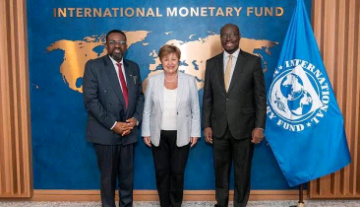
Ghana's three-year financial support programme with the International Monetary Fund (IMF) has reached its final stage following the release of approximately $371 million, bringing the total financial assistance received under the arrangement to about $3 billion.
The final payment, approved after the IMF Executive Board completed its sixth and final review of Ghana's Extended Credit Facility (ECF), marks the conclusion of a programme that became central to the country's efforts to recover from one of its most difficult economic periods in recent years.
The disbursement of 265.9 million Special Drawing Rights (SDR), equivalent to approximately $371 million, represents the final tranche of the financial assistance agreed in May 2023.
At the time, Ghana was grappling with soaring inflation, a rapidly depreciating cedi, mounting public debt and weakening investor confidence. The economic difficulties had placed considerable pressure on government finances, businesses and households, making external financial support a critical part of the country's recovery strategy.
Under the arrangement, the IMF provided financial assistance alongside a series of economic conditions and structural reforms aimed at restoring fiscal discipline, strengthening monetary policy and addressing the country's debt challenges. The completion of the programme comes against the background of improvements in several areas of the economy.
According to the IMF, Ghana recorded real economic growth of 6 per cent in 2025, with growth accelerating to 6.4 per cent year-on-year in the first quarter of 2026. Inflation, which had reached extremely high levels during the economic crisis, also declined considerably, falling to 5.4 per cent at the end of 2025 and 5.3 per cent in June 2026.
The country's external position also strengthened, with gross international reserves reaching approximately $11.9 billion by the end of 2025, equivalent to four months of import cover. On the fiscal front, Ghana recorded a primary budget surplus of 2.1 per cent of Gross Domestic Product (GDP), while its risk of external and overall debt distress was upgraded from high to moderate.
These developments point to considerable progress in economic stabilisation. However, the end of the IMF financing programme does not automatically translate into lasting economic security. One of the major issues confronting the government is how to maintain the gains without returning to the financial difficulties that necessitated the bailout in the first place.
Debt management, domestic revenue mobilisation, expenditure control and the financial health of state-owned enterprises remain important areas requiring attention. The energy and cocoa sectors, in particular, continue to present fiscal risks that could place additional pressure on public finances.
Ghana's engagement with the IMF will nevertheless continue under a different arrangement. Following the completion of the ECF programme, the country moved into a 36-month Policy Coordination Instrument (PCI), a non-financing arrangement designed to support the government's economic policies and monitor the implementation of reforms.
Unlike the previous facility, the PCI does not provide fresh loans to the country. Its focus is on maintaining policy discipline, strengthening institutions and ensuring that economic reforms remain on course.
In the latest development on November 5, 2026, the IMF announced that its staff team had reached a staff-level agreement with Ghana following the first review of the new programme. The Fund described the country's performance as broadly satisfactory but stressed the importance of rebuilding foreign exchange reserves, strengthening domestic revenue collection and maintaining the pace of economic reforms.
The IMF also identified exposure to fluctuations in international gold, cocoa and oil prices, geopolitical tensions and domestic debt refinancing requirements as potential threats to the country's economic outlook.
For Ghana, the completion of the $3 billion arrangement is therefore both an important financial milestone and a test of its ability to sustain economic discipline.
The more significant question now is whether the improvements reflected in the country's economic indicators can translate into tangible benefits for ordinary citizens.
For households that have endured rising food prices and increased living costs, businesses that have struggled with unpredictable economic conditions, and young people seeking employment, the success of the recovery will ultimately be measured by more than figures in official reports.
It will depend on whether economic stability creates a more favourable environment for investment, job creation, business expansion and improved living standards.
With the final IMF payment now completing the original financing arrangement, Ghana enters a new phase in its economic management, where sustaining the progress achieved will be just as important as the recovery itself.
Written by
Fred Kota
A dedicated journalist committed to delivering accurate, timely, and impactful news. Passionate about uncovering the facts, telling meaningful stories, and keeping the public informed with integrity and professionalism.
Related Stories
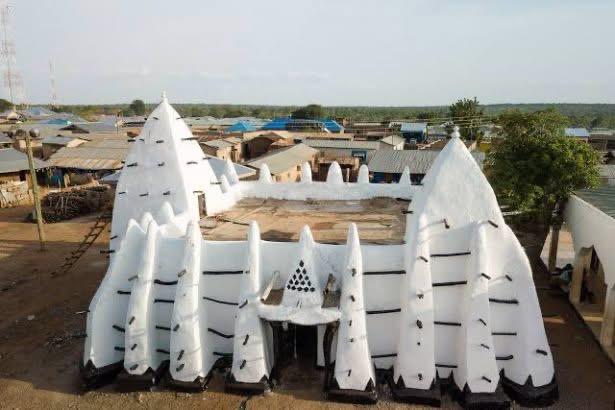
Larabanga Mosque to be removed from new cedi notes
Christian group calls for Larabanga Mosque to be removed from new cedi notes The Alliance of Christian Apologists, Ghana, has called on the government and the...
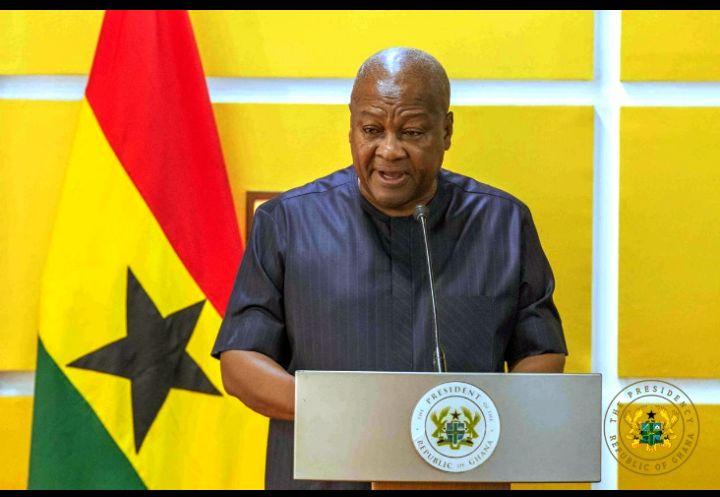
President Mahama Tasks New Labour Commission to Restore Trust in Workplace Justice
President John Dramani Mahama has called on the newly inaugurated National Labour Commission (NLC) to make fairness and timely decisions central to its work,...
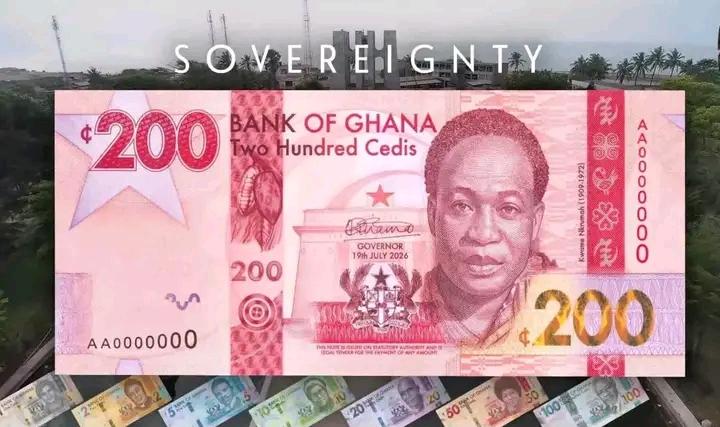
Ghana Introduces Heritage Cedi Notes Featuring National Icons, Landmarks and Adinkra Symbols
Ghana's currency is set for a new identity following the introduction of the Ghana Cedi Heritage Series, a redesigned collection of banknotes that brings the...

Comments (0)
No comments yet. Be the first to share your thoughts.