President Mahama Tasks New Labour Commission to Restore Trust in Workplace Justice
Fred Kota
Journalist
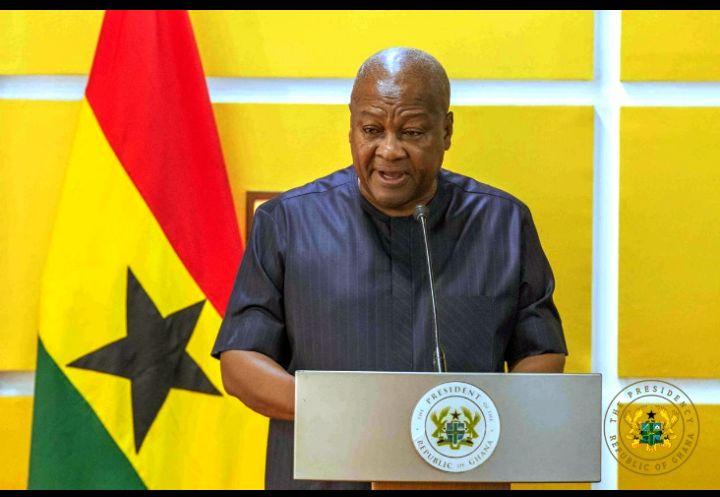
President John Dramani Mahama has called on the newly inaugurated National Labour Commission (NLC) to make fairness and timely decisions central to its work, saying the way it handles workers’ complaints will shape public confidence in Ghana’s labour dispute resolution system.
The President gave the charge on Friday, November 13, 2026, when he swore in a seven-member Commission at the Presidency in Accra. He said the institution must be able to resolve disagreements between employers and employees in a manner that is consistent, impartial and guided by the law.
He stressed that workers who seek the Commission’s intervention should not be left uncertain about whether their concerns will receive attention or how long a decision will take. Delays and inconsistent outcomes, he indicated, could weaken confidence in a body expected to help maintain stable relations in the workplace.
“A worker with a grievance wants to know that somebody will hear it and deal with it fairly and expeditiously. And the National Labour Commission has a responsibility to apply rules to the letter,” President Mahama said.
Prez Darmani remarks place the Commission’s handling of individual complaints at the centre of its responsibility to promote industrial harmony. The Commission performs a role in resolving industrial disagreements and supporting peaceful labour relations through processes that include mediation and arbitration. Its work brings it into contact with parties whose interests may differ, making impartiality and consistency important to the credibility of its decisions.
President Mahama urged the new members to carry out their duties in line with the rules governing labour relations. He congratulated them on their appointments and acknowledged the service of members of the previous Commission. The new body is chaired by retired Court of Appeal Justice Isaac Delali Duose. Its membership also includes Joseph Kingsley Amuah and Isaac Sackey, who represent the Ghana Employers Association, and Prince William Ankrah and Abdul-Samad Ali Gomdah, representing Organised Labour.
Rosemond Freeman-Tettey and Antwi-Boasiako Sekyere complete the seven-member team as presidential nominees. The composition brings together representatives of employers, organised labour and government, placing the Commission in a position to consider workplace disputes from the perspectives of key labour relations stakeholders.
Speaking on behalf of the members, Justice Duose thanked the President for the confidence placed in the team. He pledged that the Commission would conduct its work with transparency, fairness and impartiality, and assured stakeholders that matters brought before it would be handled in accordance with its mandate.
The task is significant because unresolved workplace disagreements can place pressure on employees, employers and the wider working environment. When parties do not have confidence in available dispute-resolution channels, disagreements may become harder to settle and industrial relations may suffer. A process that is trusted by both sides can instead provide a structured route for addressing complaints and reducing tension. The President’s emphasis on speed does not remove the need for careful consideration of evidence or the right of each party to be heard. Rather, the task before the Commission is to balance a timely process with decisions that are fair, reasoned and consistent. Expediting cases should not mean overlooking the facts or treating one side more favourably than the other.
The new leadership will therefore need to translate its commitments into clear and dependable procedures for receiving complaints, engaging disputing parties and communicating decisions. The Commission’s ability to manage cases openly, explain its procedures and treat parties with respect will therefore be important in building confidence beyond the parties directly involved in each dispute.
For employees, the central test will be whether a complaint can be heard and resolved without avoidable delay. For employers, it will be whether the process is impartial and predictable. For the country, the Commission’s effectiveness will matter to efforts to sustain cooperation between labour and management.
The inauguration gives the seven members the responsibility of strengthening confidence in an institution that occupies an important place in Ghana’s labour relations system.
President Mahama’s message was clear: the Commission must not only exist as a channel for resolving disputes; it must demonstrate through its conduct that workers and employers can rely on it for fair and timely treatment.
Written by
Fred Kota
A dedicated journalist committed to delivering accurate, timely, and impactful news. Passionate about uncovering the facts, telling meaningful stories, and keeping the public informed with integrity and professionalism.
Related Stories
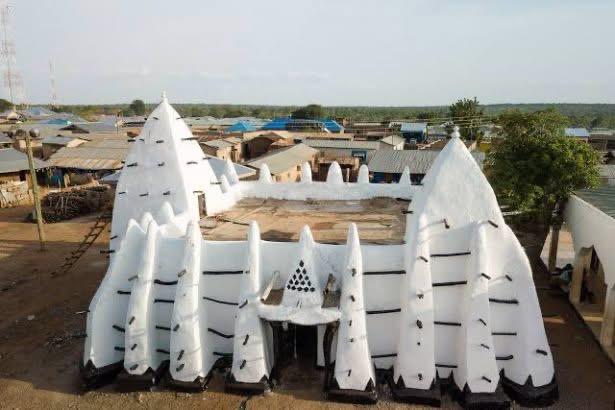
Larabanga Mosque to be removed from new cedi notes
Christian group calls for Larabanga Mosque to be removed from new cedi notes The Alliance of Christian Apologists, Ghana, has called on the government and the...

Ghana Introduces Heritage Cedi Notes Featuring National Icons, Landmarks and Adinkra Symbols
Ghana's currency is set for a new identity following the introduction of the Ghana Cedi Heritage Series, a redesigned collection of banknotes that brings the...


Kasoa Market Fire Destroys 10 Shops as 80 Containers Are Affected
A fire at the Kasoa New Market destroyed 10 metal container shops and partially damaged 30 others after flames swept through the trading area in the early...
Comments (0)
No comments yet. Be the first to share your thoughts.