Ghana Introduces Heritage Cedi Notes Featuring National Icons, Landmarks and Adinkra Symbols

Sayibu Hamdaway
Writer/Financial Analyst
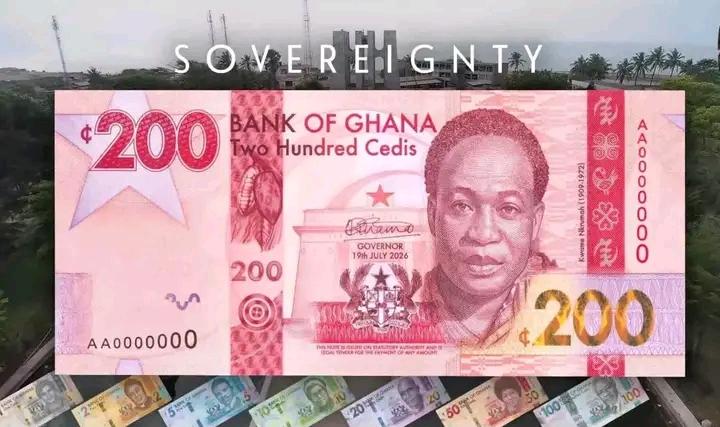
Ghana's currency is set for a new identity following the introduction of the Ghana Cedi Heritage Series, a redesigned collection of banknotes that brings the country's history, cultural symbols and notable personalities into everyday financial transactions.
The new banknotes were officially launched by President John Dramani Mahama on Thursday, November 12, 2026, at the Bank of Ghana headquarters in Accra, marking another significant development in the country's monetary history.
Unlike a conventional currency redesign focused primarily on appearance, the Heritage Series places considerable emphasis on national identity, with each denomination highlighting a personality, institution, historical landmark or cultural symbol associated with Ghana's development.
The eight denominations, ranging from GH¢1 to GH¢200, feature prominent Ghanaian personalities whose contributions span commerce, religion, education, justice, arts, nationalism, peace and national sovereignty.
Among those recognised are renowned market trader Agnes Oforiwaa Tagoe-Quarcoopome, educationist Dr James Emman Kwegyir Aggrey, Justice Annie Jiagge, composer Dr Ephraim Amu, national flag designer Theodosia Okoh, former United Nations Secretary-General Kofi Annan and Ghana's first President, Dr Kwame Nkrumah.
The notes also feature important national landmarks, including the Larabanga Mosque, Achimota School, the Supreme Court, the National Theatre, Jubilee House and the Kwame Nkrumah Memorial Park.
Another notable feature is the introduction of Adinkra symbols into Ghana's banknote designs. These traditional symbols communicate values and principles associated with Ghanaian culture, giving the currency a distinct cultural dimension beyond its monetary function.
The redesign also introduces improvements intended to make the notes more durable and easier to handle. According to the Bank of Ghana, the new currency retains cotton-based material but incorporates additional reinforcement to withstand frequent handling and the country's climatic conditions.
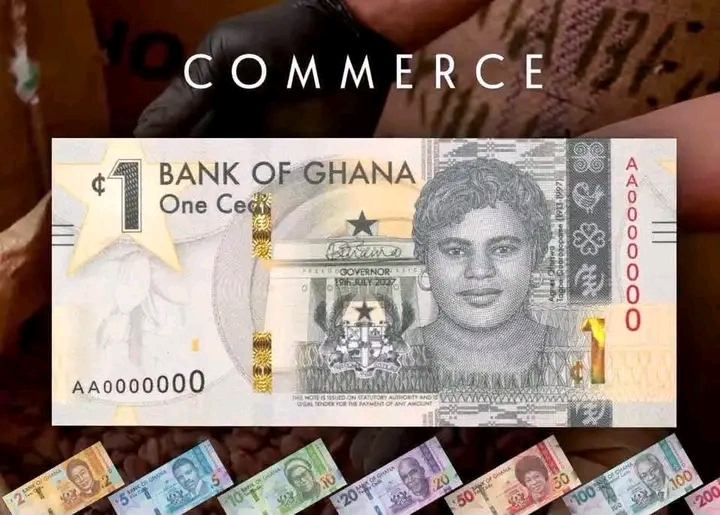
The banknotes are also smaller than the previous versions and contain enhanced security features designed to make counterfeiting more difficult.
Governor of the Bank of Ghana, Dr Johnson Pandit Asiama, announced that the new series will officially enter circulation on December 1, 2026.
The existing banknotes will, however, remain legal tender and circulate alongside the new series. This means Ghanaians will not be required to exchange their current money immediately when the redesigned notes become available.
The central bank is also preparing a nationwide public education campaign to familiarise citizens with the new designs and security features. An accompanying Cedi mobile application is expected to help users identify the different denominations, including persons with visual impairments.
For Ghana, the introduction of the Heritage Series represents more than a change in the physical appearance of its money. It creates an opportunity to recognise individuals and institutions whose contributions have shaped the country's national story.
Everyday transactions involving traders, transport operators, businesses and households will consequently become another point of contact with the country's historical and cultural heritage.
However, the long-term significance of the redesign will depend not only on its appearance and durability but also on public confidence in the currency and the broader economic conditions that determine its purchasing power.
The launch therefore places renewed attention on the relationship between the cedi as a national symbol and its practical importance in the lives of ordinary Ghanaians.
As the December 1 circulation date approaches, the Heritage Series is expected to introduce a new chapter in how Ghana's history and identity are represented through its national currency.
Written by
Sayibu Hamdaway
Hamdaway is a Ghanaian finance educator, investor, and content creator dedicated to making investing and personal finance easy to understand. He combines financial expertise with journalism to deliver timely business, economic, and market insights. Through engaging videos, articles, and social media content, he empowers individuals to build wealth through informed financial decisions. His mission is to help people achieve financial freedom by transforming complex financial concepts into practical, actionable knowledge.
Related Stories
President Mahama Tasks New Labour Commission to Restore Trust in Workplace Justice
President John Dramani Mahama has called on the newly inaugurated National Labour Commission (NLC) to make fairness and timely decisions central to its work,...

Kasoa Market Fire Destroys 10 Shops as 80 Containers Are Affected
A fire at the Kasoa New Market destroyed 10 metal container shops and partially damaged 30 others after flames swept through the trading area in the early...
Dr. Ato Forson Puts GH¢30bn Behind Ghana’s New Economic Direction
Ghana's next economic chapter will be judged by how much the country can produce, how many jobs its industries can create and whether businesses can grow...
Comments (0)
No comments yet. Be the first to share your thoughts.