Ghana’s Ginger Shortage Creates Investment Opening Across $Agricultural Value Chain
Liwalmor M-Moadan
Journalist
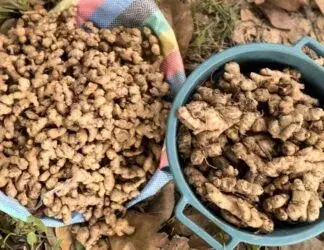
Ghana’s extraordinary surge in ginger prices is emerging as both a warning about structural weaknesses in the country’s agricultural supply chain and a potentially lucrative investment opportunity for farmers, processors and logistics companies.
Ginger recorded year-on-year inflation of 111.3 per cent in July 2026, the highest price increase of any item tracked by the Ghana Statistical Service (GSS) and the third-largest individual contributor to food inflation.
The scale of the increase is economically significant. While movements in headline inflation provide a broad indication of price pressures across the economy, ginger illustrates how commodity-specific supply constraints can produce extreme price movements and impose additional costs on consumers and businesses.
Government Statistician Dr Alhassan Iddrisu argues that the increase should therefore be viewed not simply as a consumer inflation problem but also as a signal for capital to move into an undersupplied agricultural value chain.
Ginger’s price pressures reflect a combination of strong industrial demand, restricted production areas, inadequate storage, poor rural roads, transport bottlenecks and the crop’s relatively long production cycle.
The commodity typically requires seven to nine months before harvesting, limiting farmers’ ability to respond quickly when prices rise. Unlike commodities with shorter production cycles, a sudden increase in ginger demand cannot immediately trigger additional supply.
That rigidity creates an unusually strong investment signal.
For farmers, expanding acreage could generate attractive returns if current demand persists. But the bigger economic opportunity may lie beyond cultivation.
“The sustained demand for ginger opens room for agro-processors to move into ginger powder, packaged pastes, essential oils, beverages, and dried exports - products that can capture greater value in both local retail and international export markets, while cushioning the sector against the perishability of raw produce,” Dr Iddrisu said.
Such processing could shift Ghana away from selling predominantly raw agricultural commodities towards capturing more value domestically.
Ginger is particularly suited to this strategy because demand cuts across several industries, including food processing, pharmaceuticals and beverages. Developing domestic processing capacity could therefore create a chain of economic activity extending from commercial farms and smallholders to packaging companies, transport operators, warehouses and exporters.
The immediate challenge is turning today’s scarcity premium into productive investment rather than simply encouraging farmers to chase unusually high prices.
Agricultural commodity markets can be volatile. A rapid expansion in production without corresponding investments in processing, storage and market access could eventually create oversupply and cause farm-gate prices to collapse.
That makes coordinated value-chain investment crucial.
Cold storage and modern warehousing could help smooth seasonal fluctuations, while better aggregation systems could connect fragmented smallholder production with industrial buyers. Improved farm-to-market roads would reduce transportation losses and costs, helping narrow the gap between producer and consumer prices.
The General Agricultural Workers’ Union (GAWU) argues that finance remains one of the largest obstacles to achieving such expansion.
Dr Paschal Ajongba Saviour Kaba, Deputy General Secretary of GAWU, said commercial borrowing costs were poorly suited to agriculture, where production cycles are long, weather risks are considerable and insurance coverage remains limited.
He called for a rethink of agricultural financing, including concessional lending and a stronger developmental role for institutions such as the Agricultural Development Bank.
“The government must increase its interest in agriculture and not make the sector reliant mainly on private capital and invest in agricultural manpower and extension services so that producers will have the technical know-how to boost yields,” he said.
The financing argument is particularly important for ginger because farmers must commit capital months before generating revenue. High interest rates can erode margins before crops reach maturity, discouraging precisely the production expansion required to ease supply constraints.
Affordable agricultural credit, however, would need to be accompanied by improved extension services, irrigation, quality planting materials and insurance if Ghana is to avoid merely transferring production risks from farmers to the state.
There is also an emerging structural change in the ginger market.
Strong demand from beverage and pharmaceutical companies has encouraged some farmers to sell directly to processors through input-credit arrangements instead of supplying traditional open markets.
Such contract-style arrangements can provide farmers with financing and guaranteed buyers, but they can also reduce volumes available on conventional markets, contributing to sustained pressure on retail prices.
Dr Kaba said Ghana should consider large-scale plantation development for strategic agricultural commodities, drawing lessons from neighbouring Côte d’Ivoire, where coordinated production and export strategies have helped build competitive agricultural industries.
The ginger episode consequently exposes a broader policy challenge for Ghana: reducing inflation sustainably requires more than monetary stability. Persistent supply constraints in agriculture can continue generating pockets of severe inflation even when overall price pressures are moderating.
Addressing these bottlenecks could therefore deliver benefits extending well beyond ginger.
Investment in agricultural roads, irrigation, warehousing, processing and affordable financing could strengthen domestic production while reducing the frequency with which shortages translate into sharp consumer price increases.
For investors, the 111.3 per cent price increase should not be interpreted as a guarantee of similarly exceptional future returns. Instead, it signals a significant mismatch between supply capacity and demand.
Closing that gap represents the real investment opportunity.
Ghana could use the current price shock to expand commercial ginger production, develop processing clusters and establish export-oriented supply chains. Done effectively, the result could be higher farmer incomes, rural employment, additional non-traditional export earnings and a stronger domestic agro-processing industry.
But without patient capital, infrastructure and coordinated agricultural policy, the price surge risks remaining exactly what it is today: evidence of scarcity rather than evidence of productive transformation.
“If government supports with targeted credit and infrastructure, Ghana can turn this scarcity-driven price boom into sustainable export and industrial growth, while helping bring food inflation down,” Dr Kaba said.
Written by
Liwalmor M-Moadan
M-Moadan is dedicated journalist committed to delivering accurate, timely, and impactful news. Passionate about uncovering the facts, telling meaningful stories, and keeping the public informed with integrity and professionalism.
Related Stories

Executive Director of VAST Ghana secures his second term on Movendi international Board
Mr Labram Musah Massawudu, Executive Director of Vision for Accelerated Sustainable Development Ghana (VAST Ghana), has been re-elected to the International...
Executive Director of VAST Ghana secures his second term on Movendi International Board of
Mr.Labram Musah Massawudu, Executive Director of Vision for Accelerated Sustainable Development Ghana (VAST Ghana), has been re-elected to the International...

Global South Must turn independence into Economic strength - Prof. Opoku-Agyemang
Ghana’s Vice President, Professor Jane Naana Opoku-Agyemang, has urged developing countries to focus on building stronger economies and institutions to make...
Comments (0)
No comments yet. Be the first to share your thoughts.