Ghana’s Inflation Falls to 4.6% as Food Prices Deliver Broad-Based Relief
Liwalmor M-Moadan
Journalist
Ghana’s inflation rate slowed more sharply than anticipated in July 2026, extending the country’s remarkable disinflation trend and reinforcing confidence that the economy is entering a period of sustained macroeconomic stability after years of elevated price pressures. Fresh data released by the Ghana Statistical Service (GSS) showed that headline inflation eased to 4.6 per cent in July from 5.3 per cent in June, representing a monthly decline of 0.7 percentage points and a dramatic improvement from the 12.1 per cent recorded in the same month last year. The latest figures place inflation comfortably within the Bank of Ghana’s medium-term target range and provide further evidence that the government’s fiscal consolidation measures, tight monetary policy and improving domestic food supply are beginning to produce lasting gains for consumers and businesses alike.
The latest Consumer Price Index paints the picture of an economy where price pressures are steadily moderating rather than disappearing entirely. Government Statistician Dr. Alhassan Iddrisu explained that while prices continue to rise across the economy, they are increasing at a much slower pace than they were a year ago, reflecting the continued easing of inflationary pressures. On a month-on-month basis, inflation slowed further to just 0.1 per cent in July from 0.2 per cent in June, suggesting that consumer prices were virtually unchanged during the month. Although the Consumer Price Index itself increased to 271.1 from 259.1 in June, this reflected changes in the overall price level based on the 2021 consumption basket rather than a resurgence in inflation.
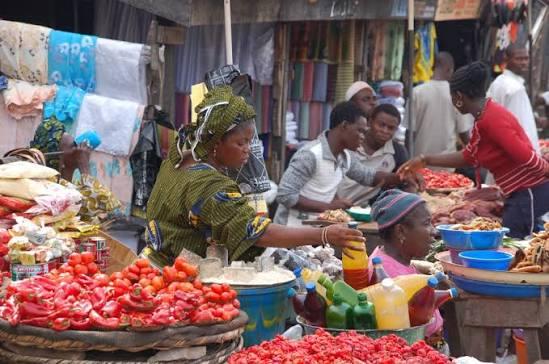
The biggest driver behind the decline in headline inflation was once again food prices, which have increasingly become the strongest source of relief for Ghanaian households. Annual food inflation eased to 3.1 per cent in July from 3.9 per cent a month earlier, while monthly food inflation turned negative at minus 0.1 per cent, indicating that average food prices actually declined during the month. The Ghana Statistical Service described the development as clear evidence that “food relief is real,” noting that slowing food inflation is significantly easing pressure on household shopping baskets across the country.
The decline was supported by substantial price reductions across several staple food items that form the backbone of everyday household consumption. The average price of kontomire fell by 41.2 per cent, while garden eggs declined by 34.5 per cent and maize dropped by 32.9 per cent compared with a year earlier. Other commodities including pawpaw, millet, guinea corn, beans, lime, local rice and Bambara beans also recorded significant price declines, giving consumers some welcome relief after enduring years of high food inflation.
However, the GSS cautioned that the national inflation figure masks significant differences across individual products. While many staple foods became more affordable, several commodities experienced exceptional price increases over the same period. Ginger recorded the sharpest increase, with prices more than doubling to rise by 111.3 per cent year-on-year. Mangoes increased by 89.0 per cent, while shrimps, bananas, fresh tomatoes, fresh coconut, avocado pears, palm fruits and cashew also recorded substantial price increases. These contrasting movements highlight the continued influence of seasonal production patterns, weather conditions and commodity-specific supply constraints, even as overall food inflation continues to slow.
Despite the encouraging improvement in food prices, the latest figures suggest that Ghana’s inflation battle is increasingly shifting towards the services sector. The Statistical Service described services as “the last hurdle” in the country’s fight against inflation. Although services inflation slowed from 9.4 per cent in June to 8.5 per cent in July, it remained the highest among all major divisions of the Consumer Price Index, reflecting persistent cost pressures in sectors that directly affect household living standards.
According to the GSS, expenses related to transport, housing, education and healthcare continue to remain stubbornly elevated. Rent payments emerged as the single largest contributor to inflation during the month, accounting for 13.0 per cent of total inflationary pressure. Fresh tomatoes and ginger followed closely, while cooked rice, river fish, charcoal, senior high school fees, bus and trotro fares, hotel accommodation and electricity all continued to exert upward pressure on household expenditure. These categories illustrate why many consumers still feel the burden of high living costs despite the sharp decline in headline inflation.
The latest figures also reveal that Ghana’s remaining inflationary pressures are now largely domestic rather than imported. Inflation for locally produced goods slowed from 6.7 per cent in June to 5.9 per cent in July, while imported goods recorded inflation of just 2.0 per cent, down from 2.3 per cent the previous month. The Ghana Statistical Service noted that locally produced goods now account for approximately 86.7 per cent of overall inflation, with domestic goods and services contributing 67.6 per cent of the total increase in consumer prices. This represents a significant shift from previous years when imported inflation, fuelled largely by exchange-rate depreciation, was the dominant driver of rising prices. The current trend reflects the growing stabilisation of the cedi and lower imported cost pressures, leaving domestic structural factors as the primary source of inflation.
Regional disparities also remain an important feature of Ghana’s inflation landscape. The North East Region recorded the country’s highest inflation rate at 10.8 per cent, more than twice the national average, while the Bono East Region posted an inflation rate of minus 3.8 per cent, indicating that average prices there were lower than they were a year earlier. These differences demonstrate that the cost of living continues to vary considerably across regions due to variations in agricultural production, transportation costs, market accessibility and local supply conditions.
From a policy perspective, the July inflation figures represent another important milestone in Ghana’s ongoing economic recovery. Falling inflation strengthens household purchasing power, improves business confidence and creates a more predictable environment for investment and long-term planning. It also reinforces confidence in the government’s fiscal adjustment programme and the Bank of Ghana’s monetary policy framework, both of which have focused on restoring macroeconomic stability after years of economic turbulence.
For the Bank of Ghana, inflation comfortably within the target range provides greater room to consider future monetary policy adjustments, although policymakers are likely to remain cautious given the persistent inflation observed in housing, transport, healthcare and education. These sectors are driven less by temporary price shocks and more by structural challenges that require broader economic reforms rather than monetary intervention alone.
Overall, the July inflation data present one of the strongest indications yet that Ghana’s economy has entered a new phase of price stability. Food prices are increasingly providing meaningful relief to households, imported inflation has been largely contained and overall consumer price growth has slowed to levels not seen in years. Yet the data also serve as a reminder that the fight against inflation is not over. Persistent pressures in the services sector continue to weigh on household budgets, meaning policymakers must now shift their focus from stabilising food prices to addressing the deeper structural factors that keep the cost of housing, transport, healthcare and education elevated. If these challenges are successfully managed while maintaining fiscal discipline and exchange-rate stability, Ghana will be well positioned to consolidate its recovery and build a more resilient and inclusive economy in the years ahead.
Written by
Liwalmor M-Moadan
M-Moadan is dedicated journalist committed to delivering accurate, timely, and impactful news. Passionate about uncovering the facts, telling meaningful stories, and keeping the public informed with integrity and professionalism.
Related Stories

Executive Director of VAST Ghana secures his second term on Movendi international Board
Mr Labram Musah Massawudu, Executive Director of Vision for Accelerated Sustainable Development Ghana (VAST Ghana), has been re-elected to the International...
Executive Director of VAST Ghana secures his second term on Movendi International Board of
Mr.Labram Musah Massawudu, Executive Director of Vision for Accelerated Sustainable Development Ghana (VAST Ghana), has been re-elected to the International...

Global South Must turn independence into Economic strength - Prof. Opoku-Agyemang
Ghana’s Vice President, Professor Jane Naana Opoku-Agyemang, has urged developing countries to focus on building stronger economies and institutions to make...
Comments (0)
No comments yet. Be the first to share your thoughts.