Mahama Calls for Living Recognition of Public Servants as Ghana Marks One Year Since Fatal Helicopter Crash
Liwalmor M-Moadan
Journalist
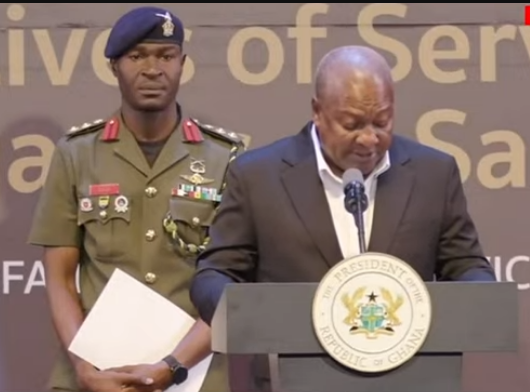
One year after one of Ghana’s darkest peacetime aviation tragedies claimed the lives of eight senior government officials and military personnel, President John Dramani Mahama has called for a fundamental shift in how the nation values those who dedicate their lives to public service. Rather than reserving national gratitude for memorial ceremonies and state funerals, the President urged Ghanaians to recognise the sacrifices of public servants while they are still alive and actively serving the country.
Speaking at the National Inter-Faith Memorial Service in Accra on Wednesday to commemorate the first anniversary of the August 6, 2025 military helicopter crash, President Mahama framed the occasion not only as a moment of remembrance but also as a national reflection on the often unseen burdens carried by those entrusted with serving the state.
The memorial honoured eight state officials and Ghana Air Force personnel who died while travelling on official duty connected to Ghana’s fight against illegal mining, an issue that continues to dominate the country’s environmental, economic and governance agenda. The tragedy, which shocked the nation last year, claimed among others Defence Minister Dr Edward Kofi Omane Boamah and Environment, Science and Technology Minister Dr Ibrahim Murtala Mohammed.
Addressing government officials, religious leaders, diplomats, members of the security services and bereaved families, President Mahama observed that public service frequently demands sacrifices that remain invisible to the wider public.
“Much of their work goes unnoticed. They travel long distances. They spend countless hours away from their families. They endure difficult conditions. They make decisions under pressure. They accept risks because they believe that Ghana’s progress is worth every effort,” he said.
His remarks carried a broader message extending beyond the helicopter crash itself. In many public institutions, the work of civil servants, military officers, police personnel, healthcare professionals and other frontline state employees often receives limited public attention unless a crisis exposes the risks they routinely face. Mahama suggested that such a culture undervalues the very individuals responsible for sustaining state institutions.
“And too often we celebrate such service only after tragedy strikes,” he said.
The President therefore challenged Ghanaians to cultivate a national culture that acknowledges commitment, integrity and sacrifice in real time rather than posthumously.
“Today we must resolve to appreciate public service even as it is performed daily. To appreciate those who labour faithfully, often without recognition, because they believe in something that is greater than themselves,” President Mahama added.
Beyond its emotional significance, the President’s message touches on an important governance principle. Strong public institutions depend not only on financial resources and administrative reforms but also on the morale and motivation of the people who operate them. Recognition, whether through improved working conditions, career development or public appreciation, has increasingly become an important component of effective public sector management across both developed and emerging economies.
For Ghana, where state institutions continue to shoulder responsibilities ranging from national security and healthcare delivery to environmental protection and economic regulation, the speech reinforces the need to support public servants who often operate under demanding and sometimes hazardous conditions.
The context of the 2025 helicopter disaster remains particularly significant. The victims were travelling on official assignments linked to the government’s efforts to combat illegal mining, popularly known as galamsey, one of Ghana’s most complex policy challenges. The fight against illegal mining has required sustained deployment of military personnel, environmental officers and other public officials into difficult operational environments, exposing them to both physical and logistical risks.
Their deaths therefore became symbolic not only of a tragic aviation accident but also of the broader dangers associated with enforcing public policy in sensitive sectors.
President Mahama also devoted part of his address to the families whose lives were permanently altered by the accident, acknowledging that official ceremonies alone cannot heal the emotional wounds left behind.
“To the bereaved families, let me once again convey the deepest condolences of the government and people of Ghana,” he said.
He added:
“I know that no speech can erase your pain.”
Those remarks underscored the enduring human cost behind national tragedies. While the state continues to honour the memories of the deceased through memorial events and official tributes, the emotional burden borne by spouses, children, parents and relatives remains an ongoing reality that extends well beyond anniversary commemorations.
The National Inter-Faith Memorial Service brought together representatives from multiple faith communities, reflecting Ghana’s longstanding tradition of using religious and civic ceremonies to promote national unity during moments of collective grief. Such events serve not only as acts of remembrance but also as opportunities to reaffirm shared national values, including duty, patriotism and service.
From a broader policy perspective, the anniversary also offers an opportunity for continued reflection on aviation safety, operational risk management and the welfare of state officials and security personnel undertaking official assignments. While investigations and institutional reviews often follow such tragedies, anniversaries provide governments with an occasion to evaluate whether meaningful lessons have translated into lasting improvements.
Ultimately, President Mahama’s message extended beyond commemorating the eight lives lost in the crash. It was a call for a cultural shift in how Ghana measures public service—not merely by titles held or ceremonies conducted after death, but by daily acts of dedication that sustain the functioning of the nation.
His appeal suggests that a stronger public service culture begins with recognising that behind every government institution are individuals who routinely sacrifice personal comfort, family time and, in some cases, their own safety in pursuit of national development. The legacy of those lost in the 2025 helicopter crash, the President implied, should therefore inspire not only remembrance but also a lasting commitment to valuing service before sacrifice becomes history.
Written by
Liwalmor M-Moadan
M-Moadan is dedicated journalist committed to delivering accurate, timely, and impactful news. Passionate about uncovering the facts, telling meaningful stories, and keeping the public informed with integrity and professionalism.
Related Stories
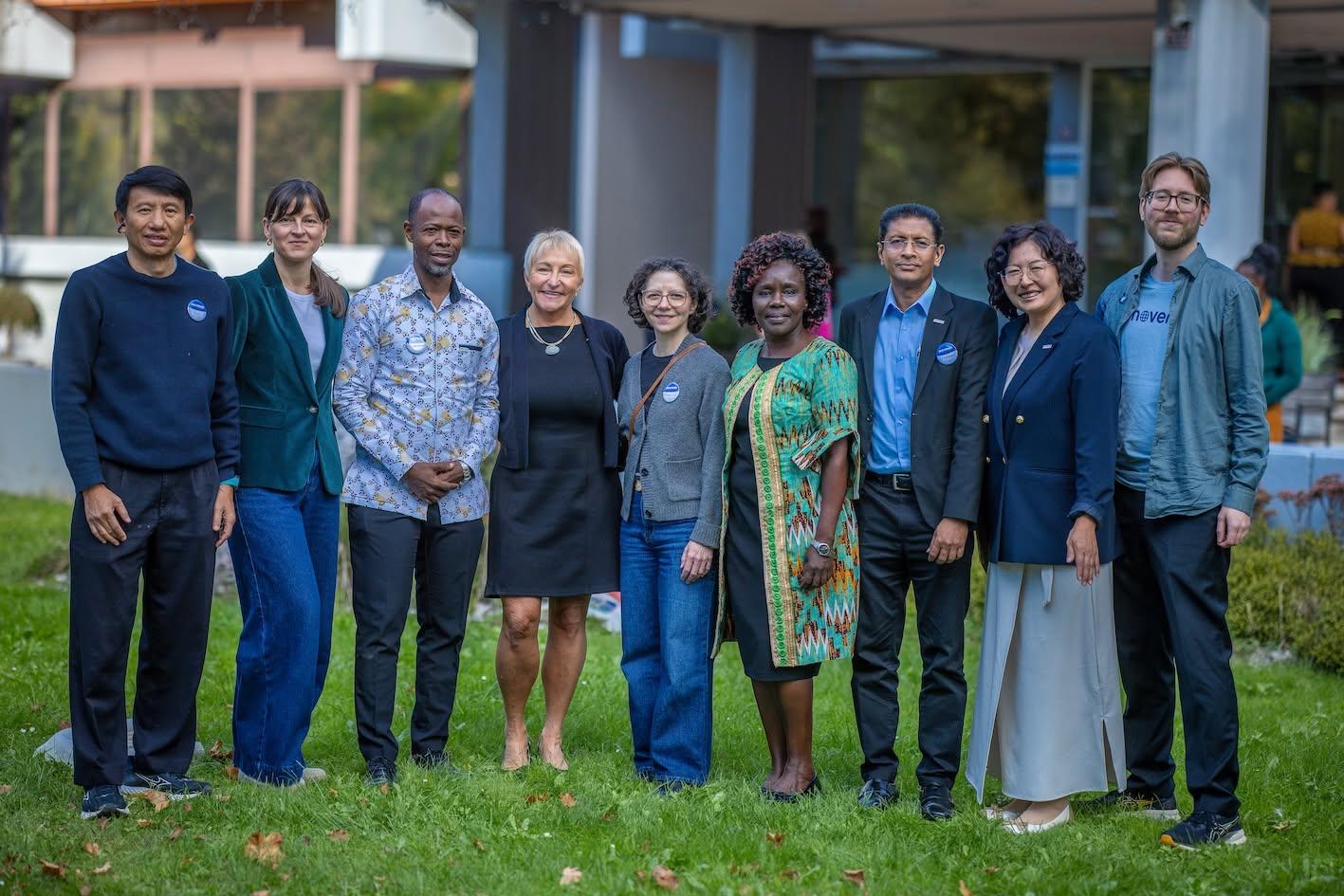
Executive Director of VAST Ghana secures his second term on Movendi international Board
Mr Labram Musah Massawudu, Executive Director of Vision for Accelerated Sustainable Development Ghana (VAST Ghana), has been re-elected to the International...
Executive Director of VAST Ghana secures his second term on Movendi International Board of
Mr.Labram Musah Massawudu, Executive Director of Vision for Accelerated Sustainable Development Ghana (VAST Ghana), has been re-elected to the International...

Global South Must turn independence into Economic strength - Prof. Opoku-Agyemang
Ghana’s Vice President, Professor Jane Naana Opoku-Agyemang, has urged developing countries to focus on building stronger economies and institutions to make...
Comments (0)
No comments yet. Be the first to share your thoughts.