Police MTTD remains Ghana’s biggest bribery hotspot as governance reforms struggle to curb petty corruption
Liwalmor M-Moadan
Journalist
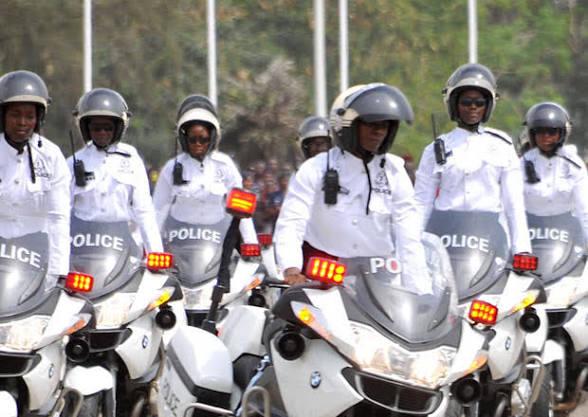
For years, Ghana’s fight against corruption has been measured through legislation, institutional reforms and international governance indices. Yet for ordinary citizens, corruption is rarely experienced in ministerial offices or parliamentary committees. Instead, it unfolds during routine encounters with frontline public officials—particularly on the nation’s roads.
The latest Governance Series report released by the Ghana Statistical Service (GSS) illustrates this disconnect. While the country recorded improvements across several governance indicators, the Motor Traffic and Transport Department (MTTD) of the Ghana Police Service remained the public institution most frequently associated with reported bribe payments, highlighting the persistence of petty corruption within everyday public service delivery.
The findings reinforce a broader policy challenge confronting successive governments: macro-level governance improvements have yet to translate into meaningful reductions in corruption experienced by citizens interacting with frontline institutions.
According to the report, the Police MTTD continues to dominate reports of unofficial payments, underscoring the department’s long-standing reputation as one of the country’s most corruption-exposed public agencies.
The findings come against the backdrop of broader governance improvements recorded during 2025, suggesting that institutional reforms alone have not fundamentally altered incentives at operational levels of public administration.
Presenting the findings, Government Statistician Dr Alhassan Iddrisu said corruption pressures intensified during the latter part of 2025 despite improvements in several governance indicators.
“Public officials demanded unofficial payments from nearly seven in every 10 Ghanaians who encountered bribery situations during the second half of 2025.”
The statistic highlights the distinction between governance quality and lived public experience.
While governance indicators often capture institutional effectiveness, regulatory quality and administrative performance, bribery statistics reveal how citizens actually experience the state during everyday transactions.
Traffic policing naturally generates frequent face-to-face interactions between officers and motorists, making it one of the most vulnerable public services to discretionary abuse. Licensing inspections, vehicle documentation checks, roadworthiness enforcement and traffic violations all create opportunities where informal payments may be solicited or offered.
For economists and governance specialists, such forms of petty corruption carry costs that extend well beyond individual motorists.
Repeated unofficial payments distort incentives, weaken confidence in public institutions and raise transaction costs across the economy. Businesses operating commercial transport fleets face additional informal operating expenses, while unequal enforcement undermines respect for regulatory compliance.
Perhaps more significantly, persistent corruption within frontline agencies erodes trust in government institutions even when broader governance reforms are underway.
The GSS report therefore presents a paradox.
On one hand, Ghana continues making measurable progress across several governance dimensions, reflecting improvements in institutional performance and public administration.
On the other hand, citizens continue reporting increasing exposure to bribery during routine interactions with public officials.
This divergence suggests that anti-corruption reforms have achieved greater success at strengthening institutional frameworks than changing operational behaviour among frontline service providers.
The persistence of Police MTTD at the top of reported bribery rankings also raises questions about enforcement strategies within the Ghana Police Service.
Over the years, police authorities have introduced internal disciplinary measures, ethics training, public complaint mechanisms and periodic anti-corruption campaigns aimed at improving professional conduct.
Despite these interventions, the latest data indicate that public perceptions—and experiences—have remained largely unchanged.
Governance analysts argue that addressing petty corruption requires more than punitive measures. Digital enforcement systems, automated traffic monitoring, cashless payment platforms for traffic fines, dashboard body cameras and stronger supervisory mechanisms have become increasingly important tools internationally for reducing opportunities for discretionary rent-seeking.
Countries that have successfully reduced traffic-related corruption have generally combined technology with institutional accountability, limiting direct cash interactions between officers and motorists while increasing transparency around enforcement procedures.
For Ghana, similar reforms could become increasingly relevant as authorities pursue broader public sector digitalisation.
The report also highlights an important behavioural dimension.
Bribery is sustained not only by officials demanding unofficial payments but also by citizens willing to make them in exchange for avoiding sanctions or administrative delays.
Consequently, reducing corruption requires reforms that address both supply and demand within the bribery ecosystem.
Public education, simplified administrative procedures and predictable enforcement mechanisms remain essential complements to institutional reforms.
The latest findings are likely to intensify calls for targeted anti-corruption interventions within frontline public agencies rather than relying solely on broad governance reforms.
Indeed, the GSS data suggest that improving citizens’ trust in public institutions may depend less on constitutional reforms or legislative changes than on ensuring that ordinary interactions between public officials and citizens are conducted transparently and fairly.
As Ghana continues pursuing governance reforms, the challenge increasingly lies in translating institutional progress into measurable improvements in everyday public service delivery.
Until motorists can travel the country’s roads without expectations of unofficial payments, the country’s broader governance gains may remain overshadowed by the daily realities confronting citizens at roadside checkpoints.
The latest Governance Series findings therefore serve as a reminder that the true measure of governance is not only how institutions perform on paper, but how citizens experience them in practice. For many Ghanaians, the road remains where the state is encountered most directly—and where the fight against corruption still has its greatest distance to travel.
Written by
Liwalmor M-Moadan
M-Moadan is dedicated journalist committed to delivering accurate, timely, and impactful news. Passionate about uncovering the facts, telling meaningful stories, and keeping the public informed with integrity and professionalism.
Related Stories

Accra and Kumasi Expressway: Government Targets Full Funding by End of 2026 as Military Clears 170km Corridor
Ghana’s ambitious Accra and Kumasi Expressway project has moved closer to its construction phase, with the government announcing that it expects to secure the...
Ghana Immigration clears beggars from the streets of Accra and Kumasi
1,055 beggars remove from the street of Accra and Kumasi, Ghana Immigration Service migrant as part of an operation targeting undocumented foreign nationals....
Star Oil cuts petrol below GH¢15 as Ghana fuel retailers begin August price reset
Some Oil Marketing Companies (OMCs) began reviewing petroleum product prices on Monday, August 17, with Star Oil emerging as one of the first large retailers...
Comments (0)
No comments yet. Be the first to share your thoughts.