VAST Ghana Backs New Excise Tax Law, Calls for Broader Health Tax Reforms

Sayibu Hamdaway
Writer/Financial Analyst
VAST Ghana Backs New Excise Tax Law, Calls for Broader Health Tax Reforms
Vision for Accelerated Sustainable Development Ghana (VAST Ghana) has welcomed Parliament’s passage of the Excise Tax Bill 2026 but warned that gaps in the legislation could limit its effectiveness in reducing consumption of products linked to non-communicable diseases.
The civil society organisation said the legislation represents an important shift towards using Ghana’s tax system not merely to raise government revenue but also to influence consumer behaviour and reduce the long-term economic burden associated with tobacco, alcohol and excessive sugar consumption.
VAST Ghana particularly welcomed changes to the taxation of spirits but called on the government to extend the reforms across all alcoholic beverages, strengthen tobacco taxes and reconsider the removal of excise duties on locally produced natural fruit juices.
“The passage of this legislation marks another important milestone in Ghana’s journey toward using fiscal policy not only as a revenue mobilisation tool, but also as a strategic instrument for protecting public health, promoting responsible consumption, and strengthening sustainable domestic financing for health,” VAST Ghana said in a statement dated August 7.
The organisation’s intervention highlights an increasingly important fiscal question for Ghana: whether so-called health taxes can simultaneously strengthen government revenues and reduce the growing financial burden of preventable diseases.
Non-communicable diseases, including cardiovascular disease, cancer, diabetes and chronic respiratory conditions, now account for about 45 per cent of deaths in Ghana, according to figures cited by VAST Ghana.
Beyond mortality, such diseases carry significant economic consequences. Treatment absorbs scarce healthcare resources, while premature deaths, illness and disability can reduce labour productivity and household incomes.
The pressure is becoming more significant as Ghana seeks to mobilise greater domestic resources for healthcare amid constraints on external development financing.
VAST Ghana said the reforms broadly align with the World Health Organization’s “3 by 35 Initiative”, which encourages countries to increase the real prices of tobacco, alcohol and sugar-sweetened beverages by at least 50 per cent by 2035 through taxation and related measures.
One of the most significant provisions highlighted by the organisation is the shift in the taxation of spirits from a purely ad valorem structure towards a hybrid regime combining specific and value-based taxes.
Under an ad valorem system, excise duties are calculated as a percentage of a product’s value. This can leave cheaper alcoholic products subject to relatively low absolute taxes, potentially allowing consumers to switch towards less expensive brands as taxes rise.
Specific taxation, by contrast, imposes a fixed charge based on factors such as volume or alcohol content. Combining the two approaches can make it harder for manufacturers and consumers to avoid higher tax burdens simply by moving towards cheaper products.
VAST Ghana said evidence from countries including Thailand and the Philippines suggests hybrid excise systems can be more effective in reducing harmful alcohol consumption.
The organisation nevertheless wants Ghana to go further.
It recommended extending the hybrid structure beyond spirits to beer, wine, cider and ready-to-drink alcoholic beverages. A broader regime, it argued, would reduce opportunities for consumers to substitute heavily taxed products with categories facing lower duties.
VAST Ghana also proposed the future introduction of minimum unit pricing for alcohol, which would establish a floor price and make it more difficult for extremely cheap alcoholic products to remain available.
The organisation raised stronger concerns over the decision to remove the 20 per cent excise tax on locally produced natural fruit juices.
While acknowledging the government’s objective of supporting domestic manufacturing, VAST Ghana said the exemption risks creating tension between industrial policy and public-health objectives.
Fruit juices can contain significant quantities of free or concentrated naturally occurring sugars, meaning their consumption can contribute to excessive sugar intake even when they are marketed as natural products.
“Excluding locally produced fruit juices from the excise tax framework may therefore weaken the public health effectiveness of Ghana’s health tax policy and reduce its ability to discourage excessive sugar consumption,” VAST Ghana said.
Rather than determining tax treatment principally by whether a beverage is locally manufactured or imported, the organisation wants the government to consider taxation based on free-sugar content.
Such an approach could provide manufacturers with a financial incentive to reformulate their products by reducing sugar content while ensuring products with similar health characteristics receive comparable tax treatment.
VAST Ghana also warned that exemptions could create opportunities for regulatory arbitrage, with manufacturers potentially changing product classifications or formulations to qualify as fruit juice or nectar while maintaining high sugar levels.
It called for clearer product standards, mandatory disclosure of free-sugar content and regular monitoring by the Food and Drugs Authority.
Another point of contention is the treatment of electronic cigarettes.
VAST Ghana argued that retaining electronic cigarettes in the excise schedule creates policy inconsistency because Ghana’s Public Health Act, 2012 (Act 851) and Tobacco Control Regulations, 2016 prohibit the manufacture, importation, advertisement, sale and distribution of electronic cigarettes and related products for recreational use.
“A product that is prohibited should not simultaneously appear within the country’s excise tax framework,” the organisation said.
It warned that taxing such products could potentially be interpreted or presented by industry participants as evidence that authorities recognise a legitimate market for them.
VAST Ghana therefore wants electronic cigarettes removed from the excise schedule to ensure greater consistency between tax and public-health regulation.
The organisation reserved some of its strongest criticism for tobacco taxation, describing the absence of stronger tobacco excise measures as a missed opportunity.
It estimates tobacco use causes more than 6,700 deaths annually in Ghana and costs the economy more than GH¢668 million each year through healthcare expenditure and lost productivity, equivalent to about 0.2 per cent of gross domestic product.
VAST Ghana said current tobacco taxation remains below the WHO recommendation that taxes account for at least 70 per cent of the retail price of the most popular cigarette brands.
Increasing tobacco taxes could potentially deliver one of the clearest fiscal and health dividends available to policymakers: generating additional revenue while raising prices sufficiently to discourage consumption, particularly among young and price-sensitive consumers.
The organisation also wants the government to consider earmarking part of the revenue generated from health-related excise taxes for NCD prevention, health promotion, screening programmes and broader health-system strengthening.
Such an arrangement would strengthen the link between taxing products associated with health risks and financing programmes intended to reduce those risks.
The passage of the Excise Tax Bill 2026 therefore represents progress, but also exposes the difficult trade-offs confronting Ghanaian policymakers.
The government must balance domestic industrial development and revenue mobilization against rising healthcare costs and the longer-term economic consequences of NCDs.
For VAST Ghana, the next phase should be about closing those gaps: extending hybrid taxation across alcohol categories, strengthening tobacco duties, taxing beverages according to sugar content and ensuring prohibited products are not inadvertently legitimized through the tax system.
If those reforms follow, Ghana’s excise regime could evolve from primarily a revenue-raising mechanism into a more deliberate instrument of health and economic policy.
Written by
Sayibu Hamdaway
Hamdaway is a Ghanaian finance educator, investor, and content creator dedicated to making investing and personal finance easy to understand. He combines financial expertise with journalism to deliver timely business, economic, and market insights. Through engaging videos, articles, and social media content, he empowers individuals to build wealth through informed financial decisions. His mission is to help people achieve financial freedom by transforming complex financial concepts into practical, actionable knowledge.
Related Stories
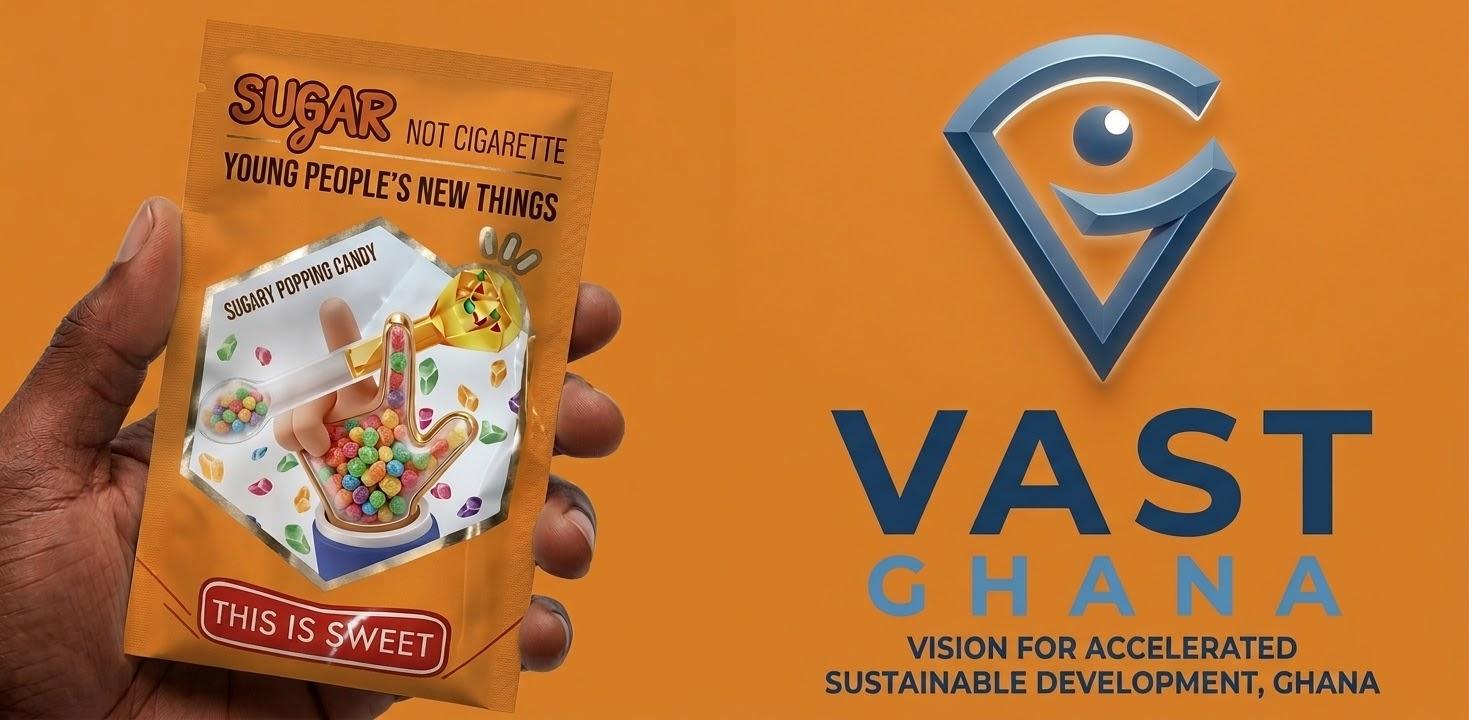
VAST Ghana Sounds Alarm Over Cigarette-Shaped Lollipops, Demands Nationwide Crackdown
VAST Ghana Sounds Alarm Over Cigarette-Shaped Lollipops, Demands Nationwide Crackdown VAST Ghana has called for a nationwide crackdown on cigarette-shaped...

NHIA injects GH¢219.8m into health sector as claims payouts approach GH¢1.2bn
The National Health Insurance Authority (NHIA) has injected GH¢219.84 million into Ghana’s healthcare system, extending a broader effort to improve the...

Health Ministry Appoints Okyeame Kwame as National Hepatitis Ambassador, Launches Taskforce to Eliminate Disease by 2030
The Ministry of Health has intensified Ghana’s fight against viral hepatitis by unveiling a National Viral Hepatitis Technical Working Group and appointing...
Comments (0)
No comments yet. Be the first to share your thoughts.