IMF upgrades Ghana’s debt-distress risk to ‘moderate’ two years ahead of schedule
Liwalmor M-Moadan
Journalist
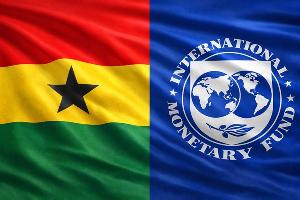
Ghana has secured one of the most significant upgrades to its sovereign debt outlook since its 2022 default, after the International Monetary Fund reclassified the country’s risk of external and overall debt distress from “high” to “moderate” two years earlier than envisaged when its $3bn bailout programme was approved.
The improvement marks an important turning point in Ghana’s recovery from the fiscal and balance-of-payments crisis that shut the country out of international capital markets and forced the government into a sweeping restructuring of domestic and external liabilities.
The IMF said the upgrade reflected substantial progress in restoring macroeconomic stability, rebuilding foreign-exchange buffers and restructuring public debt.
“Ghana’s risk of external and overall debt distress has been upgraded to moderate, two years earlier than expected at program approval, as all debt indicators are below their LIC-DSF thresholds,” the Fund said following the completion of the sixth and final review of Ghana’s Extended Credit Facility programme.
The assessment represents more than a technical adjustment to Ghana’s debt classification. For investors, creditors and development partners, it offers evidence that the country’s sovereign balance sheet is moving away from the extreme vulnerabilities that culminated in the suspension of external debt payments in December 2022.
The improvement has been underpinned by a combination of fiscal consolidation, debt relief, stronger exports and a sharp recovery in Ghana’s external buffers.
Gross international reserves nearly doubled to $11.9bn by the end of 2025, equivalent to about four months of imports, while the current-account surplus reached 7.9 per cent of gross domestic product, supported by historically high gold prices.
At the same time, Ghana recorded a primary fiscal surplus of 2.1 per cent of GDP, a significant reversal from the large deficits that contributed to the deterioration of the public finances before the crisis.
Inflation, another defining feature of the 2022 economic shock, has also retreated sharply. Headline inflation fell to 5.4 per cent at the end of 2025 and eased further to 5.3 per cent in June 2026, according to the IMF.
Economic activity has proved stronger than initially anticipated. Real GDP expanded by 6 per cent in 2025 and accelerated to 6.4 per cent year-on-year during the first quarter of 2026.
Taken together, these indicators have altered the trajectory of Ghana’s public finances.
The Fund said: “Ghana’s ECF-supported program has delivered substantial stabilization and debt-sustainability gains.”
It added that the country had restored macroeconomic stability, sharply reduced inflation, rebuilt international reserves and eased acute financing pressures following the 2022 debt crisis.
Debt restructuring changes the equation
Central to the improvement has been Ghana’s comprehensive debt restructuring.
The government has made substantial progress in renegotiating obligations to bilateral and commercial creditors after completing its domestic debt exchange and restructuring roughly $13bn of Eurobonds.
According to the IMF, debt relief agreements consistent with the framework agreed with Ghana’s Official Creditor Committee have now been signed with more than half of bilateral creditors, while agreements-in-principle have been reached with a similar proportion of external commercial creditors.
Negotiations with remaining commercial creditors are continuing.
“The Ghanaian authorities have made significant progress on their comprehensive public debt restructuring,” the IMF said.
That restructuring matters because Ghana’s crisis was not simply a question of the nominal stock of public debt. It was equally a crisis of liquidity, refinancing and confidence.
By extending maturities, reducing debt-service requirements and securing creditor relief, the government has created breathing room in the budget and reduced the immediate risk that large repayments could overwhelm public finances.
There are also tentative signs that domestic market confidence is returning.
Earlier this year, Ghana resumed the issuance of domestic Treasury bonds — a development IMF staff described in May as signalling “a return of investor confidence”.
For Accra, restoring a functioning domestic bond market will be crucial. The government cannot indefinitely depend on short-term Treasury bills or concessional multilateral financing, while an early return to expensive Eurobond borrowing could recreate precisely the refinancing vulnerabilities that contributed to the previous crisis.
Moderate risk is not an all-clear
The upgrade nevertheless stops well short of declaring Ghana’s debt problems resolved.
A “moderate” risk classification means the country is considered capable of servicing its obligations under the IMF’s baseline assumptions, but remains vulnerable to adverse economic or fiscal shocks.
The Fund continues to identify significant weaknesses, including fiscal risks from state-owned enterprises, elevated non-performing loans in parts of the financial system and pressures in the energy and cocoa sectors.
The government’s ability to maintain expenditure discipline will therefore become increasingly important as the country moves beyond the $3bn ECF programme.
The IMF Executive Board completed the sixth and final review on July 27, releasing about $371mn and bringing total disbursements under the programme to roughly $3bn.
Ghana will now move into a 36-month non-financing Policy Coordination Instrument with the Fund effectively shifting the relationship from emergency financial support towards policy monitoring and reform consolidation.
That transition may prove more difficult than the headline debt upgrade suggests.
The 2026 budget targets a primary surplus of 1.5 per cent of GDP, while Ghana’s fiscal framework ultimately seeks to reduce public debt towards a legislated anchor of 45 per cent of GDP by 2034.
The IMF believes some fiscal space is emerging and says the primary surplus could fall to 0.5 per cent of GDP from 2027 without threatening debt sustainability but only if Ghana strengthens domestic revenue mobilisation, public financial management, investment controls and oversight of state-owned enterprises.
Those conditions are critical.
Ghana’s history of fiscal expansion followed by painful consolidation has repeatedly undermined investor confidence. The real test of the latest recovery will therefore be whether fiscal discipline survives beyond the immediate constraints of an IMF financing programme.
Deputy IMF Managing Director Bo Li captured that challenge following the final review.
“The authorities’ sustained reform efforts combined with favorable commodity-price developments have delivered substantial macroeconomic stabilization and debt sustainability gains,” he said.
“Inflation has fallen sharply, international reserves have been rebuilt beyond program targets, and the primary fiscal balance has swung from a large deficit to a surplus.”
But he cautioned that continued reform would be required to consolidate those achievements.
“Going forward, sustained reform implementation under the new Policy Coordination Instrument is essential to consolidate these gains and address remaining vulnerabilities.”
For Ghana, the move from high to moderate debt distress is therefore a significant milestone, but not the end of its post-default adjustment.
The country has moved faster than expected in restoring the basic conditions for debt sustainability. What comes next will determine whether that recovery becomes permanent: resisting excessive borrowing, rebuilding domestic capital markets, improving tax mobilisation and ensuring that fiscal risks from energy, cocoa and state-owned enterprises do not migrate back onto the sovereign balance sheet.
The upgrade may help repair Ghana’s reputation among investors. But the more consequential achievement would be ensuring that the country does not have to undertake another debt restructuring when the memory of the last one has barely faded.
Written by
Liwalmor M-Moadan
M-Moadan is dedicated journalist committed to delivering accurate, timely, and impactful news. Passionate about uncovering the facts, telling meaningful stories, and keeping the public informed with integrity and professionalism.
Related Stories

Ghana’s Gold Revolution: Can Refining Gold at Home Finally Keep More of the Country’s Wealth in Ghana?
For generations, Ghana has drawn enormous wealth from beneath its soil, yet much of the value created from that wealth has flowed beyond its borders. Now,...
GoldBod Targets $1.4bn as BoG Reduces September Dollar Sales
The Bank of Ghana (BoG) has sharply reduced the amount of foreign exchange it plans to supply to the market in September 2026. Market data indicate that the...
Four CIIG Awards Strengthen Enterprise Insurance’s Leadership Position
Enterprise Insurance emerged as the most successful company at the sixth Chartered Insurance Institute of Ghana (CIIG) Awards, securing four major honours at...
Comments (0)
No comments yet. Be the first to share your thoughts.