Mahama Reignites TOR as Ghana Revives Domestic Oil Refining
Liwalmor M-Moadan
Journalist
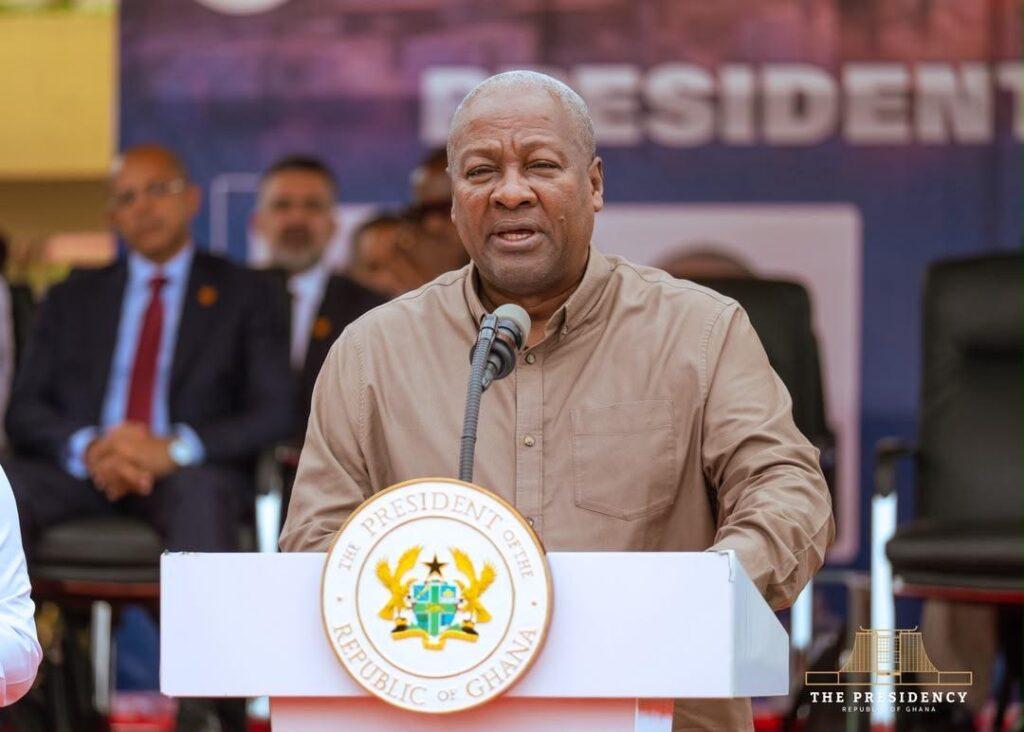
Ghana has revived domestic crude oil refining after President John Dramani Mahama commissioned the refurbished Crude Distillation Unit (CDU) at the Tema Oil Refinery (TOR), in what officials describe as a defining milestone in restoring the country’s only state-owned refinery and reducing dependence on imported petroleum products.
The commissioning also marked the official delivery of Jubilee crude to the refinery for processing, bringing locally produced oil back into Ghana’s refining system after years of operational inactivity.
For an economy that spends billions on imported refined fuel despite being an oil-producing nation, the restart of TOR’s primary processing unit is expected to strengthen energy security, reduce foreign exchange pressures and create greater value from Ghana’s upstream petroleum resources.
The CDU, often regarded as the heart of any refinery, is responsible for separating crude oil into intermediate products that are subsequently refined into petrol, diesel, kerosene and other petroleum products. Its rehabilitation restores the refinery’s core operational capability and lays the foundation for broader production recovery.
Speaking at the ceremony, President Mahama praised the refinery’s board, management and workforce for completing the refurbishment without direct financial support from the government, describing the achievement as evidence that disciplined leadership, technical expertise and strategic partnerships can transform struggling state enterprises.
He said the refinery’s revival demonstrates what can be achieved when institutions are empowered to innovate and execute reforms rather than depend solely on public funding.
Beyond its operational significance, the refinery’s return carries broader economic implications. Increased domestic refining could lower Ghana’s reliance on imported finished fuels, improve supply chain resilience, support industrial growth and reduce exposure to global fuel price volatility.
The restart also forms part of the government’s wider strategy to expand local value addition within the petroleum sector, ensuring that more of Ghana’s natural resources are processed domestically before reaching consumers.
For investors and energy analysts, the reopening of TOR represents more than the restoration of a refinery. It signals renewed confidence in Ghana’s industrial infrastructure and offers fresh evidence that operational reforms can revive strategic state assets once considered commercially unviable.
As refining operations gradually scale up, the focus will shift to sustaining production, maintaining profitability and positioning TOR as a competitive player in West Africa’s downstream petroleum market.
Written by
Liwalmor M-Moadan
M-Moadan is dedicated journalist committed to delivering accurate, timely, and impactful news. Passionate about uncovering the facts, telling meaningful stories, and keeping the public informed with integrity and professionalism.
Related Stories

Hamdaway Explained How You Can Invest

Saving Is the Slowest Way to Go Broke
Everyone tells you to save. Nobody tells you what saving actually costs. Put $10,000 in a savings account earning 1% a year. In ten years, you'll have roughly...

PETROSOL Offer up TO 17% to raise money through Corporate Bonds
PETROSOL Raises GH¢100 Million in Maiden Corporate Bond as Investors Show Strong Confidence PETROSOL Platinum Energy PLC has made a major entry into Ghana’s...
Comments (0)
No comments yet. Be the first to share your thoughts.