Parliament Urged to Enforce Mineral Royalty Payments as Delays Stall Development in Mining Communities
Liwalmor M-Moadan
Journalist
Parliament is under growing pressure to tighten oversight of Ghana’s mineral royalty distribution system after transparency advocates warned that prolonged delays in transferring statutory payments to mining host communities are disrupting infrastructure projects, weakening local planning and undermining confidence in the country’s extractive governance framework.
The Ghana Extractive Industries Transparency Initiative (GHEITI) Multi-Stakeholder Group (MSG) has called on lawmakers to summon state institutions responsible for administering mineral royalty disbursements, arguing that Parliament must enforce compliance with the Minerals Development Fund Act, 2016 (Act 912) to ensure communities receive funds due to them without unnecessary delays.
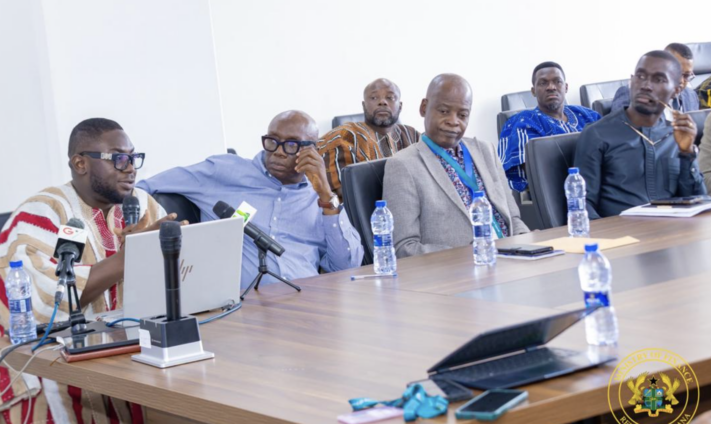
The appeal came during the dissemination of the 2023 GHEITI Report in Accra, where MSG member Dr Emmanuel Steve Asare Manteaw said weak parliamentary oversight had allowed statutory obligations to go unenforced despite clear legal provisions governing the allocation of mineral revenues.
According to Dr Manteaw, delayed payments have forced numerous community development projects to grind to a halt while creating uncertainty that makes it difficult for district authorities and traditional leaders to plan and execute development programmes.
“A lot of development projects in some of these beneficiary communities have come to a standstill, and the uncertainty over the timing of disbursements makes it difficult for communities to plan development activities with any confidence,” he said.
He argued that Parliament bears a direct responsibility to ensure the law it enacted is fully implemented, urging legislators to compel state agencies to disclose outstanding royalty payments, identify institutions responsible for delays and publish the amounts owed. Such disclosures, he said, would strengthen transparency, improve accountability and restore public confidence in the management of Ghana’s mineral wealth.
The concerns highlight broader governance challenges within Ghana’s extractive sector, where significant mineral revenues continue to coexist with persistent development deficits in many resource-producing communities. Delayed royalty transfers have increasingly become a point of contention among civil society organisations, local governments and traditional authorities, who argue that predictable funding is essential for financing schools, roads, health facilities and other social infrastructure.
Government officials, however, say important reforms have strengthened the management of extractive revenues over recent years.
In remarks delivered on his behalf, Patrick Nomo, Chief Director at the Ministry of Finance and Co-Chair of the GHEITI Multi-Stakeholder Group, said reforms to the mineral royalty regime, together with the institutionalisation of subnational transfers through the Minerals Development Fund, have improved the framework for ensuring mining communities benefit more directly from the country’s natural resources.
He nevertheless acknowledged that revenue leakages, weak inter-institutional coordination and deficiencies in data management continue to limit the sector’s contribution to both national and local development.
Mr Nomo called for stronger collaboration among government agencies, improved information-sharing and more robust data systems to enhance transparency and ensure extractive revenues translate into tangible improvements in the lives of people living in mining areas.
He reaffirmed government’s commitment to using evidence generated through GHEITI reports to shape future policy reforms and strengthen accountability across the extractive industry.
Under Ghana’s mineral royalty distribution formula established by the Minerals Development Fund Act, district assemblies receive 55% of allocations designated for local government, mining-affected communities receive 25%, while traditional councils receive the remaining 20%. The statutory arrangement is intended to ensure that communities hosting mining operations receive a direct share of resource revenues to support local economic and social development.
For investors and policymakers, the debate underscores that effective management of extractive revenues is becoming as important as resource production itself. Timely royalty disbursements not only determine the pace of development in mining communities but also influence public trust, social stability and the long-term sustainability of Ghana’s mining industry.
Written by
Liwalmor M-Moadan
M-Moadan is dedicated journalist committed to delivering accurate, timely, and impactful news. Passionate about uncovering the facts, telling meaningful stories, and keeping the public informed with integrity and professionalism.
Related Stories

Accra and Kumasi Expressway: Government Targets Full Funding by End of 2026 as Military Clears 170km Corridor
Ghana’s ambitious Accra and Kumasi Expressway project has moved closer to its construction phase, with the government announcing that it expects to secure the...
Ghana Immigration clears beggars from the streets of Accra and Kumasi
1,055 beggars remove from the street of Accra and Kumasi, Ghana Immigration Service migrant as part of an operation targeting undocumented foreign nationals....

Star Oil cuts petrol below GH¢15 as Ghana fuel retailers begin August price reset
Some Oil Marketing Companies (OMCs) began reviewing petroleum product prices on Monday, August 17, with Star Oil emerging as one of the first large retailers...
Comments (0)
No comments yet. Be the first to share your thoughts.