Archbishop Reaffirms Church’s £100m Slavery Reparations Fund During Ghana Visit
Liwalmor M-Moadan
Journalist
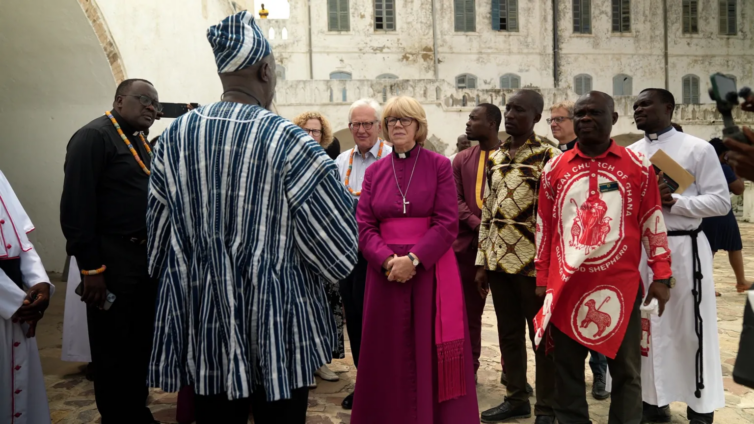
Archbishop of Canterbury Dame Sarah Mullally has reaffirmed the Church of England’s commitment to its £100 million reparative justice programme during a visit to Ghana, signalling that the Church will press ahead with efforts to address its historical role in the transatlantic slave trade despite mounting opposition in Britain.
Speaking after touring Cape Coast Castle, one of West Africa’s most significant slave forts, Mullally said the visit underscored the moral responsibility of the Church to confront its past and translate repentance into practical action for communities still living with the legacy of slavery.
“We played a part in the transatlantic slave trade. That is clear,” she said, describing the conditions inside the castle’s slave dungeons as a stark reminder of the institution’s complicity. She added that Christian repentance requires action, not merely acknowledgement.
The reaffirmation comes as debate over historical reparations continues to intensify globally, with Ghana leading international calls for governments, churches and institutions that benefited from slavery to provide financial and developmental restitution to affected communities.
The Church’s £100 million fund, announced in 2023 following an independent review of its historical investments, is intended to finance long-term research, community investment and engagement programmes aimed at addressing the enduring social and economic consequences of the slave trade. The initiative followed findings that the Church’s endowment had historical links to companies involved in the trafficking of enslaved Africans, while its missionary institutions also owned slave-worked plantations in the Caribbean.
Although the programme has been welcomed by reparations advocates, it has faced resistance from some within the United Kingdom, where critics have questioned both the historical evidence underpinning the initiative and the legal authority of the Church to allocate such a substantial sum for reparative purposes.
Mullally’s visit, her first pastoral tour of Africa since assuming office as Archbishop of Canterbury earlier this year, places reparative justice at the centre of the Church’s international engagement at a time when calls for accountability over colonial-era injustices are gaining renewed political momentum.
Ghanaian Foreign Affairs Minister Samuel Okudzeto Ablakwa welcomed the Archbishop’s renewed commitment, describing it as a significant signal that could strengthen the global reparations movement and encourage institutions that have been reluctant to acknowledge their historical responsibilities.
The visit also reinforces Ghana’s strategy of positioning itself as a leading voice in the international campaign for reparative justice, using its historic slave forts and diplomatic engagement to press for greater recognition of the economic and human costs of the transatlantic slave trade.
Written by
Liwalmor M-Moadan
M-Moadan is dedicated journalist committed to delivering accurate, timely, and impactful news. Passionate about uncovering the facts, telling meaningful stories, and keeping the public informed with integrity and professionalism.
Related Stories

Accra and Kumasi Expressway: Government Targets Full Funding by End of 2026 as Military Clears 170km Corridor
Ghana’s ambitious Accra and Kumasi Expressway project has moved closer to its construction phase, with the government announcing that it expects to secure the...
Ghana Immigration clears beggars from the streets of Accra and Kumasi
1,055 beggars remove from the street of Accra and Kumasi, Ghana Immigration Service migrant as part of an operation targeting undocumented foreign nationals....

Star Oil cuts petrol below GH¢15 as Ghana fuel retailers begin August price reset
Some Oil Marketing Companies (OMCs) began reviewing petroleum product prices on Monday, August 17, with Star Oil emerging as one of the first large retailers...
Comments (0)
No comments yet. Be the first to share your thoughts.