Hannah Tetteh Urges AU to Prioritise Trade, Finance, AI and Peace in New Continental Strategy
Liwalmor M-Moadan
Journalist
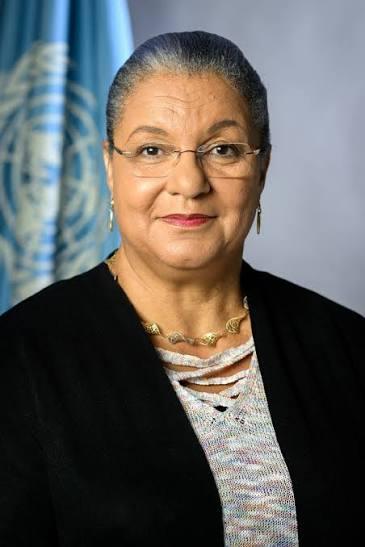
United Nations Special Representative Hannah Tetteh has called on the African Union to concentrate its collective efforts on trade integration, financial reform, artificial intelligence governance, climate-linked development and conflict resolution, arguing that these priorities will determine Africa’s influence in an increasingly fragmented global order.
Speaking at the 21st Kronti ne Akwamu Public Lecture, Tetteh said the continent stands at a critical moment as it prepares a proposed common African foreign policy framework ahead of the 2027 African Union Summit. While welcoming the initiative, she cautioned that ambitious declarations would have little value without credible implementation.
“The challenge for Africa is no longer agreeing on priorities but delivering measurable outcomes,” she argued, urging governments to focus on a limited number of areas where political consensus can translate into tangible progress.
At the centre of her recommendations was the African Continental Free Trade Area (AfCFTA), which she described as the continent’s most important economic integration project. Although member states have ratified key trade protocols, she said the next phase must focus on turning legal commitments into commercial opportunities by improving customs systems, transport infrastructure and institutional support for businesses.
Tetteh emphasised that opening markets alone would not guarantee increased intra-African trade.
“There is a difference between market access and market readiness,” she noted, adding that practical indicators such as logistics performance, border efficiency and the movement of goods should become benchmarks for evaluating progress.
Beyond trade, she urged African governments to intensify their campaign for reforms to the global financial architecture while strengthening domestic revenue mobilisation. With development assistance becoming increasingly constrained, she argued that the continent must reduce dependence on external financing and build stronger internal fiscal capacity to fund long-term development.
Climate policy, she said, should also be pursued through an economic lens. Africa’s transition to cleaner energy must, in her view, safeguard industrialisation ambitions and expand energy access rather than constrain economic growth.
On emerging technologies, Tetteh called for a unified African position on artificial intelligence governance, warning that global rules governing AI should not be designed without meaningful participation from developing economies. She argued that Africa must play an active role in shaping standards that will influence innovation, economic competitiveness and social development for decades.
She also identified peace and security as a non-negotiable foundation for economic transformation, urging renewed diplomatic engagement to address the continent’s growing conflicts. Despite previous commitments to “silence the guns”, she observed that insecurity continues to undermine investment, trade and regional integration.
Her remarks come as African leaders seek to strengthen the continent’s collective voice amid shifting geopolitical alliances, changing development financing patterns and accelerating technological change. The proposed common foreign policy framework, first endorsed during the February 2026 African Union Summit, is intended to enhance Africa’s coordination on global issues.
For investors and policymakers alike, Tetteh’s message reinforced a broader reality: Africa’s competitiveness will increasingly depend less on policy announcements and more on effective execution, institutional capacity and regional cooperation capable of translating continental ambitions into measurable economic outcomes.
Written by
Liwalmor M-Moadan
M-Moadan is dedicated journalist committed to delivering accurate, timely, and impactful news. Passionate about uncovering the facts, telling meaningful stories, and keeping the public informed with integrity and professionalism.
Related Stories

Hamdaway Explained How You Can Invest
Saving Is the Slowest Way to Go Broke
Everyone tells you to save. Nobody tells you what saving actually costs. Put $10,000 in a savings account earning 1% a year. In ten years, you'll have roughly...

PETROSOL Offer up TO 17% to raise money through Corporate Bonds
PETROSOL Raises GH¢100 Million in Maiden Corporate Bond as Investors Show Strong Confidence PETROSOL Platinum Energy PLC has made a major entry into Ghana’s...
Comments (0)
No comments yet. Be the first to share your thoughts.