Parliament Wraps Up Session with 12 Major Bills Reshaping Ghana’s Economy, Justice and Governance
Liwalmor M-Moadan
Journalist
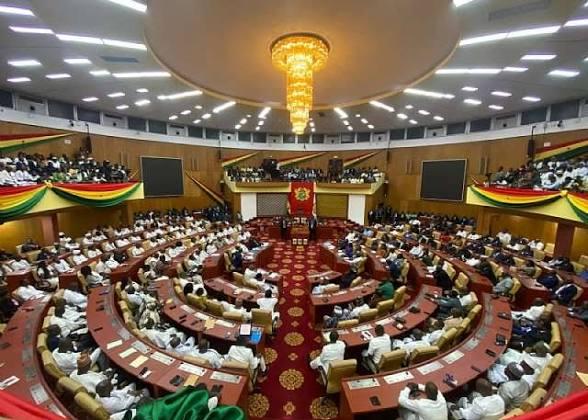
Parliament has concluded the Second Meeting of the First Session of the Ninth Parliament after passing 12 landmark bills aimed at overhauling Ghana’s legal, economic and institutional framework, marking one of the busiest legislative sessions in recent years.
The package of legislation spans taxation, investment, justice, energy, agriculture, defence and maritime security, reflecting the government’s push to modernise public institutions, strengthen domestic revenue mobilisation and improve the country’s long-term economic competitiveness.
Among the most significant economic reforms is the Ghana Investment Promotion Authority Bill, 2025, which replaces the country’s existing investment promotion regime with a new authority designed to streamline investor services, tighten regulation and attract greater foreign and domestic investment.
Parliament also approved a series of tax reforms through the Value Added Tax (Amendment) Bill, Income Tax (Amendment) Bill, Customs Bill and Excise Bill, all intended to simplify tax administration, improve compliance, strengthen border revenue collection and support the government’s fiscal consolidation agenda outlined in the 2026 Budget.
The agricultural sector received a major legislative boost with the passage of the Ghana Cocoa Board Bill, 2026, which seeks to strengthen COCOBOD’s governance, improve financial management and secure the long-term sustainability of Ghana’s cocoa industry.
In the energy sector, lawmakers passed the Energy Sector Levies (Amendment) Bill, increasing levies on fuel oil and extending the Road Fund Levy to fuel oil. Government says the reforms will reduce subsidy abuse, plug revenue leakages and improve financing for the country’s energy sector while maintaining refund mechanisms for eligible industrial users.
Beyond the economy, Parliament enacted the Community Service Bill, introducing non-custodial sentencing for certain offences to reduce prison overcrowding and encourage rehabilitation, while the Tribunals Bill modernises Ghana’s tribunal system to improve access to justice and dispute resolution.
National security also featured prominently, with the passage of the Maritime and Related Offences Bill to strengthen Ghana’s fight against piracy, illegal fishing and maritime crime, alongside the National Defence University Bill, establishing a dedicated institution for advanced military education and strategic security research.
The legislative session also witnessed the passage of the Human Sexual Rights and Family Values Bill, one of the country’s most debated pieces of legislation. The bill prohibits LGBTQ+ advocacy and related activities and continues to generate domestic and international discussions over constitutional rights, human rights and cultural values.
Collectively, the 12 bills represent one of Parliament’s most ambitious reform packages, laying the legal foundation for changes across public finance, governance, justice, investment, security and key productive sectors as Ghana pursues broader economic recovery and institutional transformation.
Written by
Liwalmor M-Moadan
M-Moadan is dedicated journalist committed to delivering accurate, timely, and impactful news. Passionate about uncovering the facts, telling meaningful stories, and keeping the public informed with integrity and professionalism.
Related Stories

Fuseini Inusah Akonsi Declares Bid for NDC Northern Regional Deputy Youth Organizer
Fuseini Inusah Akonsi has officially declared his intention to contest for the position of Northern Regional Deputy Youth Organizer of the National Democratic...
Parliament Calls for Investigation into Alleged GH¢70,000 Return Memo
Parliament has called for a thorough investigation into a memorandum circulating on social media that allegedly links Deputy Minority Leader and Member of...

Mahama Orders Immediate Dissolution of Boards of Nine State Institutions
President John Dramani Mahama has directed the immediate dissolution of the governing boards of nine state-owned institutions, affecting organisations...
Comments (0)
No comments yet. Be the first to share your thoughts.